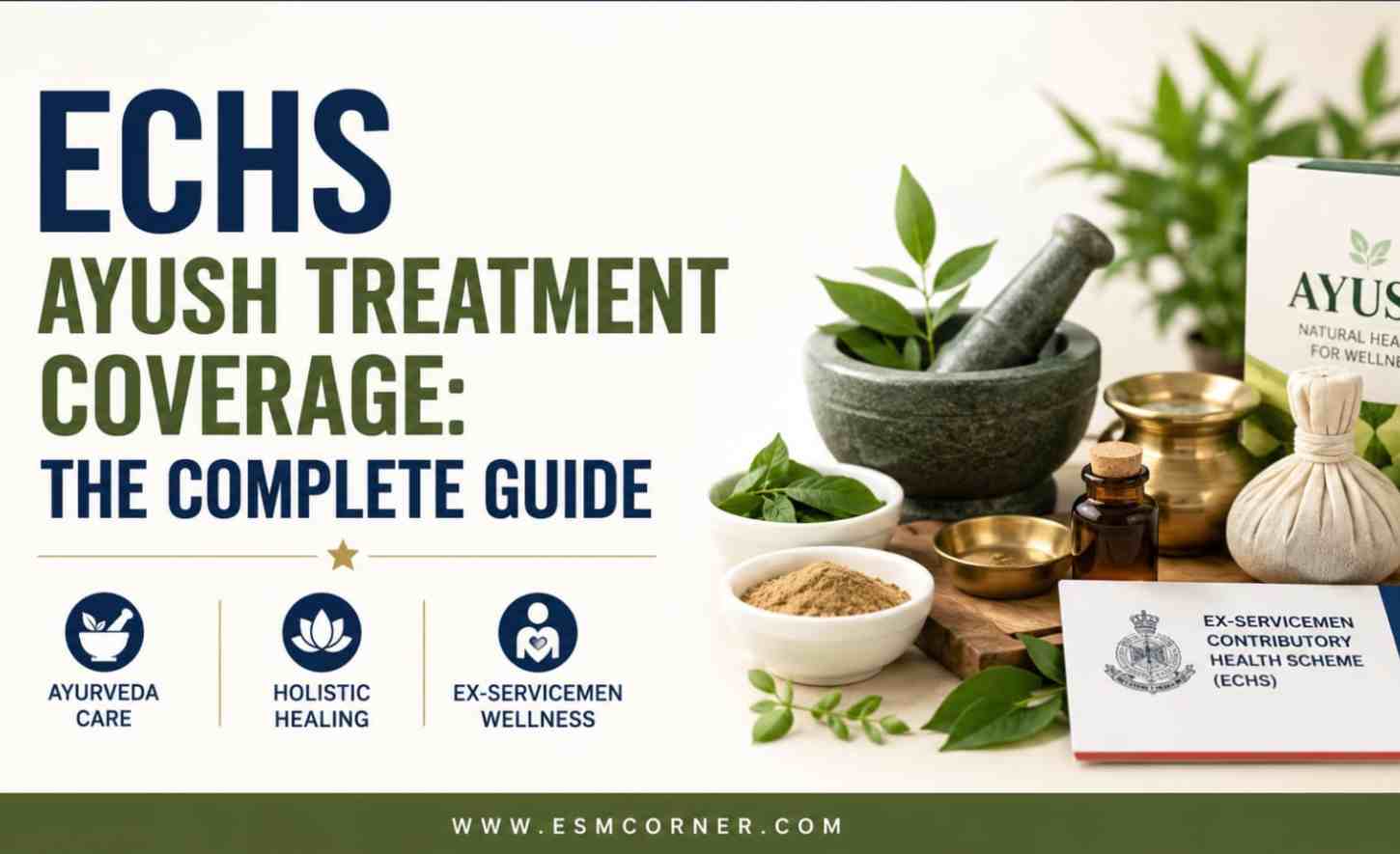

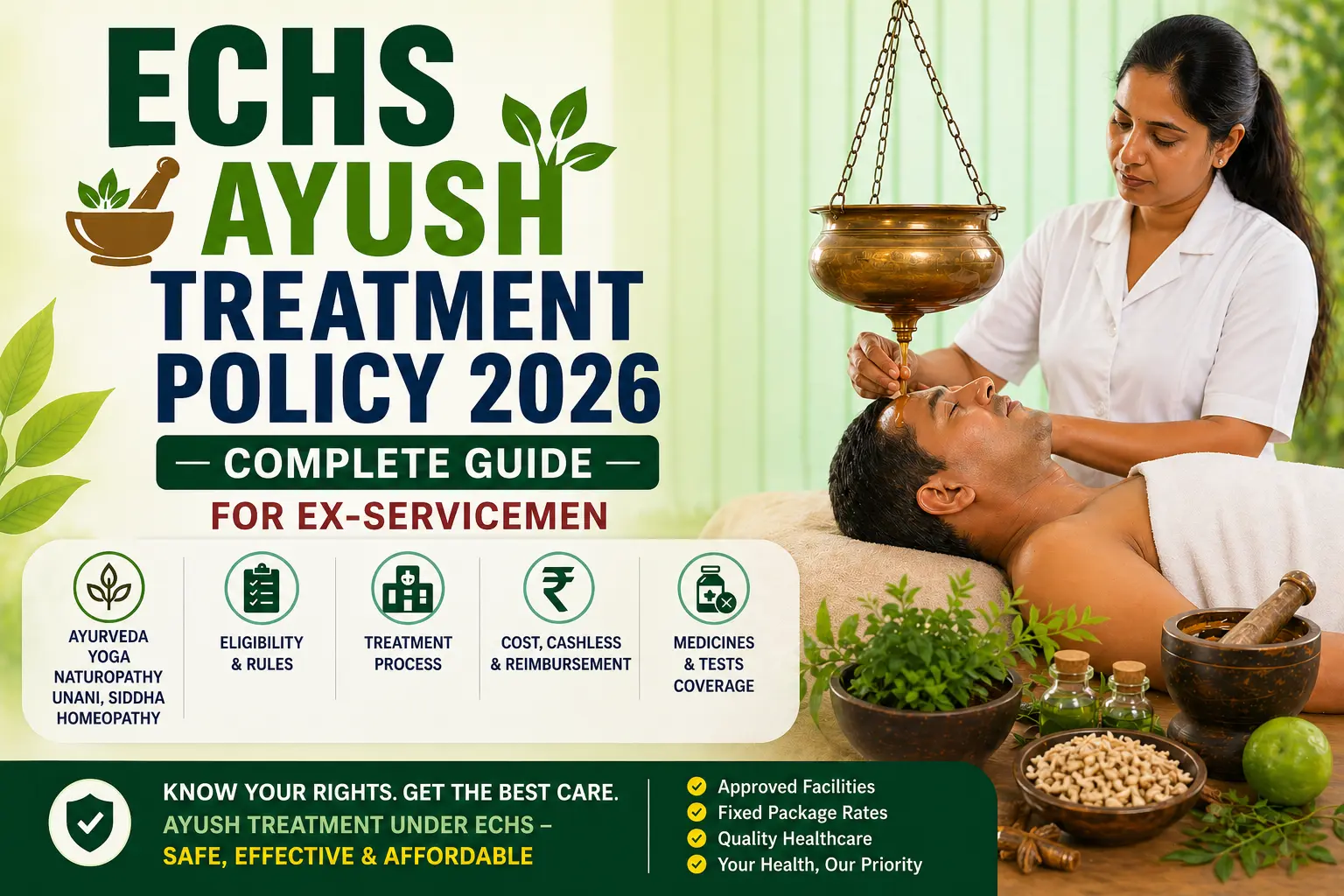
The ECHS AYUSH Treatment Policy 2025 is designed to give Ex-Servicemen (ESM) and their dependents access to alternative systems of medicine like Ayurveda, Yoga, Naturopathy, Unani, Siddha, and Homeopathy under the Ex-Servicemen Contributory Health Scheme (ECHS). The aim is to expand treatment options beyond allopathy while maintaining strict control over cost, treatment process, and eligibility.
However, the policy is not fully flexible. It is rule-based, and if a beneficiary does not understand the process clearly, treatment or reimbursement can easily get rejected.
What is AYUSH Treatment Under ECHS?
AYUSH treatment under ECHS refers to medical care provided through traditional Indian systems of medicine. This includes therapies like Panchakarma, Yoga therapy, herbal medicines, and natural healing methods.
The policy allows ESM to choose AYUSH treatment, but with a key restriction: you cannot take AYUSH and allopathic treatment simultaneously for the same disease.
This rule is strictly enforced and is one of the most common reasons for claim rejection.
Who is Eligible for AYUSH Treatment?
All ECHS card holders, including Ex-Servicemen and their dependents, are eligible for AYUSH treatment.
Important points:
- Valid ECHS membership is mandatory
- Eligibility remains active during AYUSH treatment
- Emergency allopathic treatment is still allowed even if you are under AYUSH care
This means the system allows flexibility only in emergencies, not in routine treatment.
Where Can You Take AYUSH Treatment?
AYUSH treatment is not available everywhere. It is limited to specific facilities:
- ECHS Polyclinics with AYUSH OPD
- Armed Forces Medical Services (AFMS) hospitals with AYUSH setup
- Empanelled private AYUSH hospitals
- Government AYUSH hospitals
Due to limited availability, many veterans face difficulty in accessing nearby facilities.
Step-by-Step Process to Avail AYUSH Treatment
This is the most critical part. Most problems happen here.
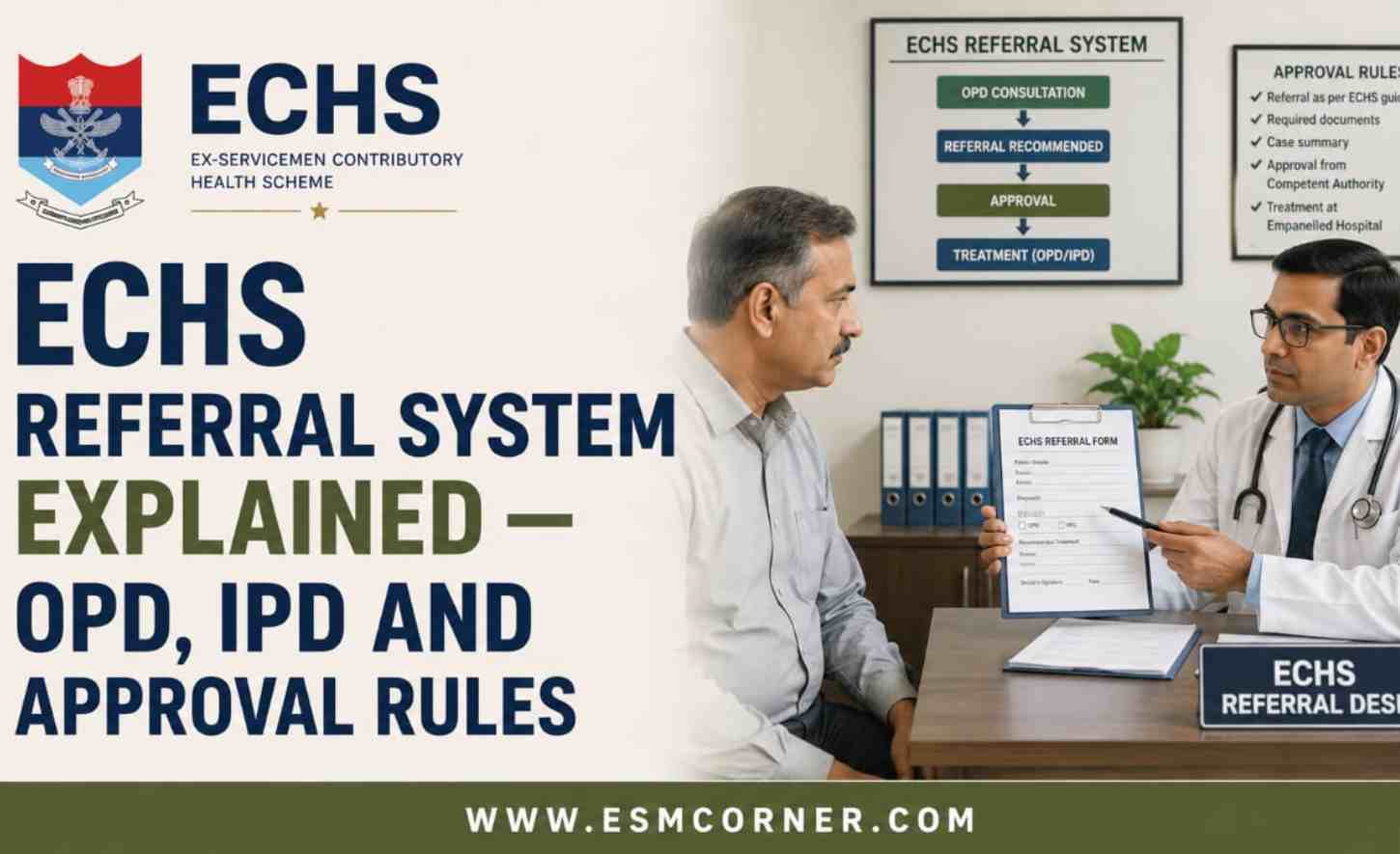
- Visit your nearest ECHS Polyclinic
- Get medical evaluation
- Obtain referral for AYUSH treatment
- Visit empanelled AYUSH hospital
- Start treatment as per approved package
A major confusion point is referral. Currently, allopathic doctors may issue referral based on AYUSH prescription, but in future AYUSH doctors will handle this fully.
This mixed system causes delays and denial in many cases.
Types of AYUSH Treatments Covered
The policy covers multiple therapies under different systems:
- Ayurveda (Panchakarma, massage therapies)
- Yoga and Naturopathy
- Unani and Siddha treatments
- Homeopathy
However, treatment is limited by duration:
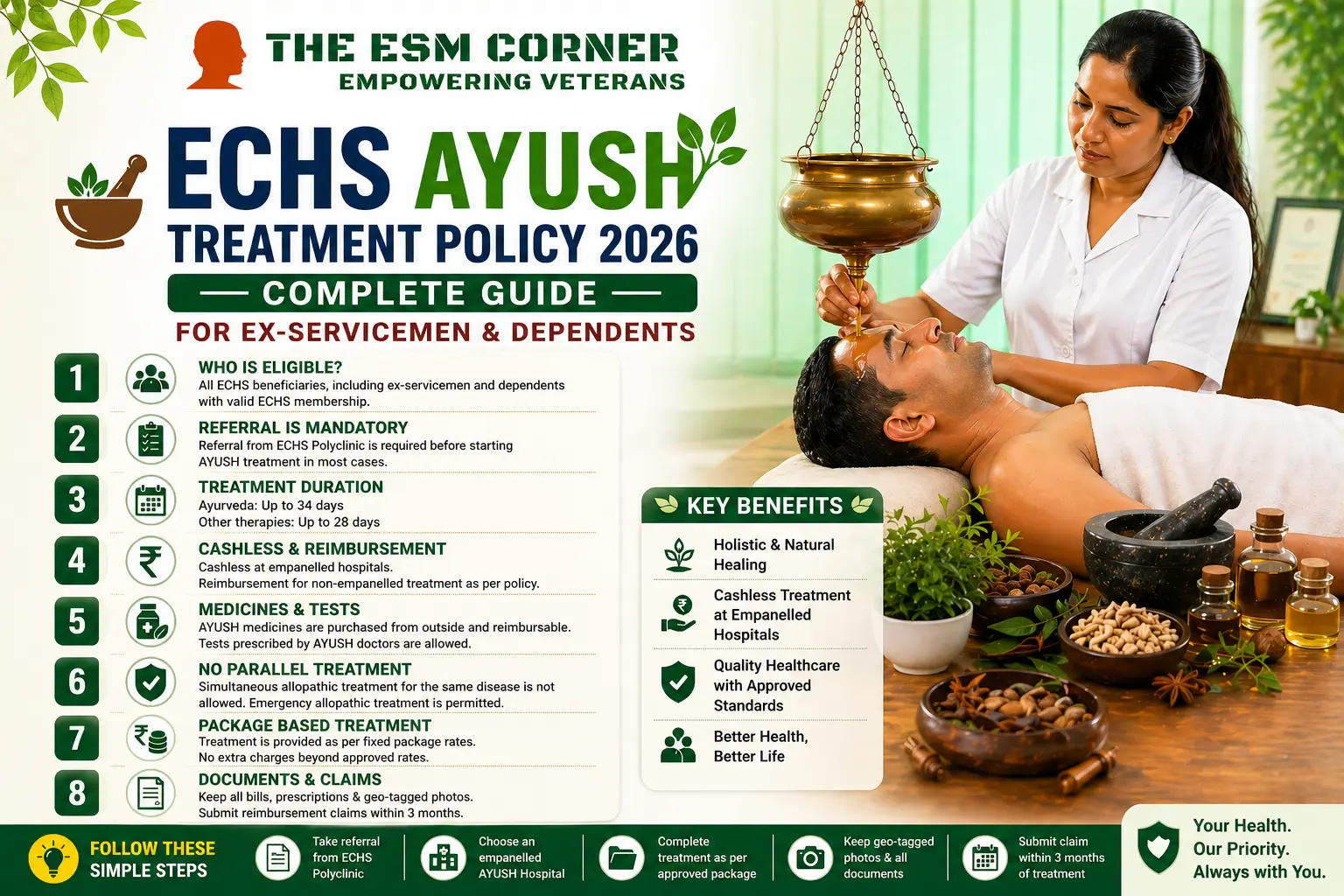
- Ayurveda: Maximum 34 days
- Other therapies: Maximum 28 days
No unlimited treatment is allowed.
Cost and Payment System
ECHS follows a fixed package rate system.
Covered:
- Consultation
- Therapy procedures
- Basic investigations
- Hospital charges
Not covered:
- Special diet
- Personal expenses
- Extra services beyond package
Hospitals are not allowed to charge more than approved rates. If they do, the extra cost will be paid by the patient.
Cashless Treatment vs Reimbursement
Two systems exist:
Cashless Treatment
- Available at empanelled hospitals with valid referral
- No upfront payment required
Reimbursement
- Applicable if treatment taken outside referral system
- Limited to approved rates only
- Claim must be submitted within 3 months
New rule: Geo-tagged photos during treatment are required for claim verification.
AYUSH Medicines and Tests
This is a major weakness in the system.
- AYUSH medicines are usually not available in ECHS Polyclinics
- Patients must buy medicines from outside
- Reimbursement is allowed based on prescription and bills
For diagnostic tests:
- Tests prescribed by AYUSH doctors are allowed
- They can be done at empanelled labs or polyclinics
Ward Entitlement Rules
Ward entitlement depends on ECHS subscription category:
- General Ward
- Semi-Private Ward
- Private Ward
Room rent limits are fixed and cannot be exceeded.
Common Problems Faced by Veterans
Ground reality is different from policy. Major issues include:
- Lack of AYUSH doctors in polyclinics
- Confusion in referral process
- Limited empanelled hospitals
- Delay in reimbursement
- Out-of-pocket spending on medicines
These issues reduce the practical benefit of the policy.
Important Do’s and Don’ts
Do’s
- Always take referral from ECHS
- Use empanelled hospitals only
- Keep all bills and documents
- Follow treatment duration limits
Don’ts
- Do not take parallel allopathic treatment
- Do not exceed package limits
- Do not delay claim submission
- Do not visit non-approved hospitals
Final Conclusion
The ECHS AYUSH Treatment Policy 2026 is a controlled and structured system. It gives additional treatment options but does not provide full flexibility. If used correctly, it can reduce dependency on allopathic treatments and provide effective alternative care.
However, success depends on understanding the rules clearly. Most failures happen due to lack of awareness, not policy limitations.
Quick Action Checklist
- Confirm eligibility before treatment
- Always take proper referral
- Choose empanelled hospital only
- Track treatment duration
- Submit claims within 3 months
- Keep complete documentation
Q1: Who is eligible for AYUSH treatment under ECHS?
A: All ECHS beneficiaries, including Ex-Servicemen and their dependents with valid ECHS membership, are eligible.
Q2: Can a patient take AYUSH and allopathic treatment together?
A: No. Simultaneous treatment for the same disease under both systems is not allowed.
Q3: Is emergency allopathic treatment allowed during AYUSH treatment?
A: Yes. In emergency situations, allopathic treatment can be taken even if the patient is under AYUSH care.
Q4: From where can AYUSH treatment be taken under ECHS?
A: Treatment is allowed only at:
ECHS Polyclinics with AYUSH facility
AFMS hospitals with AYUSH setup
Empanelled AYUSH hospitals
Government AYUSH hospitals
Q5: Is referral required for AYUSH treatment?
A: Yes. Referral from ECHS Polyclinic is mandatory in most cases before starting treatment.
Q6: Who gives referral for AYUSH treatment?
A: Currently, allopathic doctors at ECHS Polyclinics can issue referral based on AYUSH prescription. In future, AYUSH doctors will handle this.
Q7: What is the maximum duration of AYUSH treatment?
A: Ayurveda: Maximum 34 days
Other therapies: Maximum 28 days
Q8: Can treatment duration be extended?
A: Yes, but it requires approval and additional payment beyond package is not allowed.
Q9: How is AYUSH treatment charged under ECHS?
A: Treatment is package-based with fixed rates approved by ECHS.
Q10: Can hospitals charge extra money beyond package rates?
A: No. Any extra charges beyond approved rates are not allowed and will not be reimbursed
Q11: Is AYUSH treatment cashless under ECHS?
A: Yes, if treatment is taken at empanelled hospitals with proper referral.
Q12: When is reimbursement applicable?
A: Reimbursement is applicable if treatment is taken outside referral system or in non-empanelled setup, but only at approved rates.
Q13: What is the time limit for submitting reimbursement claims?
A: Claims must be submitted within 3 months from treatment completion.
Q14: Are geo-tagged photos required for claims?
A: Yes. Geo-tagging during treatment is required for verification in reimbursement cases.
Q15: Are AYUSH medicines available in ECHS Polyclinics?
A: No. Medicines are generally not available and must be purchased from outside.
Q16: Can cost of AYUSH medicines be reimbursed?
A: Yes. Tests prescribed by AYUSH doctors are permitted.
Q17: Can AYUSH doctors prescribe diagnostic tests?
A: Yes. Tests prescribed by AYUSH doctors are permitted.
Q18: Where can diagnostic tests be conducted?
A: Tests can be done at ECHS Polyclinics or empanelled diagnostic centres.
Q19: What ward entitlement is given under AYUSH treatment?
A: Ward entitlement depends on ECHS subscription category (General, Semi-Private, Private).
Q20: Can a patient go directly to AYUSH hospital without referral?
A: Technically possible, but reimbursement may be limited or denied without proper referral.