

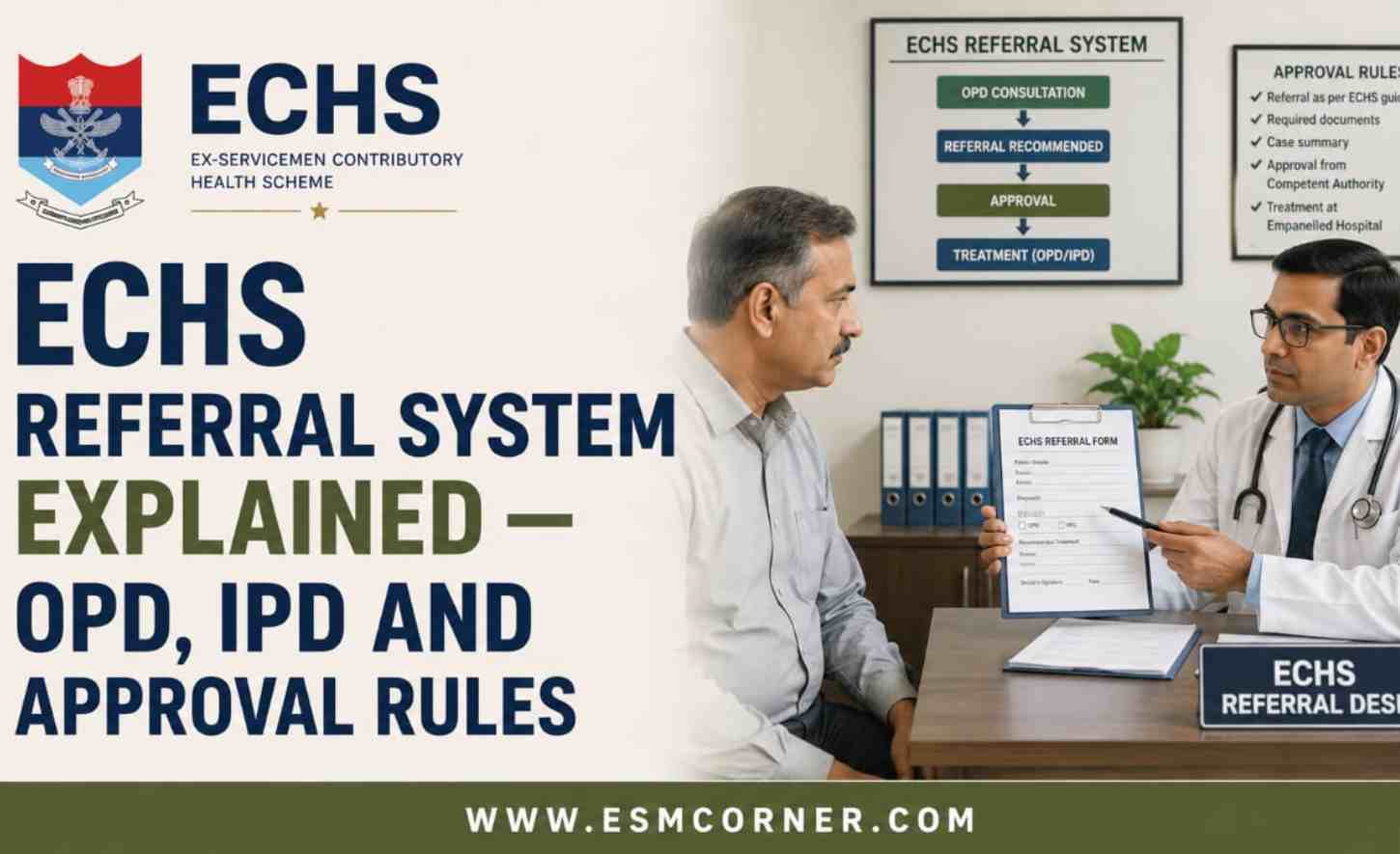
The ECHS referral is the most important document in the entire treatment process. It is the official permission from your polyclinic that tells the hospital — this patient is authorised, treat them on cashless basis. Without a valid referral, no empanelled hospital will treat you in a routine situation.
Yet the referral is also the most misunderstood part of ECHS. Expired referrals, wrong referral types, unnecessary trips to the polyclinic for approvals — these problems happen every day. This article explains everything about the ECHS referral system simply and clearly, based strictly on ECHS SOP April 2026.
What is an ECHS Referral?/Echs referral system explained
A referral is an official document issued by your ECHS Polyclinic. After examining you, if the Medical Officer decides you need specialist care, they issue this document. It authorises you to visit a specific empanelled hospital for consultation, tests, or admission.
Standard Referral Validity — 3 Months
A normal ECHS referral is valid for three months from the date of issue. Check the date every time before visiting the hospital. An expired referral will not be accepted.
For serious conditions — cancer treatment, dialysis, diabetes, hypertension, and cardiac patients — the referral is valid for 180 days. The number of treatment sessions is decided by the Medical Officer at the polyclinic or military hospital.
How Many Consultations on One Referral?
On one referral you can see up to three specialists and have a maximum of six consultations within the validity period.
Simple example — your polyclinic refers you to a Medical Specialist. That specialist can further refer you to a Cardiologist and a Gastroenterologist under the same referral. That is three specialists, no new referral needed from polyclinic.
OPD Referral — For Consultation and Tests
An OPD referral is for visiting the hospital as an outpatient — you consult the specialist and come back home.
- Listed tests up to Rs 3,000 — no separate approval needed
- Listed tests above Rs 3,000 — separate ECHS referral required
- Unlisted tests above Rs 5,000 — hospital gets online approval through ECHSF-U form
Most important rule — an OPD referral cannot be used for admission. Period.
IPD Referral — For Admission Only
An IPD referral is issued when you need to be admitted to hospital. The specialist recommends admission, the polyclinic issues the IPD referral.
No hospital will admit an ECHS patient without an IPD referral except in genuine emergencies. If after examination admission is not needed, the hospital can convert the IPD referral to OPD on the BPA portal.
When No Referral is Needed
Aged 70 years and above — can visit empanelled hospitals for OPD and investigations without any referral. No separate referral needed for any listed tests. But IPD admission still requires a referral.
Genuine emergencies — admitted without referral. Hospital raises Emergency Intimation Report within 48 hours.
Post-operative follow-up — no referral needed for follow-up after cardiac surgery, organ transplant, neuro surgery, end stage renal disease, liver failure, auto immune disorders, and neurological conditions like dementia, Alzheimer’s, and Parkinsonism. No time limit on follow-up.
Military Hospital specialist recommendation — no approval or referral needed for any test advised by a Military Hospital specialist.
You Never Run for Approvals
The ECHS SOP is very clear — patients and families will not be asked to run around for approvals. The hospital handles all online approvals through the BPA portal. You sit and wait. The hospital does the work.
Common Mistakes
- Arriving with an expired referral
- Using OPD referral to request admission
- Not knowing that 70-plus beneficiaries need no referral for OPD
- Not knowing follow-up after major surgery needs no new referral
Conclusion
The ECHS referral is your authorisation for cashless treatment. OPD for consultation, IPD for admission — never mix the two. Know your validity period, know when no referral is needed, and remember — you never have to run to the polyclinic for test approvals. The hospital does that for you.
READ ALSO: ECHS AYUSH TREATMENT POLICY 2026: COMPLETE GUIDE FOR EX-SERVICEMEN
Frequently Asked Questions
Q1. What is an ECHS referral and who issues it?
An ECHS referral is an official document issued by your ECHS Polyclinic after the Medical Officer examines you and determines that specialist care is needed. It authorises you to visit an empanelled hospital for consultation, investigations, or admission on a cashless basis.
Q2. How long is a standard ECHS referral valid?
A standard referral is valid for three months from date of issue. For serious conditions including cancer, dialysis, diabetes, hypertension, and cardiac conditions the referral is valid for 180 days. Always check the referral date before visiting the hospital.
Q3. How many specialist consultations are allowed on one referral?
On a single referral you can consult up to three specialists and have a maximum of six consultations within the validity period. The primary specialist can refer you to two more specialists under the same original referral without needing a fresh one from the polyclinic.
Q4. What is the difference between OPD and IPD referral?
An OPD referral is for outpatient consultation and tests — you visit and return home the same day. An IPD referral is for admission when the patient needs to stay in hospital for treatment or surgery. An OPD referral cannot be used for admission under any circumstance.
Q5. Can a 70-year-old ECHS beneficiary visit a hospital without a referral?
Yes. Beneficiaries aged 70 and above can visit empanelled hospitals for OPD consultations and investigations without a referral. They also need no separate referral for listed tests. However for hospital admission an IPD referral from the polyclinic is still required.
Q6. Do I need to go to the polyclinic for test approvals above Rs 5,000?
No. For unlisted tests above Rs 5,000 the hospital raises the ECHSF-U approval form online on the BPA portal on your behalf. You do not go anywhere. The ECHS SOP clearly states that patients and families will not be asked to run around for approvals.
Q7. Is proxy consultation allowed under ECHS?
Proxy consultation is generally not permitted. However for a bed-ridden patient who cannot travel, proxy consultation may be allowed with a written undertaking from the patient and with the Regional Centre kept informed.
Q8. Is a referral needed for post-surgical follow-up?
No referral is needed for follow-up after cardiac surgery, organ transplant, neuro surgery, end stage renal disease, liver failure, auto immune disorders, and neurological conditions like dementia, Alzheimer’s, and Parkinsonism. There is no time limit on follow-up for these conditions.
Q9. What if a patient arrives on IPD referral but does not need admission?
If after examination the doctor finds admission is not required, the hospital can convert the IPD referral to an OPD referral on the BPA portal. The patient is then treated as an outpatient without needing to return to the polyclinic for a new referral.
Q10. Is a referral needed for treatment recommended by a Military Hospital specialist?
No. If a Military Hospital specialist recommends any test, investigation, or procedure — listed or unlisted — no separate approval or referral is required. The empanelled hospital carries out the treatment directly without raising any online approval form
For daily defence updates, government notifications, recruitment alerts, welfare schemes, career opportunities, education news, and other important announcements, join our WhatsApp Community. Click here to join our WhatsApp Group.





















Very nice information and explanation about referal, IPD, OPD and above 70 yrs people etc. Very helpful.
ਮੈਂ opd refrel ਤੇ ੬ ਵਾਰ ਨਹੀਂ ੧੨ ਵਾਰ ਡਾਕਟਰ ਕੋਲ ਜਾ ਆਇਆ ਹਾਂ ਇਹ ਕਿਸ ਤਰ੍ਹਾਂ ਮੁਮਕਿਨ ਹੋਇਆ
If a patient above 70 years is prescribed medications by the empanelled hospital,can he buy them and sumit claim for reimbursement ?
70 வயதிற்கு மேற்பட்ட பயனாளி ஒருவர் OPD Refferal Letter உடன் மருத்துவ மனைக்கு சென்று, டாக்டர் ஆலோசனை பெறும் போது, அவருக்கு சிறுநீரக பாதிப்பு ஏற்கனவே உள்ளது. அதற்காக அந்த மருத்துவ மனையில் சிகிச்சை பெற்று வந்த நிலையில், சிறுநீரக மருத்துவர்கள் அவரை MICU வில் அவசரமாக அனுமதிக்கும் போது நேரம் மாலை 500 மணி, MIOT Hospital Chennai யின் ECHS HELP DESK ல் உள்ளவர்கள் அனுமதிக்க முடியாது என்று சொன்னார்கள். காரணம் IPD Refferal Letter கண்டிப்பாக வேண்டும் என்று சொன்னார்கள். தெய்வாதீனமாக அங்கு ஜீனத் என்ற ஒரு அம்மையார் வந்து, 78 வயதுடைய ஒரு நடக்க முடியாத, படுக்கையில் இருக்கும் ஒருவரை டாக்டர் பரிசோதனை செய்து எமெர்ஜென்சி என்று எழுதி MICU வில் அனுமதிக்கும் போது, நாம் கண்டிப்பாக அனுமதிக்க வேண்டும் என்று சொன்னார்கள். உடனே எனது தாயார் திருமதி காந்தி வயது 78 மியாட் மருத்துவமனையில் சிகிச்சைக்காக அனுமதிக்கப்பட்டார்.
I met with doctor twelve times in place of six times on opd refrel. How can possible this?
Direct Purchase Restrict: Open-market commercial purchases and direct cash claims for routine medications are not permitted under standard ECHS rules.
Institutional Supply: Prescribed drugs must be procured directly through authorized ECHS polyclinic or empanelled hospital pharmacies.
The NAC Exception: Out-of-pocket claims are only allowed if a prescribed medicine is unavailable at the polyclinic and a valid Non-Availability Certificate (NAC) is issued.
Senior 70+ Status: While members aged 70 and above enjoy direct OPD access and consultations, they still follow standard institutional medicine supply norms.
Emergency Rules: Direct purchase and subsequent reimbursement apply strictly to verified, acute emergency situations where regular supply channels are completely unreachable.
Sir, do we need to pay in empanelled hospitals for certain tests like PAC and physiotherapy?
Is referral required for veterans ( 70yrs & above) for specialist OPD in empaneled hospital in out station.