
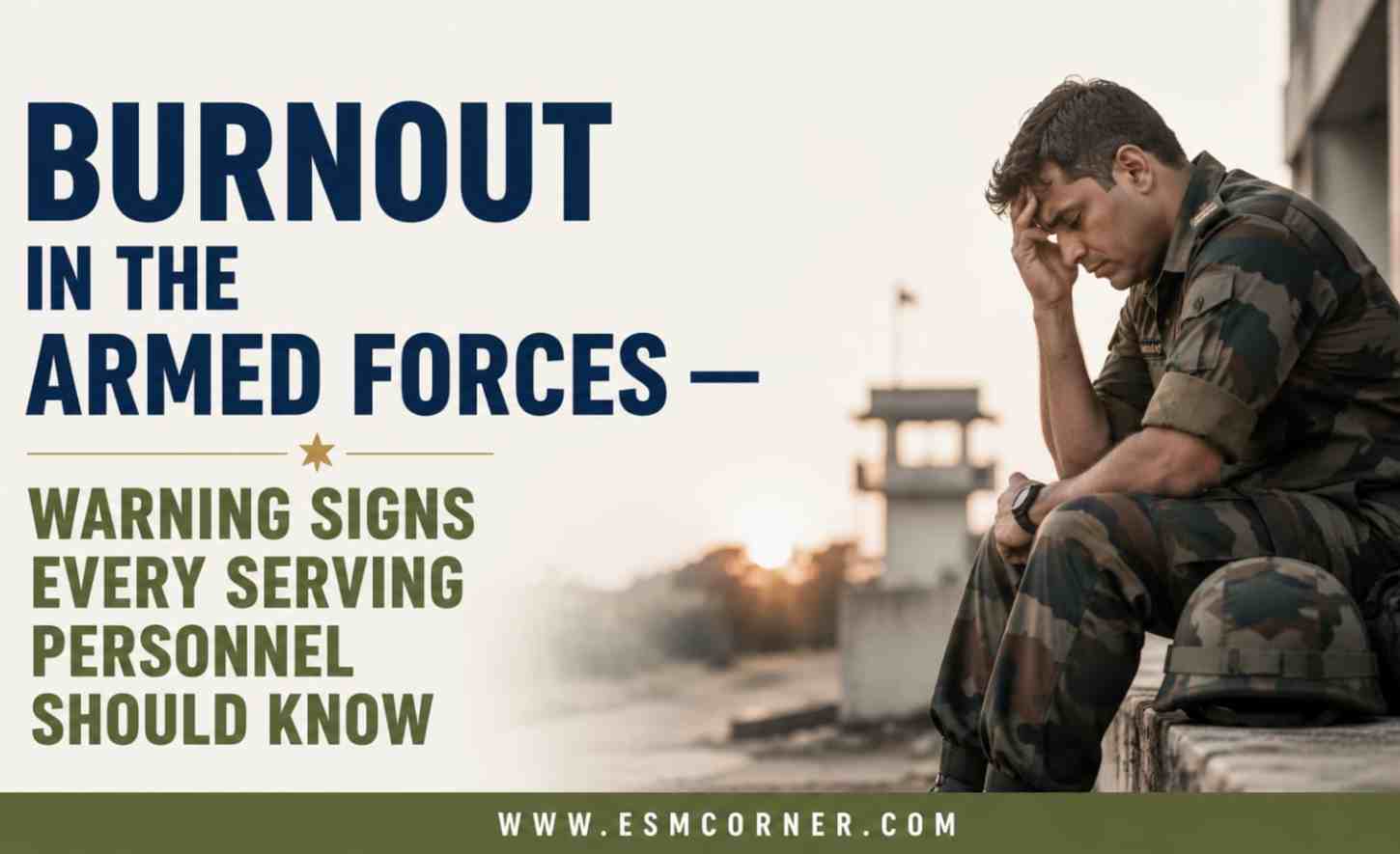
Think of a soldier who’s done multiple tough deployments without a single complaint. Tough training, back-to-back postings, high-pressure missions — he handled it all. But lately, even filling out a simple form feels exhausting. The enthusiasm he was known for? Gone. Replaced by irritation, detachment, “kuch bhi karo, kya fark padta hai” kind of attitude.
That’s not laziness. That’s not weakness. That’s burnout — and it happens to the most dedicated people, not the least.
Here’s the important part: burnout is not a character flaw. It’s simply what happens to the human mind and body when it keeps giving and giving without ever properly recovering. It’s biology, not a personality problem. And the sooner you can spot it, the sooner you can fix it — before it costs you your health, your relationships, or your career.
Stress, Fatigue, Burnout — Know the Difference
These three get mixed up all the time, but they’re not the same thing:
- Operational stress — that “on edge” feeling during a tough task. Uncomfortable, but you know once the task is done, you’ll be fine.
- Fatigue — plain tiredness after a long shift or field exercise. A good night’s sleep and proper food usually fixes it.
- Burnout — a deeper, long-term exhaustion. Emotional numbness, complete disengagement. And here’s the tricky part — rest alone doesn’t fix it, because the damage has built up over months, sometimes years.
Why Forces Personnel Are Especially At Risk
The culture of service teaches “push through, don’t complain, mission first.” That mindset builds incredible units — but it also makes people ignore their own warning signs for way too long. Add unpredictable schedules, long separations from family, and constant high responsibility into the mix, and you’ve got the perfect setup for burnout to creep in quietly.
The Warning Signs — Don’t Brush These Off
Think of your body like a vehicle engine. Run it at full speed for too long without maintenance, and something’s going to break down. Here are the signals your engine gives before that happens:
Physical & mental signs:
- Frequent headaches, tight muscles, stomach issues
- Falling sick more often than usual
- Trouble concentrating, slower decision-making
- Simple tasks suddenly feeling mentally exhausting
Emotional & behavioural signs:
- Constant irritability or feeling emotionally “numb”
- Losing motivation, feeling detached from your team
- Withdrawing from people, dropping hobbies you used to enjoy
- Becoming unusually cynical or short-tempered
- Relying heavily on caffeine to get through the day, or alcohol/sleeping pills to switch off at night
If a few of these sound familiar, it’s not a red flag about your character — it’s a dashboard warning light. Time to check under the hood.
Your Burnout Recovery Cheat Sheet
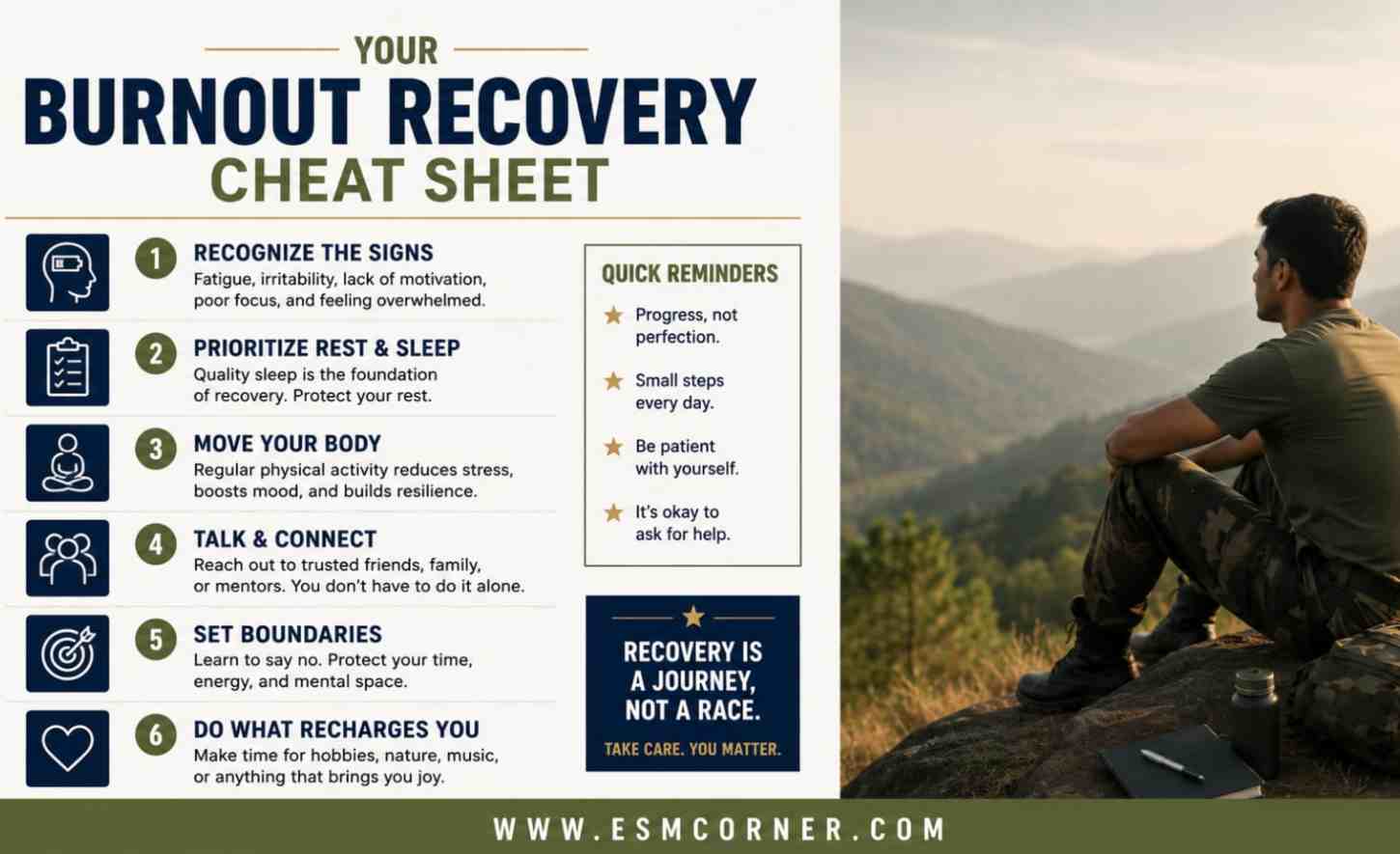
| Warning Sign | Likely Cause | Healthy Action | What You Gain |
|---|---|---|---|
| Can’t sleep properly | Stress hormones staying high | Fix a strict bedtime routine | Energy and focus return |
| Constant cynicism | Long-term emotional exhaustion | Talk openly with your peers | Rebuilds trust and purpose |
| Mental fog | Nervous system not recovering | Take short breaks through the day | Sharper focus |
| Pulling away from people | Deep emotional depletion | Reconnect with trusted comrades | Real support system back |
| Falling sick often | Weakened immunity from stress | Prioritise food and rest | Stronger overall health |
Getting Your Foundation Right
Being physically fit doesn’t automatically protect your mind — that’s a common misunderstanding. True resilience needs proper recovery alongside physical effort.
Sleep, water, and food — non-negotiable basics: Bad sleep messes with your hormones and makes emotional control much harder. Keep a consistent sleep schedule wherever possible, keep your room cool and dark, and wind down before bed instead of scrolling your phone till the last minute. Stay hydrated and eat proper meals — skipping food just adds more fatigue on top of what you’re already carrying.
Small routines make a big difference: When everything feels overwhelming, tiny controllable habits — a fixed morning routine, prioritising your tasks, a short wind-down ritual after duty — bring back a sense of control. Breaking big tasks into smaller steps also stops that “I can’t even start” feeling from taking over.
It’s a Team Effort Too
Talk to people who get it. Sharing what you’re going through with a trusted friend, mentor, or family member is one of the simplest ways to release built-up pressure. And if you notice a comrade going quiet or unusually irritable, check in on them before it turns into something bigger.
Leadership matters, a lot. Good leaders don’t lower standards to support well-being — they set realistic expectations, give proper recovery time after intense exercises, and are open about their own struggles too. When leaders normalise talking about mental readiness, the whole unit becomes stronger and more resilient.
Let’s Bust Some Myths
- “Only weak people burn out.” False. Burnout hits the most dedicated, hardworking people first — the ones who keep pushing past their limits without rest.
- “A weekend off fixes burnout.” False. Real recovery needs consistent changes to habits and routines over time, not a quick fix.
- “Asking for help hurts your career.” False. Managing your health proactively actually shows maturity and self-awareness — qualities every good leader values.
The two biggest mistakes to avoid:
- Powering through with sheer willpower, extra chai, or energy drinks instead of addressing the actual problem
- Completely withdrawing from people, cutting off the very support system that could help you recover
Conclusive
Nobody’s endurance is unlimited — not even the toughest, most experienced personnel. Real resilience isn’t about enduring endless strain until you break down. It’s about noticing the early signs, building proper recovery into your routine, and treating your mental fitness with the same seriousness as your physical training.
Prioritise your sleep. Eat properly. Talk openly with your team. Look out for each other. Because staying fit for duty isn’t just about being ready for the mission — it’s about staying fully present for the people who need you, both on the field and back home.
Also Read: 10 Simple Habits for ESM to Stay Fit & Happy
Q1.What is the primary difference between stress and burnout?
Stress involves hyper-arousal, anxiety, and an overactive response to high demands, where an individual feels overwhelmed yet fully engaged. Burnout is a state of chronic emotional blunting, helplessness, and detachment resulting from unmanaged, long-term stress where an individual feels completely drained and disengaged from their responsibilities.
Q2.Can physical exercise prevent military burnout?
While regular exercise builds physical stamina and releases stress-reducing endorphins, it cannot single-handedly prevent burnout if sleep, nutritional needs, emotional processing, and mental rest are consistently neglected. Over-training without proper recovery can actually accelerate physical and mental exhaustion, contributing directly to the burnout cycle.
Q3.How can serving personnel balance high operational tempo with personal recovery?
Personnel can maintain balance by maximizing brief recovery windows through structured sleep, proper hydration, nutrient-dense meals, and deliberate mental micro-breaks. Focusing intensely on controllable daily habits, engaging in meaningful non-military hobbies when off-duty, and setting clear boundaries between work and personal life helps sustain energy during intense operational periods.
Q4.What should a service member do if they recognize burnout in a comrade?
Start an informal, respectful, peer-to-peer conversation in a private setting, sharing specific, observable changes in their behavior without judgment. Listen actively, offer practical support, encourage them to adopt healthy recovery routines, and gently suggest utilizing supportive resources like unit chaplains, medical officers, or counselors if the strain continues.
Q5.How can families support military members experiencing severe operational strain?
Families can offer a stable, supportive home environment by listening patiently without immediate judgment and maintaining calm, predictable daily routines. Encouraging restful off-duty activities, respecting the service member’s need for initial quiet recovery time after long shifts, and supporting healthy lifestyle habits significantly assists in physical and psychological restoration.
Q6.Does taking time to recover mean a person lacks military toughness?
No, prioritizing deliberate recovery is a fundamental component of professional readiness, self-discipline, and long-term Mental Strength in Armed Forces. Elite military units treat recovery as a vital performance tool, recognizing that continuous operational readiness requires systematic maintenance of the body and mind, similar to servicing complex military equipment.
Q7.How long does it typically take to recover from burnout?
Recovery timelines vary significantly depending on the severity of depletion, individual resilience factors, and the swiftness of intervention. While mild exhaustion can improve over several weeks of disciplined rest and lifestyle adjustments, severe burnout may require months of structured lifestyle modifications, professional guidance, and consistent recovery habits.
Q8.When should a service member consider seeking professional mental health support?
Professional support should be sought when warning signs persist despite self-care efforts, or when exhaustion severely impairs daily functioning, decision-making, family relationships, or unit safety. Accessing medical officers, counselors, or mental health professionals early prevents minor exhaustion from developing into chronic physical or psychological health conditions.
For daily defence updates, government notifications, recruitment alerts, welfare schemes, career opportunities, education news, and other important announcements, join our WhatsApp Community. Click here to join our WhatsApp Group.