
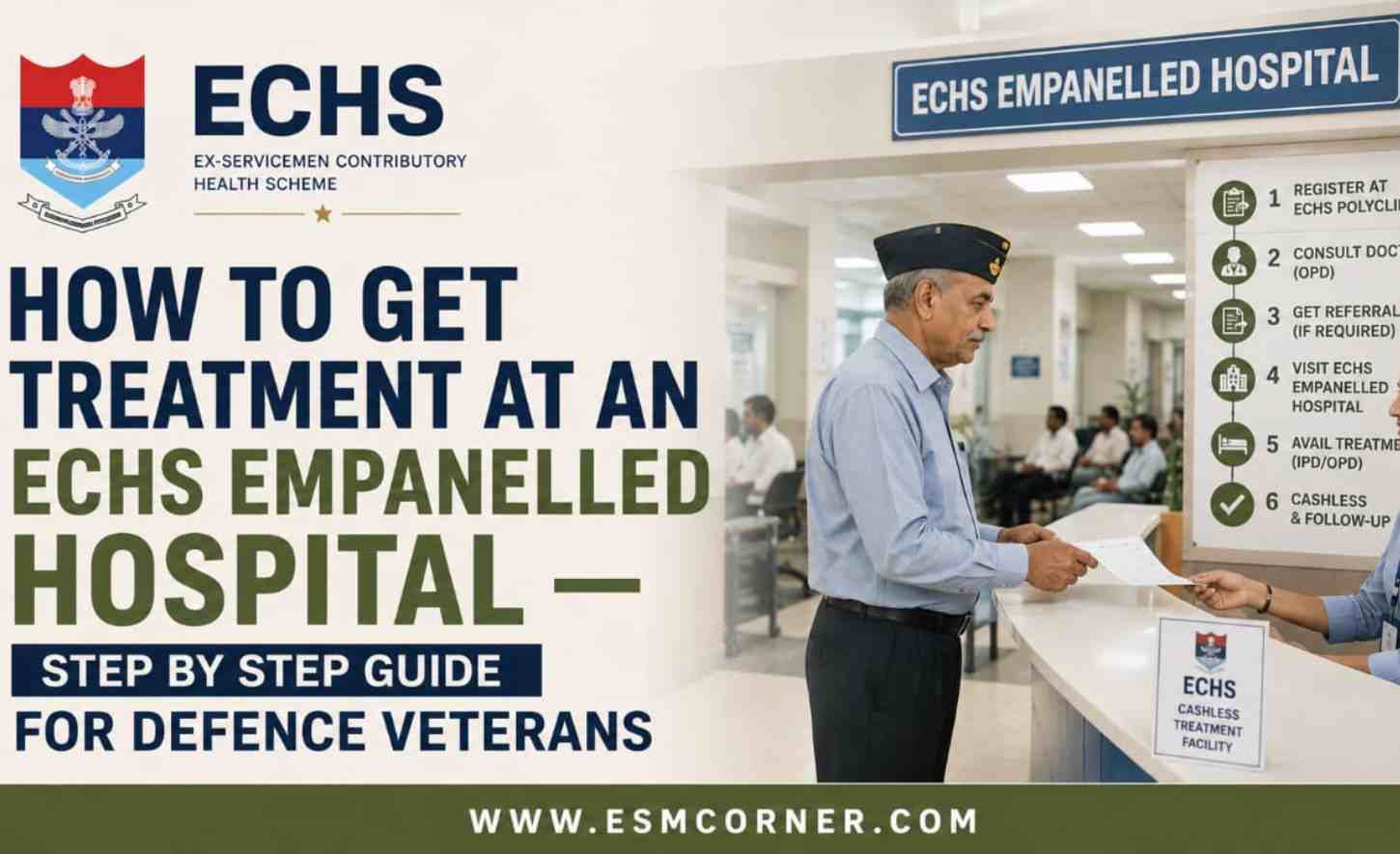
One of the most common problems that ECHS beneficiaries face is not about eligibility or Getting treatment at an ECHS empanelled hospital is simple — but only if you follow the correct steps. Many veterans go directly to a private hospital without a referral and end up paying from their own pocket. Others arrive with expired documents or the wrong referral type. These mistakes are completely avoidable.
This article explains the correct process from start to finish in plain simple language — based strictly on ECHS SOP April 2026.
Step 1 — Visit Your ECHS Polyclinic First
Always start at your ECHS Polyclinic. This is your first and most important step. Carry your original ECHS card, a photocopy, and any previous medical records.
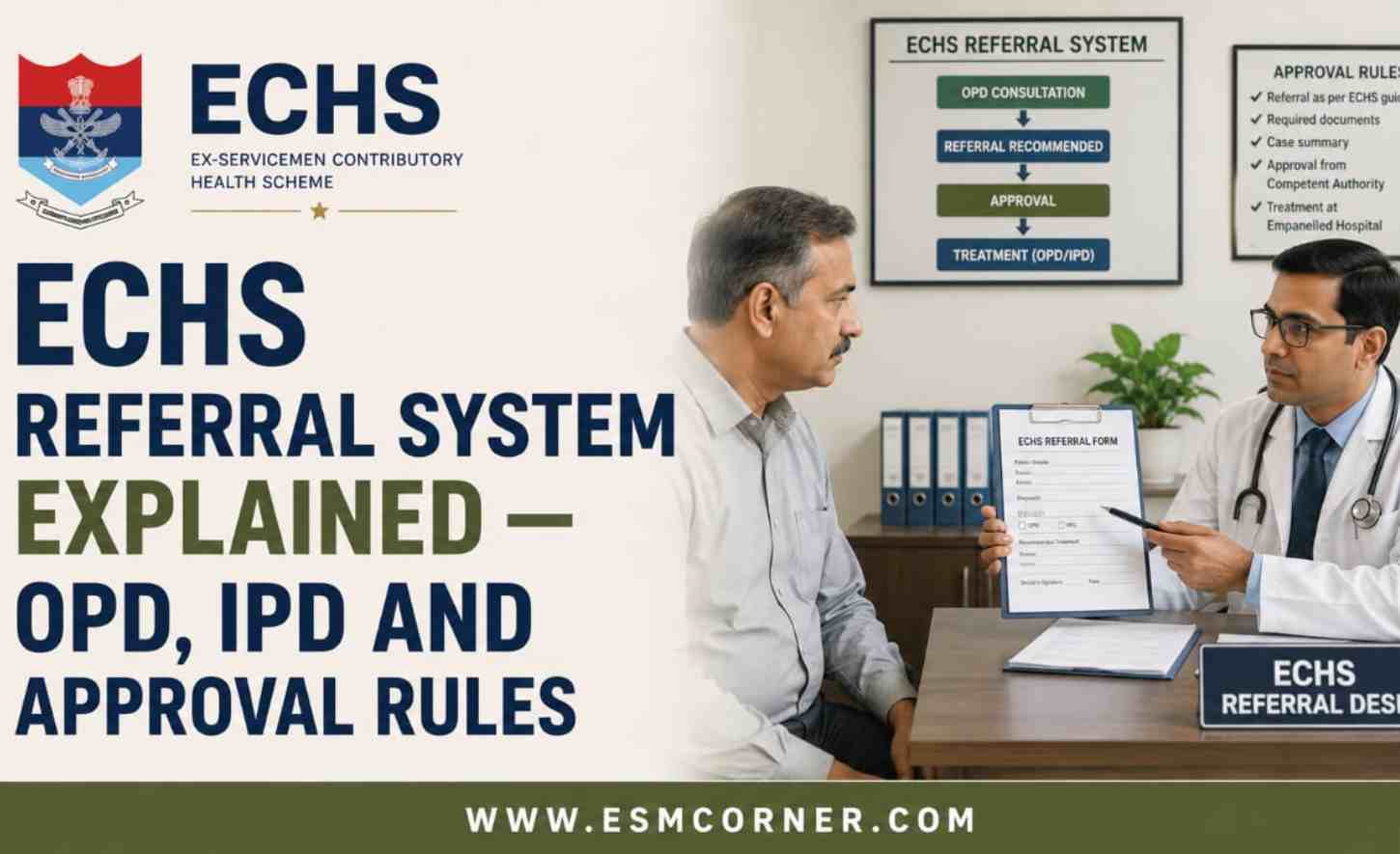
The Medical Officer at the polyclinic will examine you. If your condition needs specialist treatment, they will issue you a referral to an empanelled hospital.
Step 2 — Get the Correct Referral
There are two types of referrals:
OPD Referral — for outpatient consultation and tests. You visit the hospital and return home the same day. An OPD referral cannot be used for admission.
IPD Referral — for hospital admission. If the specialist recommends you stay in hospital for treatment or surgery, the polyclinic issues an IPD referral. Hospitals will not admit any ECHS patient without an IPD referral except in emergencies.
A standard referral is valid for three months. For cancer, dialysis, diabetes, hypertension, and cardiac patients it is valid for 180 days.
Step 3 — Report to the Empanelled Hospital
Carry your original ECHS card, photocopy, and referral form to the hospital. Go to the ECHS help desk or reception. Every empanelled hospital must have a designated Authorised Representative for ECHS patients — their contact details are displayed at the help desk and on the hospital website. Approach them if you need any help.
If there is any mismatch between your card details and referral, the hospital may ask for your Aadhaar card.
Step 4 — Specialist Consultation and Tests
After registration you meet the specialist. For tests recommended by the specialist:
- Listed tests up to Rs 3,000 — no separate approval needed
- Listed tests above Rs 3,000 — separate ECHS referral required
- Unlisted tests above Rs 5,000 — hospital gets online approval from ECHS on your behalf through ECHSF-U form on BPA portal
You do not need to run to the polyclinic for approvals. The hospital handles this.
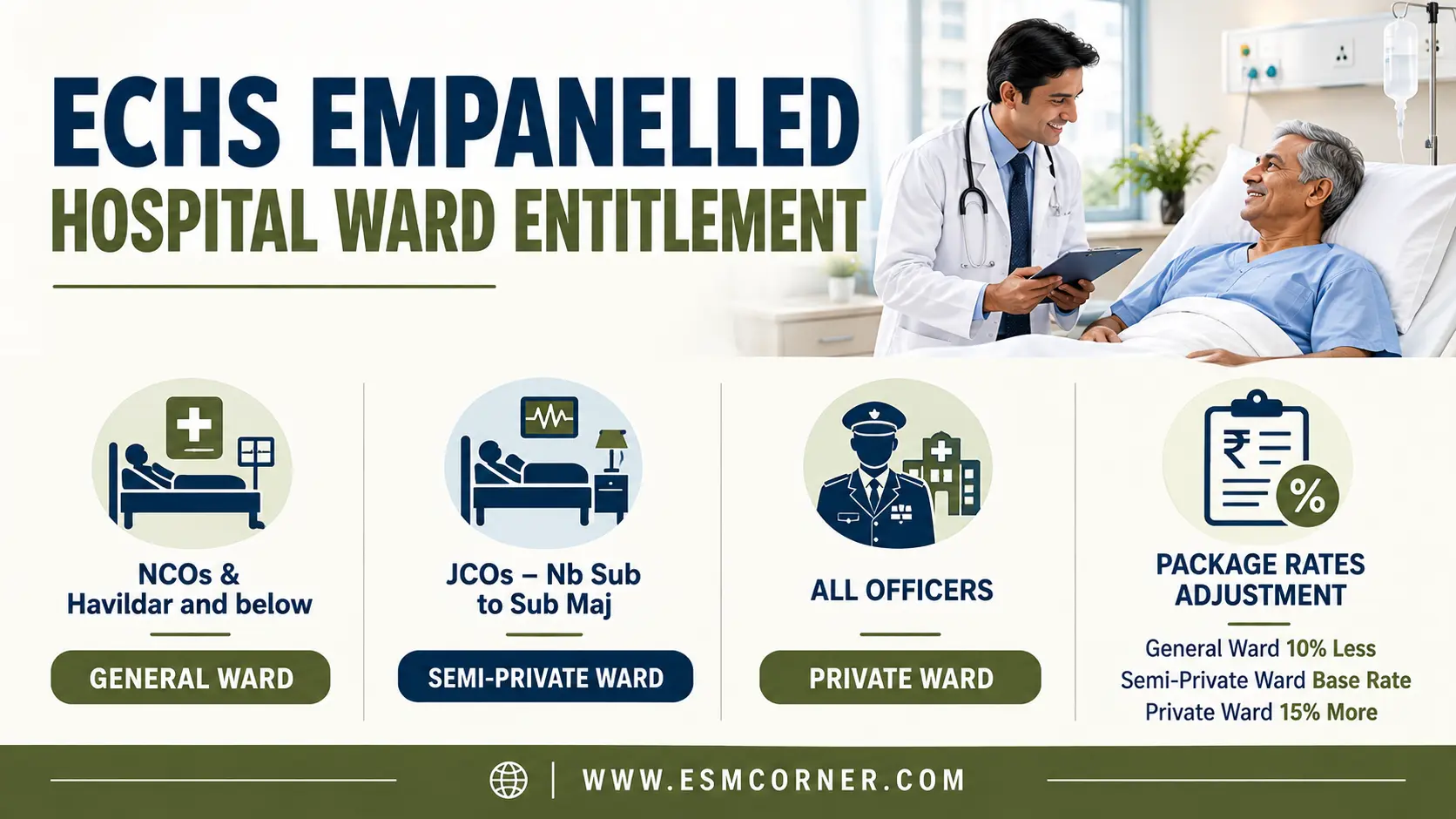
Step 5 — Admission and Ward Entitlement
If admitted, your ward is decided by your rank at retirement:
- NCOs and below — General Ward
- JCOs — Semi-Private Ward
- Officers — Private Ward
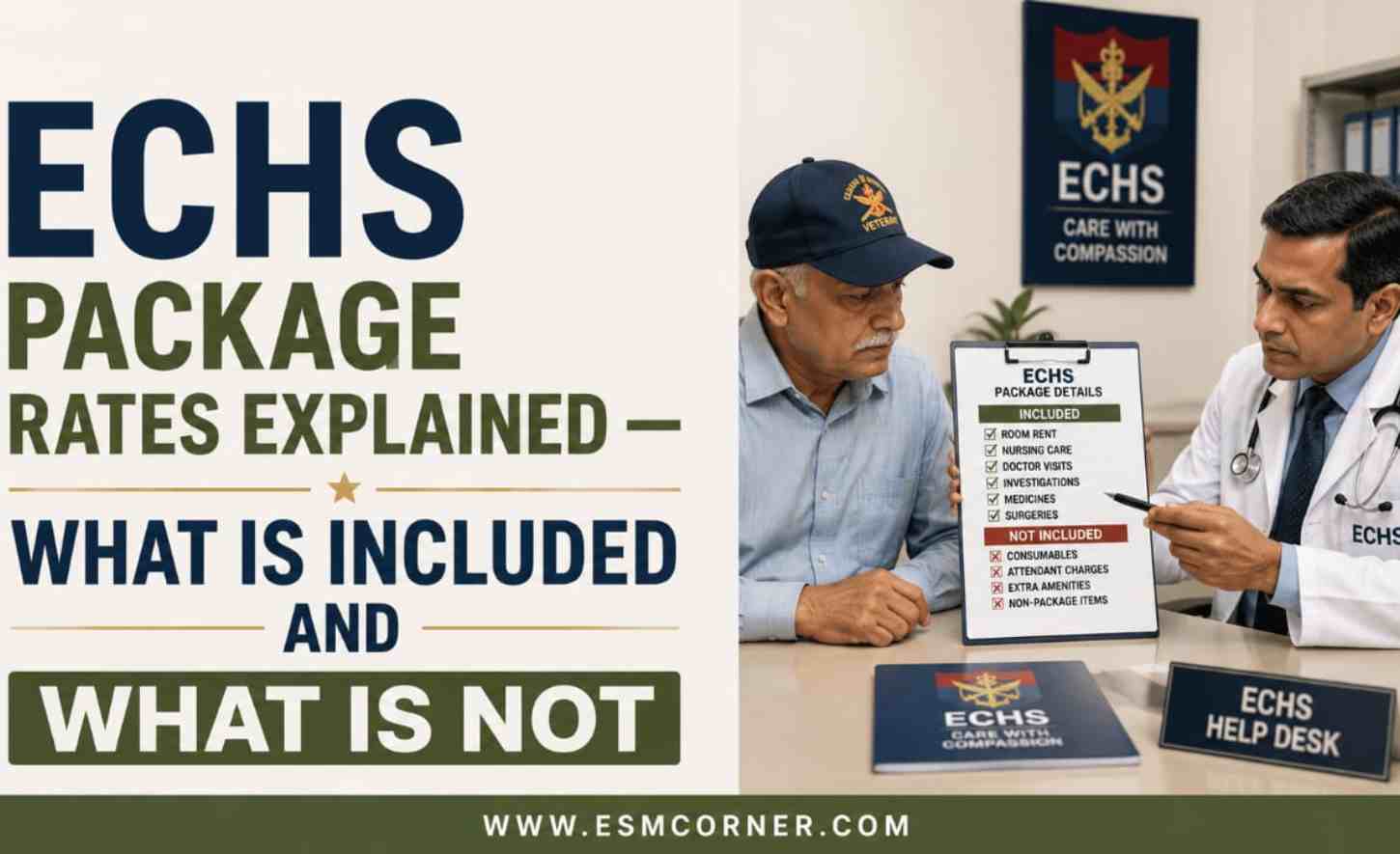
Room rent, diet, nursing, and standard ward facilities are all covered under your package. Nothing extra is charged for these.
Step 6 — Discharge
At discharge the hospital must:
- Give you a complete discharge summary
- Provide full copy of all medical records including reports and CDs — free of charge
- Issue seven days of medicines not exceeding Rs 2,000
- Take your feedback — this is mandatory
- Take a geo-tagged photo of you at discharge
For major surgeries, free follow-up consultation for up to seven days after discharge is included in the package.
Common Mistakes to Avoid
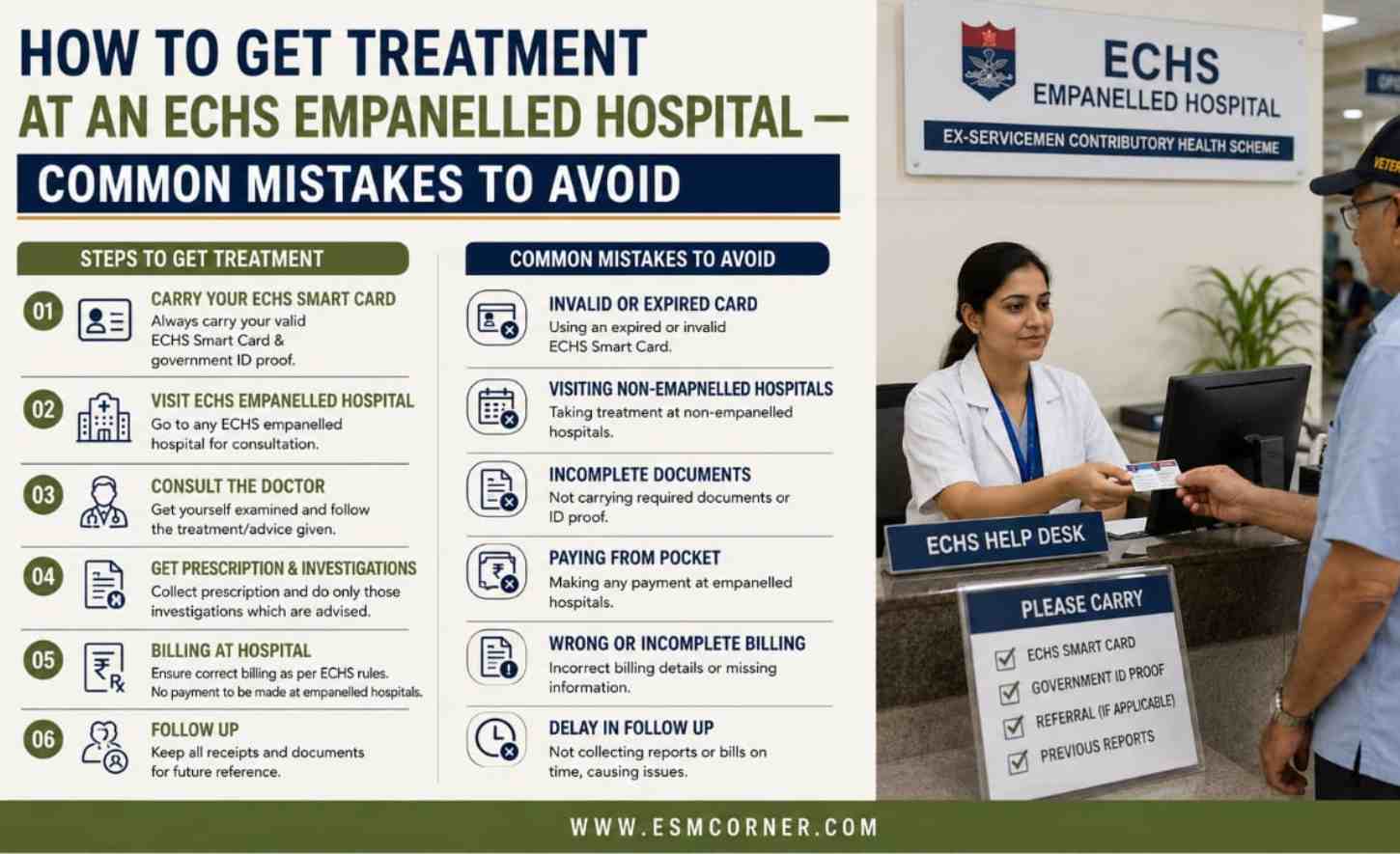
- Going to hospital without a polyclinic referral
- Using OPD referral to try to get admitted
- Paying for items the hospital cannot charge under ECHS
- Not collecting full medical records at discharge
- Not filling the feedback form at discharge
Conclusion
The ECHS treatment process is straightforward — polyclinic first, correct referral next, then hospital. Know your steps, carry your documents, and use your full ECHS benefit without paying a single rupee for covered treatment.
READ ALSO: WHAT IS ECHS AND WHO CAN USE IT? A SIMPLE GUIDE
Frequently Asked Questions
Q1. Can I go directly to an empanelled hospital without a polyclinic referral?
In routine situations no. You must first visit your ECHS polyclinic, get examined, and obtain a referral. The only exceptions are genuine emergencies and ECHS beneficiaries aged 70 and above who can visit for OPD consultation without a referral.
Q2. How long is a standard ECHS referral valid?
A standard referral is valid for three months from date of issue. For cancer, dialysis, diabetes, hypertension, and cardiac patients the referral is valid for 180 days. Always check the date before visiting the hospital.
Q3. What documents must I carry to the empanelled hospital?
Carry your original ECHS smart card, a photocopy of the card, and the referral form from your polyclinic. If there is any data mismatch between your card and referral, the hospital may also ask for your Aadhaar card.
Q4. Can an OPD referral be used for hospital admission?
No. An OPD referral is only for outpatient consultations and related tests. If admission is needed, a separate IPD referral must be obtained from the polyclinic. Hospitals will not admit any ECHS patient on an OPD referral.
Q5. What happens in a genuine medical emergency when I cannot get a referral?
In a genuine emergency you can be admitted to any empanelled hospital without a referral. The hospital raises an Emergency Intimation Report on the BPA portal within 48 hours of admission and attaches a geo-tagged photograph of the patient.
Q6. Who should I contact at the hospital if I face a problem?
Every empanelled hospital must have a designated Authorised Representative for ECHS beneficiaries. Their contact details are displayed at the ECHS help desk and on the hospital website. Contact this person if you face any issue during your visit or stay.
Q7. Do I need to get approval for every test the specialist recommends?
Not always. Listed tests up to Rs 3,000 need no approval. Listed tests above Rs 3,000 need an ECHS referral. Unlisted tests above Rs 5,000 need online approval which the hospital gets on your behalf. You do not need to visit the polyclinic for approvals.
Q8. What medicines will I get when discharged?
On discharge the hospital provides seven days of essential generic medicines not exceeding Rs 2,000. These are for continuity of treatment only. Supplements, vitamins, and tonics are not included. For ongoing medicines after this you collect prescriptions from your ECHS polyclinic.
Q9. Am I entitled to a copy of my medical records at discharge?
Yes. The hospital must provide one complete copy of all medical records at discharge including lab reports, X-rays, and CDs — completely free of charge. You also have the right to review your hospital bill before discharge.
Q10. Is the feedback form at discharge compulsory?
Yes. Feedback from the patient or their attendant is mandatory before discharge. It is a compulsory part of the hospital’s medical claim to ECHS. Fill it honestly at the time of discharge itself.
For daily defence updates, government notifications, recruitment alerts, welfare schemes, career opportunities, education news, and other important announcements, join our WhatsApp Community. Click here to join our WhatsApp Group.