
Why ECHS Bill Approval Works This Way
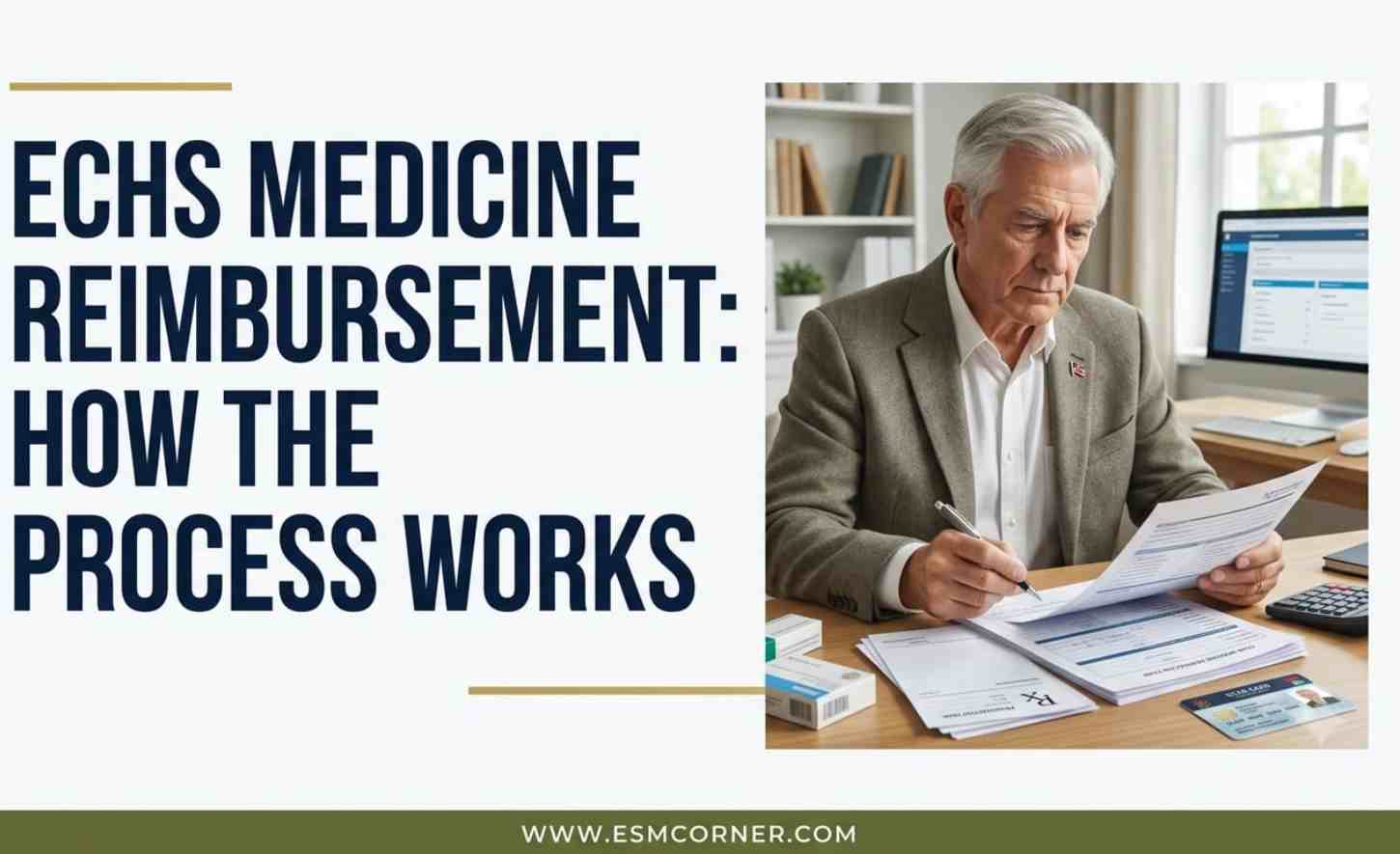
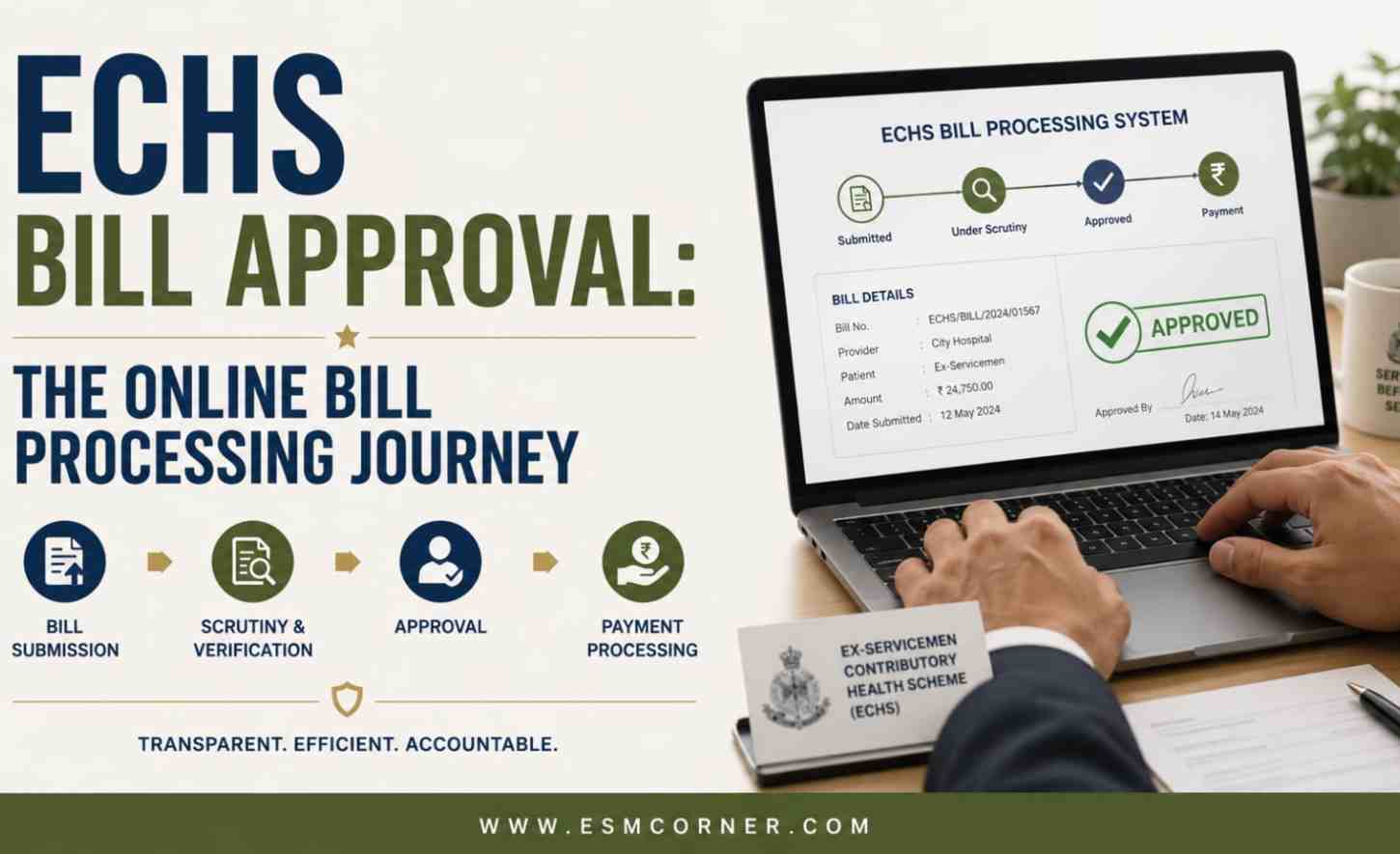
Since 1 April 2012, ECHS has processed empanelled hospital bills through an online system rather than a purely manual, paper-based one. The goal is to make payments to hospitals faster and more transparent, while still allowing proper medical and financial checks before any amount is released.
Step 1: Referral and Admission
Everything starts with a referral from your ECHS Polyclinic. Once the empanelled hospital accepts the referral and admits you, the hospital is expected to tell the Polyclinic about your admission.
Step 2: The Hospital Uploads Your Bill
When you’re discharged, the empanelled hospital scans and uploads a copy of your bill onto the ECHS online system. This is not optional paperwork on your end. It is the hospital’s responsibility, though it is worth confirming with the hospital billing desk that this has actually been done soon after discharge.
Step 3: Bill Processing Agency (BPA) Review
The uploaded bill goes to a Bill Processing Agency (BPA), which acts as the first line of checking. The BPA verifies the hard copy against the soft copy uploaded by the hospital, and prepares a worksheet with detailed reasons and a payment recommendation. If anything is unclear or missing, the BPA can raise questions, which the hospital or Polyclinic is expected to answer before the bill moves forward.
Step 4: Medical and Financial Checks at the Regional Centre
At the Regional Centre, the bill passes through two checks at the same time: Medical check — A designated medical officer reviews the case from a clinical standpoint, and gives recommendations along with reasons for any difference from the claimed amount. Financial approval — A Competent Financial Authority (CFA) at the Regional Centre approves bills up to a set value, factoring in any difference flagged during the medical check.
Only once both checks are cleared does the bill move toward payment.
Step 5: Escalation for Higher-Value Bills
Not every bill is cleared at the Regional Centre. Based on the claimed amount, bills are sent to different levels of Competent Financial Authority:
| Bill Value | Approving Authority |
| Up to Rs 1 lakh | Regional Centre (Director, CFA) |
| Rs 1 lakh to Rs 3 lakh | Central Organisation ECHS, Unit II (Deputy MD) |
| Rs 3 lakh to Rs 5 lakh | Central Organisation ECHS, Unit I (MD) |
Above Rs 5 lakh | Sent to Central Organisation ECHS with worksheets, for onward submission to the Ministry of Defence for sanction |
At each of these higher levels, the same pattern repeats: medical check and recommendation first, then financial approval, with any questions sent back down the chain for an answer before final sign-off.
Step 6: Sanction and Payment
Once a Competent Financial Authority approves the bill, whether at the Regional Centre or Central Organisation level, a sanction is issued, first as a soft copy and later formalised as a hard copy. Payment to the hospital is then processed through the Electronic Clearance Service (ECS) on a daily payment cycle, with payment details shared back with the Regional Centre.
What This Means If Your Claim Is Delayed
Because higher-value bills pass through more layers of checking, BPA, Regional Centre medical and financial review, and possibly Central Organisation review, larger claims naturally take longer to clear than small ones. If questions are raised at any stage, the process pauses until the hospital or Polyclinic responds, which can add to the timeline.
One useful protection exists here: if a claim isn’t recommended for approval at any middle stage, it cannot simply be rejected there. It must be sent to Central Organisation ECHS along with the detailed reasons for rejection, giving your case a final, higher-level review rather than a silent denial.
Final Thoughts
ECHS bill approval, as a journey, is designed with checks at multiple levels, clinical, financial, and administrative, before a hospital gets paid. As a beneficiary, you’re mostly a bystander to this process once your bill is uploaded, but knowing the stages helps you ask the right questions if a claim seems to be taking unusually long, and reassures you that a claim can’t simply be turned down without being escalated for a documented reason.
Stay updated on defence-related matters — join our WhatsApp group.
Frequently Asked Questions
Q1: What is the ECHS online bill processing system?
A1: It’s the system, in effect since 1 April 2012, through which empanelled hospitals upload beneficiary bills online for checking and approval, rather than relying purely on manual paper processing.
Q2: Who reviews my ECHS bill first?
A2: A Bill Processing Agency (BPA) verifies the hospital’s hard copy against the uploaded soft copy and prepares a recommendation worksheet before the bill goes further for approval.
Q3: Does every ECHS bill go to the Central Organisation?
A3: No. Bills up to a certain value are approved at the Regional Centre itself. Only bills above 1 lakh are sent to the Central Organisation, with the exact approving authority depending on the claimed amount.
Q4: Who approves bills above 5 lakh?
A4: These are processed by the Regional Centre along with the BPA’s worksheet and recommendations, then sent to Central Organisation ECHS for further submission to the Ministry of Defence for sanction.
Q5: What happens if there’s a query on my bill during processing?
A5: The concerned authority raises a question, which is sent back to the hospital or Polyclinic for a reply. The bill only moves forward once the question has been answered.
Q6: How is payment made to the hospital once a bill is approved?
A6: Payment is processed through the Electronic Clearance Service (ECS) to the hospital daily, once the Competent Financial Authority’s sanction is issued and confirmed, based on the current rules.
Q7: Can my claim be rejected without explanation at an intermediate stage?
A7: No. If a claim isn’t recommended for approval, it must be sent to Central Organisation ECHS with detailed reasons. It cannot simply be turned down at a middle level.
For more ECHS guides and policy updates, browse our ECHS section.