
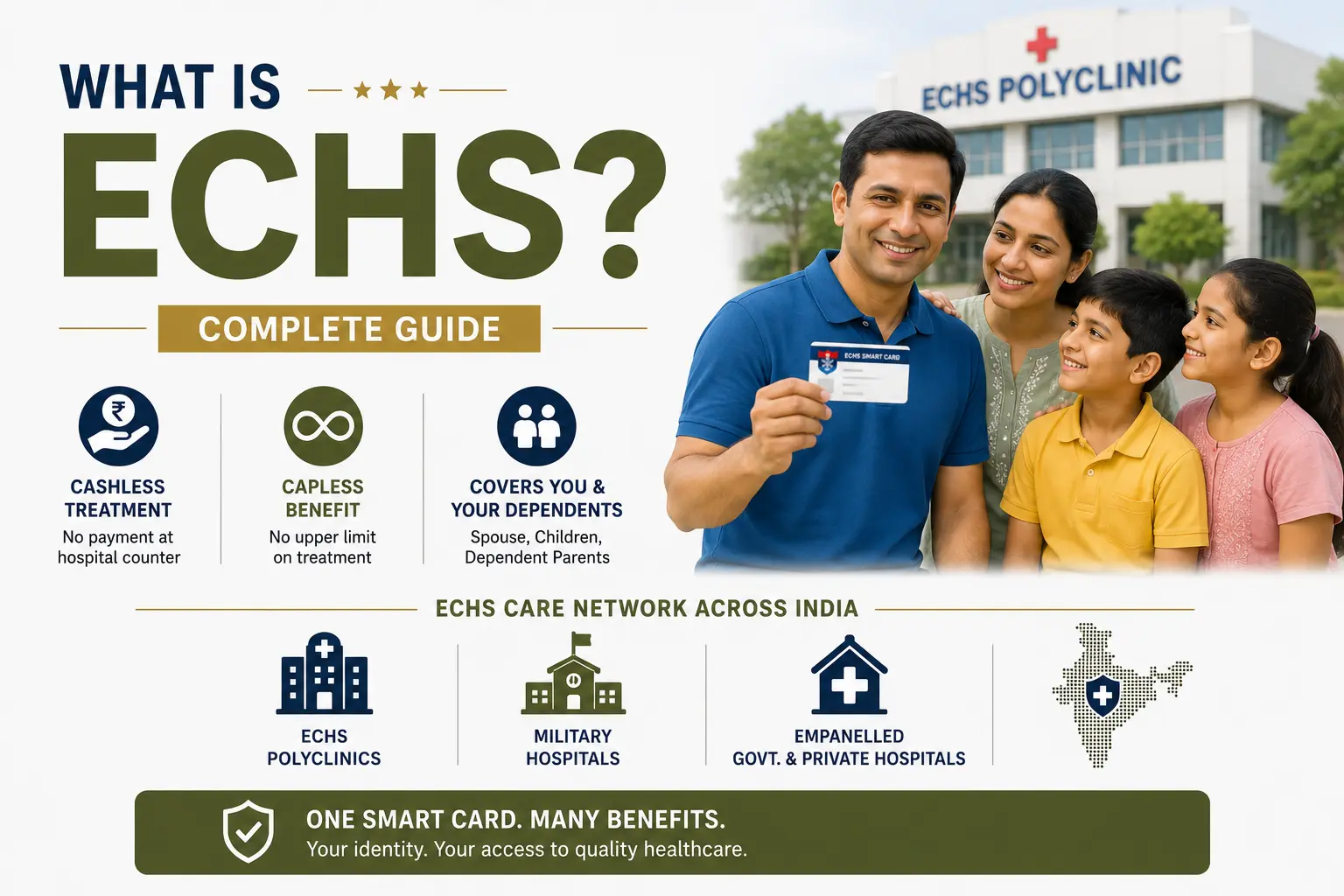
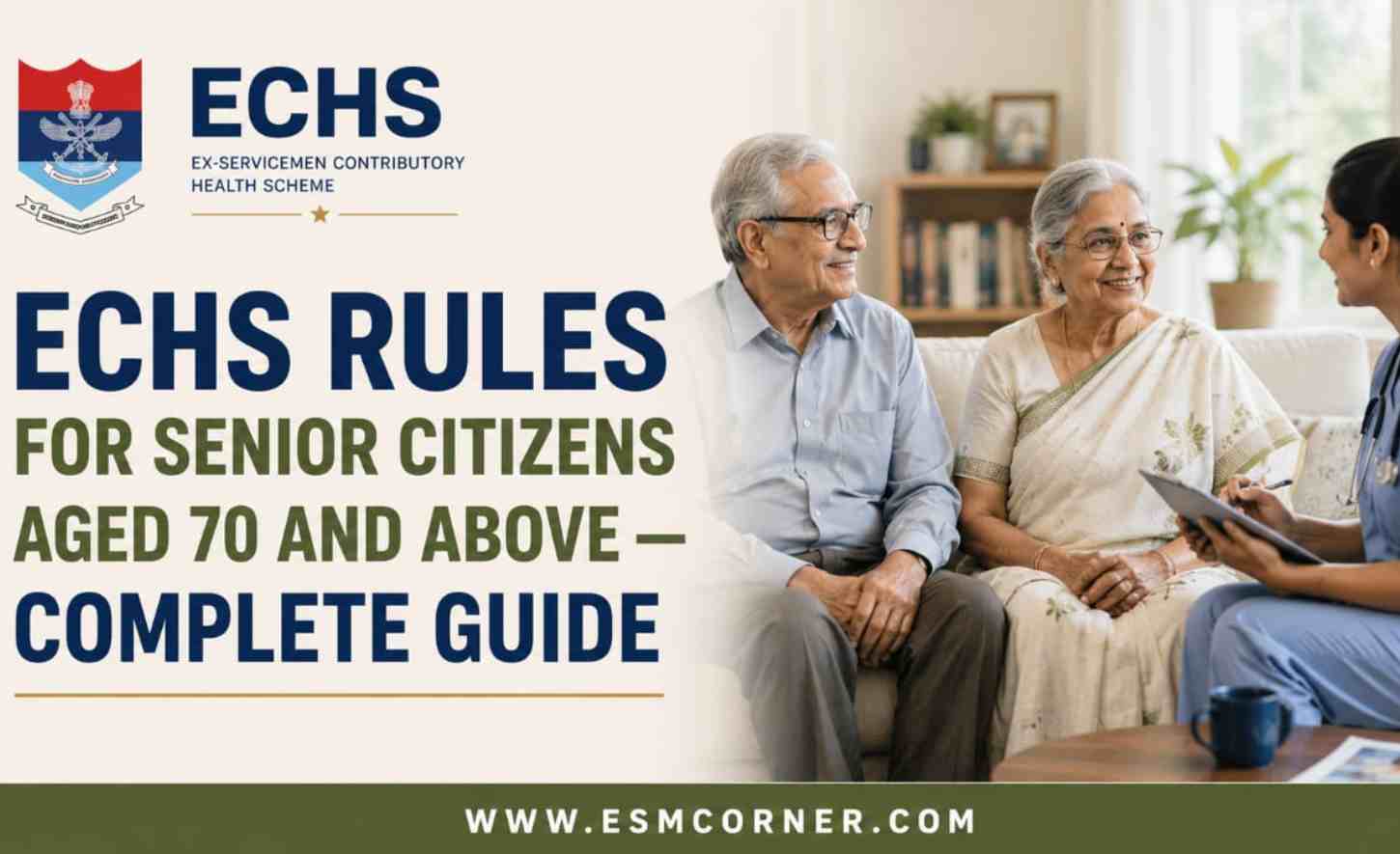
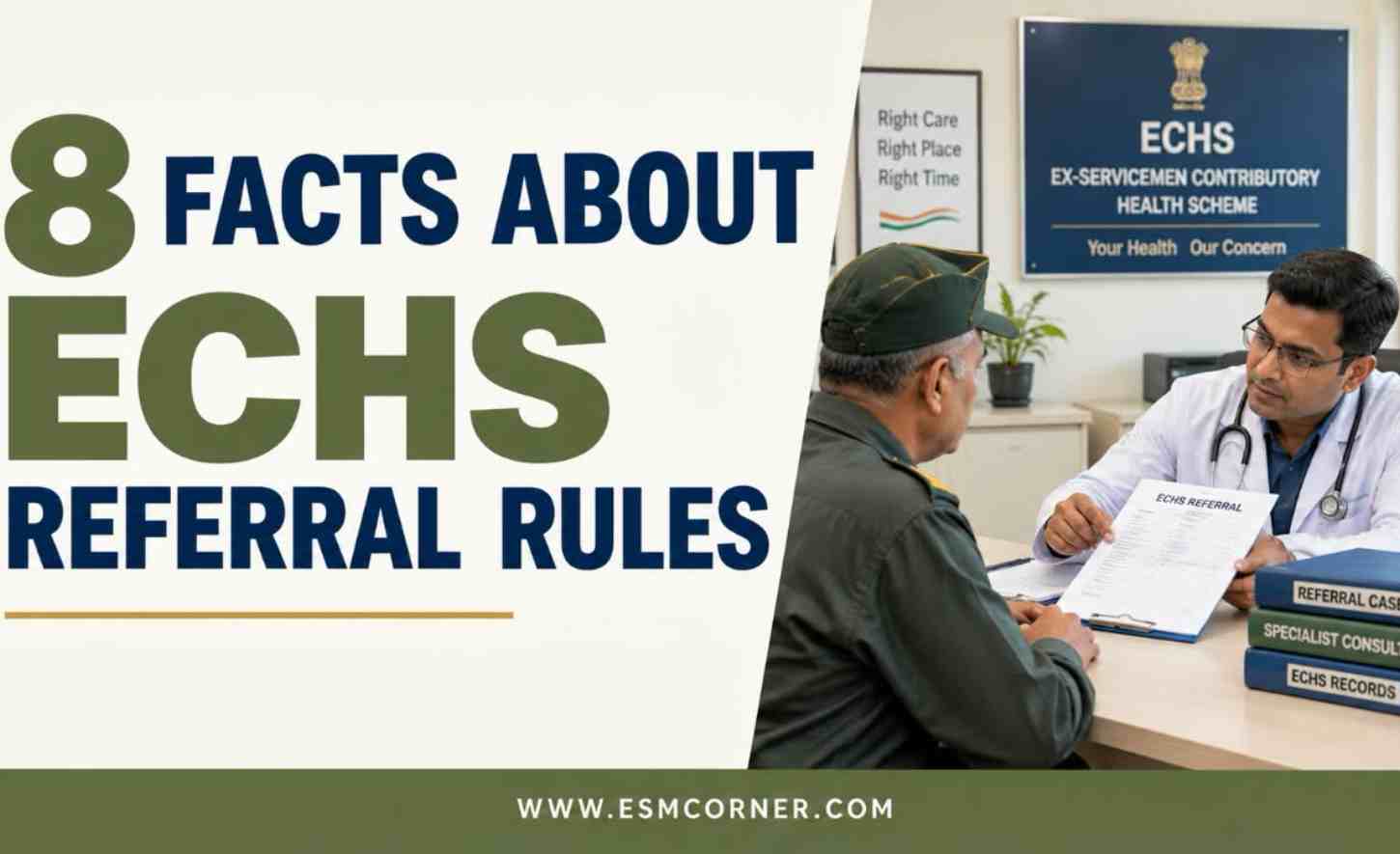
If you have retired from the Indian Army, Navy, or Air Force with a pension, then then you must understand what is ECHS? The health scheme made specifically for you. ECHS stands for Ex-Servicemen Contributory Health Scheme. It gives you cashless and capless medical treatment — meaning you pay nothing at the hospital counter, and there is no upper limit on the treatment you can receive.
This scheme covers you through a network of ECHS Polyclinics, Military Hospitals, and empanelled Government and Private Hospitals across India.
Who Can Use ECHS?
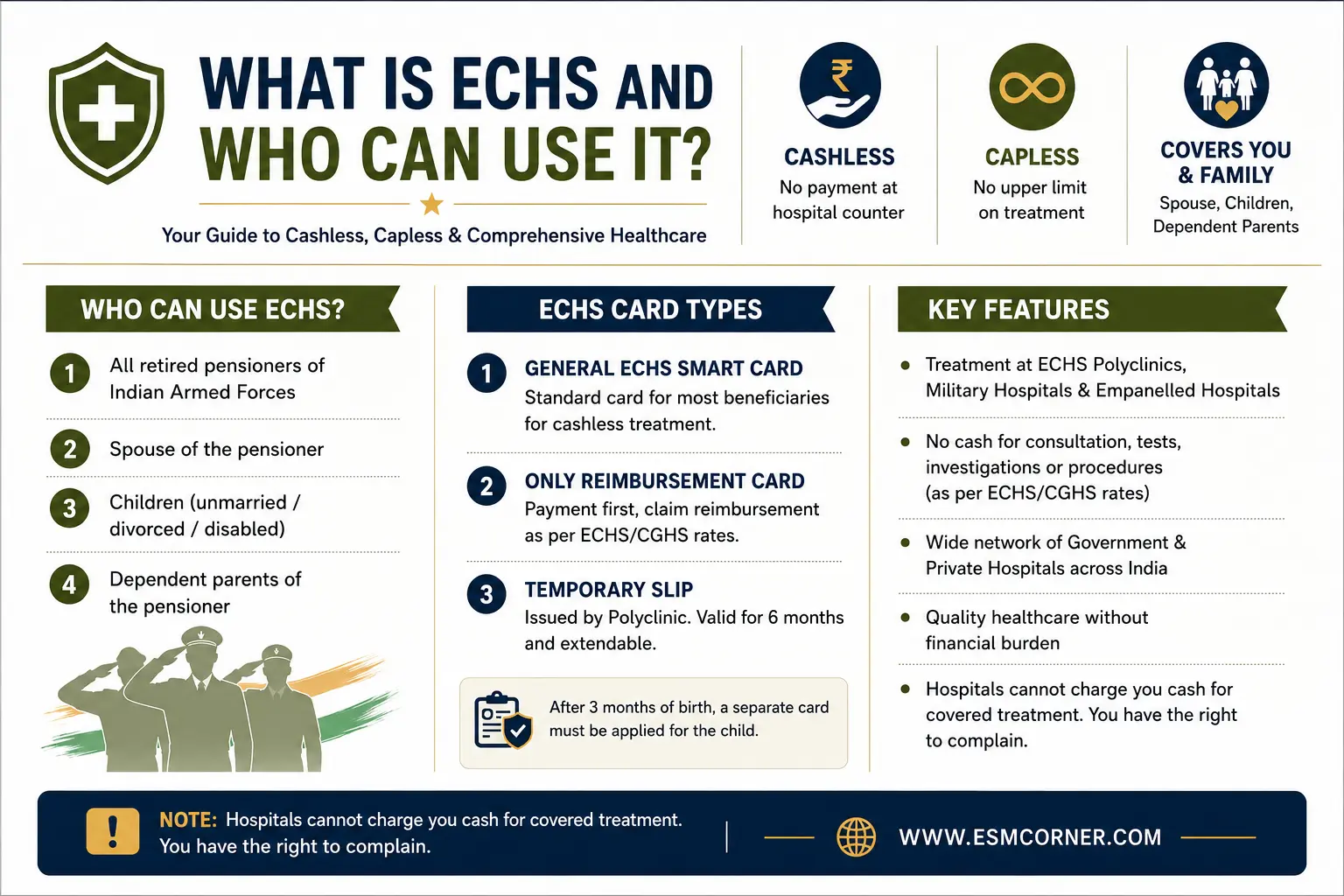
All retired defence pensioners of the Indian Armed Forces (Indian Army, Indian Navy, and Indian Air Force) are eligible. Their eligible dependents registered on the ECHS card are also covered. These include spouse, children, and dependent parents.
Retired veterans and their dependents together are called ECHS Beneficiaries.
One important rule — a newly born baby is automatically covered on the mother’s ECHS card for up to three months from birth. No separate card is needed. After three months, a separate card must be applied for.
Your ECHS Smart Card
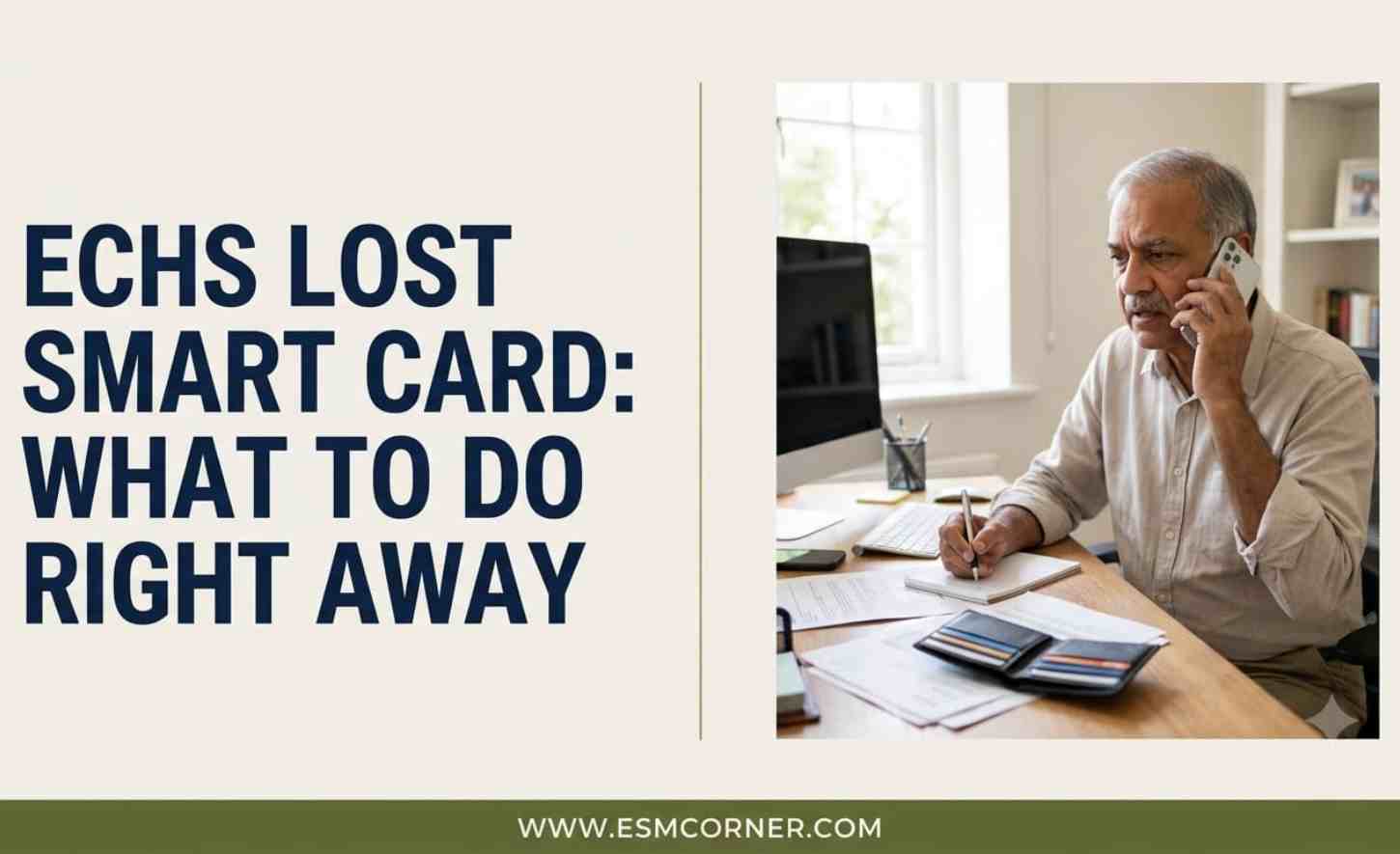
Every beneficiary is issued an ECHS Smart Card. This card is your identity and your authorisation for treatment. Always carry the original card and a photocopy when visiting any hospital or polyclinic.
Your card contains — your rank and name, date of birth, date of membership, a 12-digit card number with a regional prefix (for example Dehradun region cards begin with DH), your defence force, and your blood group.
Three Types of ECHS Cards
1. General 64 KB Smart Card This is the standard card issued to most beneficiaries. It entitles you to full cashless treatment at all empanelled hospitals. You pay nothing for covered procedures.
2. Only Reimbursement Card This card has the words “Only Reimbursement” printed on it. Holders of this card must pay the hospital first at CGHS/ECHS rates and then apply to ECHS for reimbursement. Cashless treatment is not permitted for this card type. This is a very important distinction — many hospitals mistakenly provide cashless treatment to reimbursement card holders, which is incorrect and causes billing problems.
3. Temporary Slip When you have applied for your ECHS card but not yet received it, the polyclinic issues a Temporary Slip. It is ink-signed by the Officer in Charge of the Polyclinic. This slip gives you all the same rights as the General Smart Card. It is valid for six months and can be extended every three months until your permanent card arrives.
The Golden Rule of ECHS
The ECHS SOP April 2026 states this clearly — no ECHS beneficiary will be charged any cash for any consultation, test, investigation, or procedure. The only exception is if the patient personally chooses a higher cost implant or procedure that is not covered under the ECHS/CGHS rate list.
If any empanelled hospital asks you to pay cash for a covered treatment, they are violating their agreement with ECHS. You have the right to complain to your polyclinic or the Regional Centre.
Common Mistakes to Avoid
- Not carrying a photocopy of your ECHS card
- Not checking whether your card says Only Reimbursement
- Letting the Temporary Slip expire without renewal
- Not applying for a separate card for your child after three months of birth
- Not knowing you can complain if a hospital charges you incorrectly
Conclusion
ECHS is a powerful health protection scheme for every defence veteran and their family. Know your card type, carry your documents, and understand your rights. No veteran should ever pay from their own pocket for treatment that ECHS covers.
Also Read: ECHS Beneficiary App – A Complete Guide to Services
FAQ : WHAT IS ECHS?
Q1. What does ECHS stand for and what does it offer?
ECHS stands for Ex-Servicemen Contributory Health Scheme. It provides cashless and capless medical treatment to all retired defence pensioners and their registered dependents through polyclinics, military hospitals, and empanelled government and private hospitals across India.
Q2. Who is eligible for ECHS benefits?
All retired pensioners of the Indian Army, Indian Navy, and Indian Air Force are eligible. Their registered dependents including spouse, children, and dependent parents are also covered under the scheme as long as they are enrolled on the ECHS card.
Q3. Is ECHS available for all ranks or only officers?
ECHS is available for all ranks without any difference. Whether you retired as a Sepoy, Havildar, JCO, or Commissioned Officer — if you are a pensioner, you and your family are equally entitled to ECHS benefits
Q4. What is the difference between the General card and the Only Reimbursement card?
The General card entitles you to full cashless treatment at empanelled hospitals. The Only Reimbursement card requires you to pay the hospital first at CGHS/ECHS rates and then claim reimbursement from ECHS. Hospitals sometimes incorrectly treat reimbursement card holders on cashless basis which is not permitted.
Q5. What is a Temporary Slip and is it valid for treatment?
A Temporary Slip is issued by the polyclinic to beneficiaries waiting for their permanent ECHS card. It is ink-signed by the Officer in Charge and gives the holder all the same treatment rights as the General Smart Card. It is valid for six months and can be extended in three-monthly blocks.
Q6. Does a newborn baby need a separate ECHS card?
No. For the first three months after birth, a newborn is automatically covered under the mother’s ECHS card. No separate card is required during this period. After three months, a separate ECHS card must be applied for the child to continue coverage.
Q7. Can a hospital charge an ECHS beneficiary cash for covered treatment?
No. As per ECHS SOP April 2026, no beneficiary should be charged cash for any covered consultation, test, or procedure. If a hospital charges you incorrectly, you should immediately report the matter to your ECHS Polyclinic or the Regional Centre ECHS.
Q8. Can dependents use the ECHS card without the veteran being present?
Yes. Registered dependents carry their own dependent ECHS card showing their relationship to the veteran. They can visit the polyclinic and empanelled hospitals independently. The veteran does not need to be physically present for dependent family members to receive treatment.
Q9. What details should I verify when I receive my ECHS card?
Verify your name, rank, date of birth, date of membership, blood group, defence force, and the regional prefix on your card number. If any detail is wrong, report it to your polyclinic immediately for correction before using the card for treatment.
Q10. Where can I get updated information about ECHS policies?
You can visit the official ECHS website at www.echs.gov.in for policy updates. For region-specific queries, contact your nearest ECHS Regional Centre or the Officer in Charge of your nearest ECHS Polyclinic











Sir mera canteen smart card gum ho gya uske liye kya karna hoga plz reply me
Sir rajasthan police Sub inspector ke liye army graduation certificate valid hai kya