
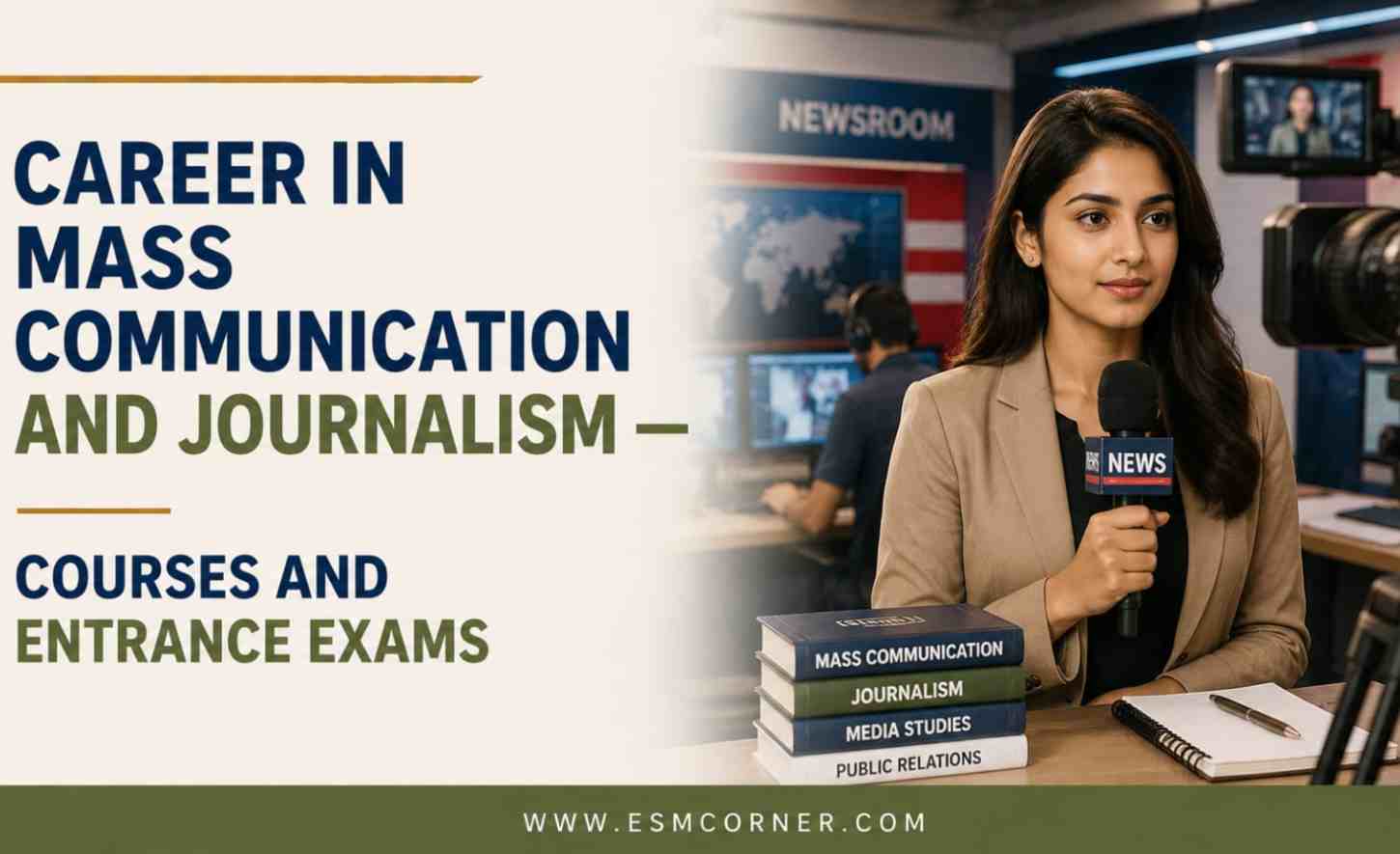
Many high school students love writing stories, speaking on stage, taking photos, making videos, or sharing opinions on social media. However, after completing Class 12, many feel confused about choosing a Career in Mass Communication. Parents and students often wonder whether they should study Journalism, Digital Media, Public Relations, Advertising, or Video Creation. Is media only about reading news on television, or is there a much bigger world behind the screen?
Today, the media industry has expanded far beyond traditional newspapers and television news channels. Modern media includes digital news portals, YouTube channels, social media management, podcasts, filmmaking, corporate communication, and content marketing. If you love sharing ideas with people, this sector offers endless creative career paths.
This Media Career Guide covers Mass Communication Courses, Journalism Courses After 12th, entrance exams, required skills, career opportunities, and future scope. Read this comprehensive Journalism Career Guide to decide if this field matches your personal strengths and goals.
Understanding the Basics: Mass Communication vs Journalism
A common confusion among students is whether Mass Communication and Journalism mean the same thing. While both fields deal with sharing information, their actual scope and focus are quite different.
Mass Communication is a broad field that teaches you how to send messages to large audiences through various platforms. It includes television, radio, newspapers, movies, advertising, public relations, digital media, and social media.
Journalism is a specific branch within mass communication focused on gathering, verifying, and reporting true news events to the public.
- Mass Communication Scope: Covers news, entertainment, creative writing, design, marketing, and media management.
- Journalism Scope: Focuses specifically on news reporting, investigating issues, interviewing people, and writing articles.
- Career Goal of Mass Communication: Entertaining, educating, marketing, or informing the public through various formats.
- Career Goal of Journalism: Informing citizens about current events, holding powerful institutions accountable, and serving society.
Popular Mass Communication Courses After 12th
After passing Class 12 from any stream (Arts, Commerce, or Science), you can join undergraduate Mass Communication Courses or Journalism Courses After 12th.
Undergraduate Degrees (3–4 Years)
- BA in Journalism and Mass Communication (BAJMC): The most popular degree offering balanced knowledge of news writing, broadcasting, and media production.
- Bachelor of Journalism (BJ): Focuses heavily on news gathering, reporting techniques, editing, and media ethics.
- Bachelor of Mass Media (BMM): Teaches advertising, public relations, film editing, and media marketing alongside journalism.
- B.Sc. in Electronic Media: Focuses on technical skills like camera operation, video editing, sound recording, and radio production.
Diploma & Postgraduate Options
- Diploma in Journalism / Digital Media: Short 1-year programs designed for fast skill development in practical tasks.
- MA in Mass Communication / Journalism: A 2-year postgraduate degree for students wanting specialized roles, research, or teaching positions.
Entrance Exams for Media Courses
Most top colleges and universities conduct national or university-level Journalism Entrance Exams to test basic general awareness and language abilities.
- General Awareness: Questions on current national events, basic world history, geography, and popular political developments.
- Language Abilities: Testing English or regional language grammar, reading comprehension, vocabulary, and sentence construction.
- Logical Reasoning: Simple analytical puzzles, critical thinking tasks, and basic pattern recognition tests.
- Media Knowledge: Basic awareness of major news stories, popular advertising campaigns, social platforms, and media trends.
Essential Skills for a Successful Media Career
Building a strong career in media requires combining creative thinking with practical technical skills.
Critical Skills Every Student Needs
- Strong Writing: Expressing complex thoughts using simple, clear, and engaging language.
- Public Speaking & Confidence: Presenting ideas clearly on camera, stage, or during public interviews.
- Curiosity & Research Skills: Asking smart questions, checking facts carefully, and finding truth behind rumors.
- Adaptability & Tech Skills: Learning new social media tools, basic photo/video editing, and digital software quickly.
Diverse Career Options in Mass Communication
Mass communication provides varied career paths depending on your personal interests and creative talents.
1. Digital Media and Online Journalism
Digital media is currently the fastest-growing sector. A Digital Media Career involves writing news articles for websites, creating short online videos, managing web content, and using SEO tools to reach larger online audiences.
2. Television and Print Media
Traditional media remains strong and reliable. In television, you can work as a news anchor, video journalist, producer, or scriptwriter. In print media, you can work as a reporter, sub-editor, feature writer, or photojournalist.
3. Advertising and Public Relations
A Public Relations Career involves managing a company’s public reputation through press releases, corporate events, and crisis management. Advertising focuses on creating catchy campaign ideas, writing scripts, and designing ads that persuade consumers.
4. Content Creation and Social Media
If you love storytelling on Instagram, YouTube, or LinkedIn, this domain is ideal. Companies hire social media managers, content strategists, scriptwriters, and community leads to build brand awareness.
5. Radio and Podcasting
With audio content growing rapidly through Spotify, Apple Podcasts, and FM radio, radio jockeying (RJing), audio editing, podcast production, and voiceover work offer vibrant career options.
Quick Comparison of Media Pathways
| Career Option | Best For | Future Scope | Key Point |
| Digital Journalism | Fast-paced writers & curious minds | Very High growth across web platforms | Requires speed, fact-checking, and basic SEO skills |
| Public Relations (PR) | Excellent networkers & communicators | Steady growth in corporate sectors | Focuses on building brand image and managing reputation |
| Content Creation | Creative storytellers & video creators | Massive demand in digital marketing | Combines creativity, visual design, and social strategy |
| Television & Radio | Confident speakers with strong presence | Stable demand in regional & national media | Demands confidence, clear voice, and camera presence |
| Advertising | Out-of-the-box thinkers & designers | High demand across business agencies | Focuses on creative ideas that persuade buyers |
Practical Steps to Prepare During School and College
Starting early gives you a significant advantage when applying for jobs or higher education.
- Start Writing Daily: Keep a daily journal, write short blog posts, or post book reviews on social media to build habit and clarity.
- Read Newspapers and Quality Portals: Stay updated on current affairs by reading credible newspapers or listening to news podcasts daily.
- Practice Public Speaking: Participate in debate competitions, school events, or record short video speeches to overcome camera fear.
- Build a Digital Portfolio: Save your written articles, videos, podcasts, and graphics into an online portfolio link to show employers.
- Complete Internships Early: Do short internships at local news outlets, digital agencies, or NGOs during college vacations to gain real work experience.
Common Myths vs Reality
- Myth: Mass communication is only about becoming a famous TV news anchor.
- Reality: TV anchoring is a small part; thousands of media professionals work in PR, digital content, editing, design, and advertising.
- Myth: You need perfect fluency in English to enter media.
- Reality: Regional language media (Hindi, Tamil, Marathi, Bengali, etc.) is growing rapidly and offers massive career opportunities.
- Myth: AI tools will replace human media professionals completely.
- Reality: AI helps with simple tasks, but human creativity, real interviews, critical thinking, and storytelling remain irreplaceable.
Is Mass Communication the Right Career Choice for You?
Ask yourself these practical questions before making a final decision:
- Do you enjoy asking questions and finding out why events happen?
- Can you explain ideas clearly to others using words, visuals, or videos?
- Are you comfortable meeting new people from different backgrounds?
- Do you enjoy staying updated on current events, culture, and technology?
If you answered “Yes” to most of these questions, a career in media will bring you high personal satisfaction and creative fulfillment.
Conclusion
Choosing a career in Mass Communication and Journalism is an exciting path for students who love communication, storytelling, creativity, and learning about society. Modern media offers diverse opportunities across digital journalism, social media, public relations, advertising, radio, and television.
To succeed in this fast-evolving industry, focus on developing real practical skills—like clear writing, audio-video editing, research, and public speaking—rather than relying solely on classroom theory. Choose this career path based on your genuine curiosity, creative passion, and willingness to learn continuous digital skills. If you stay curious, ethical, and adaptable, the media industry offers a deeply fulfilling and impactful lifetime career.
READ ALSO: CAREER OPTIONS AFTER 12TH SCIENCE (PCM) -ENGINEERING & BEYOND
Frequently Asked Questions
1. Can I pursue Mass Communication after Class 12 Science or Commerce?
Yes. Students from any educational stream (Arts, Science, or Commerce) can pursue undergraduate mass communication and journalism courses after completing Class 12 from a recognized educational board.
2. Is there a big difference between Journalism and Mass Communication?
Yes. Journalism focuses strictly on news gathering, factual reporting, and editorial writing. Mass Communication is a broader field covering news, advertising, public relations, filmmaking, and social media.
3. Do I need expensive camera equipment to start learning?
No. You do not need expensive DSLR cameras to begin. A basic smartphone with a decent camera and internet connection is sufficient to learn photography, video editing, and writing.
4. Are regional language media careers growing in India?
Yes. Regional language digital news portals, YouTube channels, FM radio stations, and newspapers are growing extremely fast, creating thousands of job opportunities for skilled local language communicators.
5. What subjects should I prepare for mass communication entrance exams?
Focus on current affairs, basic Indian history and polity, general English grammar, reading comprehension, basic logical reasoning, and general media awareness.
6. Can I build a career as a freelancer in media?
Yes. Many media professionals work as freelance writers, video editors, social media managers, voiceover artists, and photographers for global clients while working from home.
7. Is public relations (PR) a good career option for mass media students?
Yes. Public Relations offers steady growth and excellent creative opportunities in corporate companies, PR agencies, entertainment firms, and non-profit organizations.
8. Will artificial intelligence (AI) eliminate journalism jobs?
AI assists with basic research and transcription, but cannot replace human field reporting, live interviewing, critical thinking, empathetic storytelling, and ethical investigation.
For daily defence updates, government notifications, recruitment alerts, welfare schemes, career opportunities, education news, and other important announcements, join our WhatsApp Community. Click here to join our WhatsApp Group.