
Source: SC
War widows carry a grief no family should have to bear, and the pension system is meant to provide real support — not another battle to fight. Special family pension war widows claims are denied or misclassified more often than they should be. This guide explains the eligibility rules and what to do if a genuine claim is wrongly denied.
Special Family Pension War Widows: Understanding the Category Structure
There are multiple tiers of benefit that may apply: Special Family Pension (for deaths attributable to or aggravated by service, generally 60% of last pay), and Liberalised Family Pension (for battle casualties and war-like operations, generally equal to full last drawn pay).
A Common, Costly Misclassification
One of the most frequent problems widows face is a soldier’s death being initially classified as a lower category than it should be — treated as a “physical casualty” (Special Family Pension) when the actual circumstances warrant treatment as a “battle casualty” (Liberalised Family Pension).
Union of India v. Saroj Devi (2024 INSC 921)
In this case, the deceased — Naik Inderjeet Singh of the Indian Army, posted under Operation Rakshak — suffered a fatal cardiac arrest while on an Area Domination Patrol near the Line of Control on 23 January 2013. His death was initially classified as a “battle casualty” but later reclassified as a “physical casualty,” and his widow was granted Special Family Pension but denied the higher Liberalised Family Pension.
She fought this before the Armed Forces Tribunal, which ruled in her favour in August 2019. When the government appealed to the Supreme Court, a Bench of Justice Abhay S. Oka and Justice Augustine George Masih dismissed the appeal and imposed costs of Rs 50,000 on the Central Government.
The 37-Year Delay Case
The widow of Naik Dharambir, who died of Hepatitis in 1987 with his death certificate noting his condition was aggravated by military service, was initially granted only Ordinary Family Pension. It was only 30 years later, in 2017, that she discovered her actual entitlement. In January 2025, the AFT’s Chandigarh bench granted her the correct pension retroactively, with full arrears from her
husband’s death, and imposed Rs 2 lakh in exemplary costs on the responsible authorities.
What Determines the Correct Classification
The Court of Inquiry’s findings, and specifically whether death is attributable to or aggravated by military service, form the foundation of eligibility.
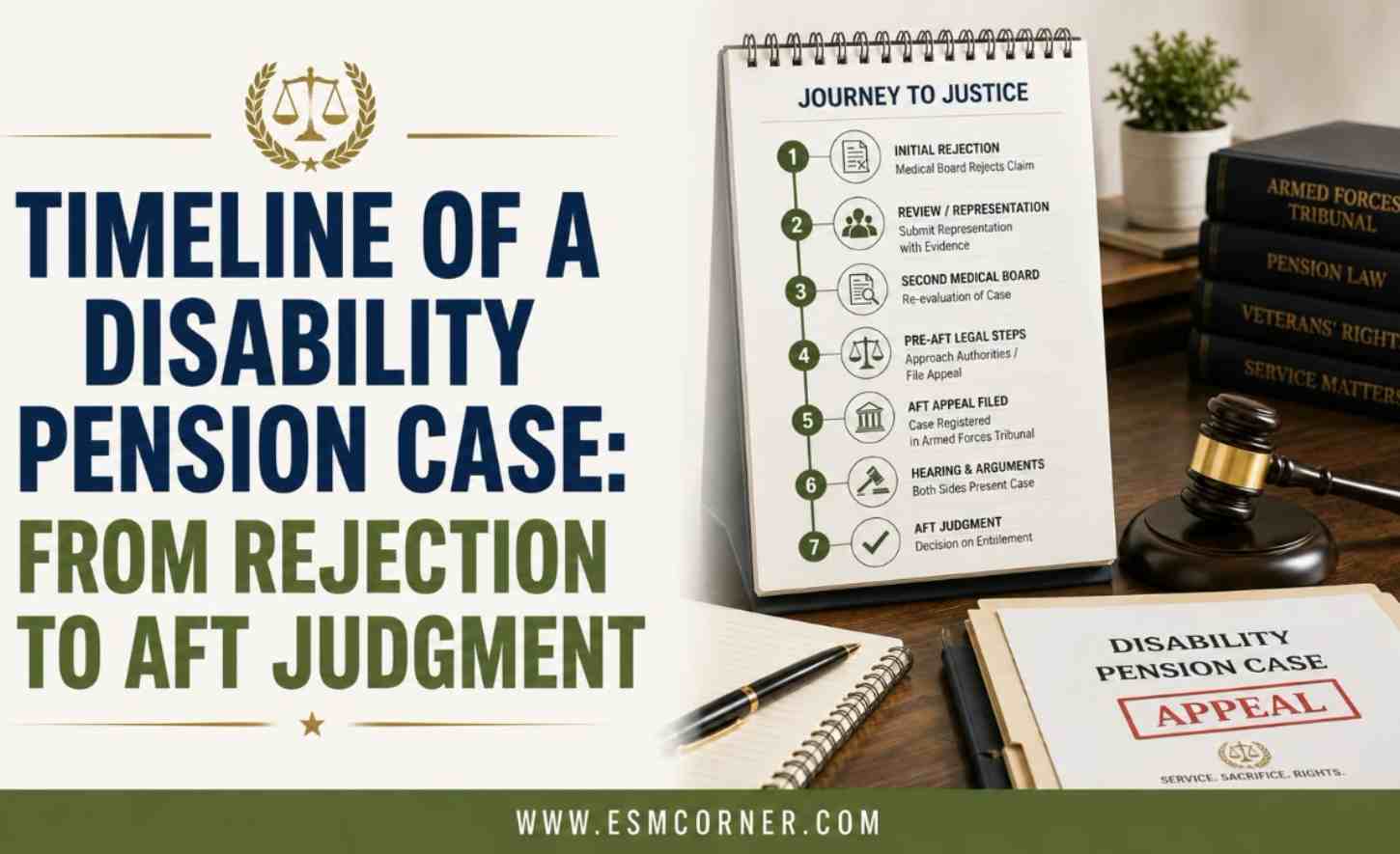
Step 1: Review the Original Court of Inquiry Findings
Check whether it clearly attributed the death to military service, and compare this against your actual pension category.
Step 2: Don’t Accept a “Time-Barred” Rejection Without Question
Where you only recently discovered your entitlement, this circumstance has succeeded in overcoming time- bar objections.
Step 3: Pursue the Claim Formally
Submit a documented claim citing the Court of Inquiry findings and the correct applicable category.
Step 4: Escalate to the AFT
Pursuing a denied or misclassified claim before the Armed Forces Tribunal has repeatedly succeeded, sometimes with cost penalties.
The Role of the Record Office in Initial Classification
The initial classification of a death — whether it’s recorded as a battle casualty, a physical casualty, or something else entirely — typically originates with the Record Office processing the Court of Inquiry findings, well before a widow ever sees a formal pension decision. This means the earliest, most consequential classification decision often happens without the family having any real visibility into how or why it was made.
If you’re navigating a fresh case, it’s worth requesting a copy of the original Court of Inquiry report and the Record Office’s initial classification note as early as possible, since these documents form the factual foundation that any later dispute will need to engage with directly.
Final Thoughts
War widows deserve both the correct pension category and a process that treats their claim with dignity. Courts have repeatedly ruled in favour of widows facing wrongful denial or misclassification. If you’re navigating a Special Family Pension denial or misclassification, visit ESM Corner’s Legal Help
ask your questions.
If you want help with your specific case, get in touch with ESM Corner’s Legal Help team for guidance tailored to your situation.
Frequently Asked Questions
Q1: What are the main pension categories that can apply to a war widow?
A1: Special Family Pension applies to deaths attributable to or aggravated by service, generally 60% of last pay; Liberalised Family Pension applies to battle casualties and war-like operations, generally equal to full last drawn pay.
Q2: What’s the most common problem widows encounter with classification?
A2: A soldier’s death being initially classified as a lower category than it should be — treated as a “physical casualty” when the actual circumstances genuinely warrant treatment as a “battle casualty.”
Q3: What happened in the Saroj Devi Supreme Court case?
A3: Naik Inderjeet Singh’s death was reclassified from battle to physical casualty, leading to denial of Liberalised Family Pension; the AFT ruled for the widow, and the Supreme Court upheld this on the government’s appeal, imposing Rs 50,000 in costs.
Q4: What happened in the 37-year delay case?
A4: The widow of Naik Dharambir, who died of Hepatitis aggravated by service in 1987, was initially given only Ordinary Family Pension; she discovered her actual entitlement 30 years later, and the AFT Chandigarh bench corrected this in 2025 with full arrears and Rs 2 lakh in costs.
Q5: What actually determines the correct pension classification?
A5: The Court of Inquiry’s findings, and specifically whether death is attributable to or aggravated by military service, form the foundation of eligibility for a given category.
Q6: What if I only recently discovered I might be entitled to a higher category?
A6: This exact circumstance has succeeded in overcoming time-bar objections in reported cases, so a late discovery doesn’t automatically mean the claim is out of time.
Q7: What’s the first document I should try to obtain?
A7: The original Court of Inquiry findings, so you can compare what they actually established against your current pension category.
Q8: What if my claim is denied or the classification stays wrong after I raise it?
A8: Pursuing a denied or misclassified claim before the Armed Forces Tribunal has repeatedly succeeded in reported cases, sometimes with cost penalties imposed on the responsible department.
Want regular updates on pension, legal, and welfare matters for veterans? Join the ESM Corner WhatsApp group.