

Source: PCDA(P) Circular 653 dated 30 Nov 2021 (SPARSH)
Many retiring pensioners assume they’ll need to submit a life certificate before their very first pension payment can go through. Under SPARSH life certificate first pension rules, that’s actually not the case. And knowing this upfront can save some unnecessary stress right at the start of retirement.
What Changed?
Life certification, whether done physically or through biometric verification, isn’t required for your first payment of gratuity, commuted value of pension, ex-gratia payments, or monthly pension. As long as the payment goes through SPARSH. This single change removes a step that used to cause real delays for many new pensioners.
What You Still Need
That said, this isn’t a free pass on all paperwork. You’ll still need to submit an undertaking to refund any excess payment received, along with a declaration of your re-employment status after retirement, if that applies to you.
Annual Requirement Still Applies
It’s worth being clear about the limits of this exemption: it covers only your very first pension payment. After twelve months, the usual life certificate not required pension exemption ends, and the standard yearly requirement kicks back in, exactly as it did before this update.
Are You About to Retire?
If you’re retiring soon and your pension will be processed through SPARSH, here’s a question worth asking your Record Office directly: will my first payment require a life certificate? Based on this rule, the answer should be no. But it never hurts to confirm before you assume anything.
Important Exceptions
This rule doesn’t extend to family pension paid after a soldier’s death, whether that happens while still in service or after retirement. Identification is still required in those cases. It also only applies where your pension is actually being paid through SPARSH; any other channel, and the old rules still stand.
Why This Matters
Retirement already comes with a fair share of paperwork and adjustment, and removing the life certificate step at this particular moment helps at an already busy
time. Many pensioners in the past faced delays simply because they couldn’t complete identification quickly enough. Some were travelling right after retiring, others were still settling in. This update basically recognises that your identity is already confirmed through service records at the point of retirement, so an extra step for that first payment just isn’t necessary.
One More Thing Worth Knowing
It’s easy to lose track of exactly when your first pension payment landed. There’s a lot going on around retirement already. Jotting down that date somewhere memorable helps. Set a reminder for roughly eleven months later too. This simple habit keeps you ahead of the annual life certificate requirement, instead of being caught off guard.
A Word of Caution
Some pensioners mistakenly assume this exemption covers every future payment, which isn’t the case. Read your retirement documents carefully to understand exactly which rule applies and when. That one habit can save you from an avoidable payment disruption down the line.
Final Thoughts
A smooth first payment sets a good tone for years of pension support ahead, so it’s worth understanding this rule clearly right from the start. It removes one of the earliest sources of confusion that new pensioners typically run into.
What This Looks Like in Practice
Say you retire in March and your first pension payment lands the same month through SPARSH. Under this rule, you would not need to submit any life certificate for that particular payment. But by the following March, the standard annual certificate becomes due again, just like it would for any other pensioner.
Practical Steps to Follow
- Confirm your pension is being processed through SPARSH.
- Submit your required undertaking documents at retirement.
- Do not worry about a life certificate for the first payment.
- Mark your calendar for the annual certificate renewal date.
- Use Jeevan Pramaan or your bank when renewal is due.
- Keep a copy of every document you submit.
- Contact your Record Office if payments seem delayed.
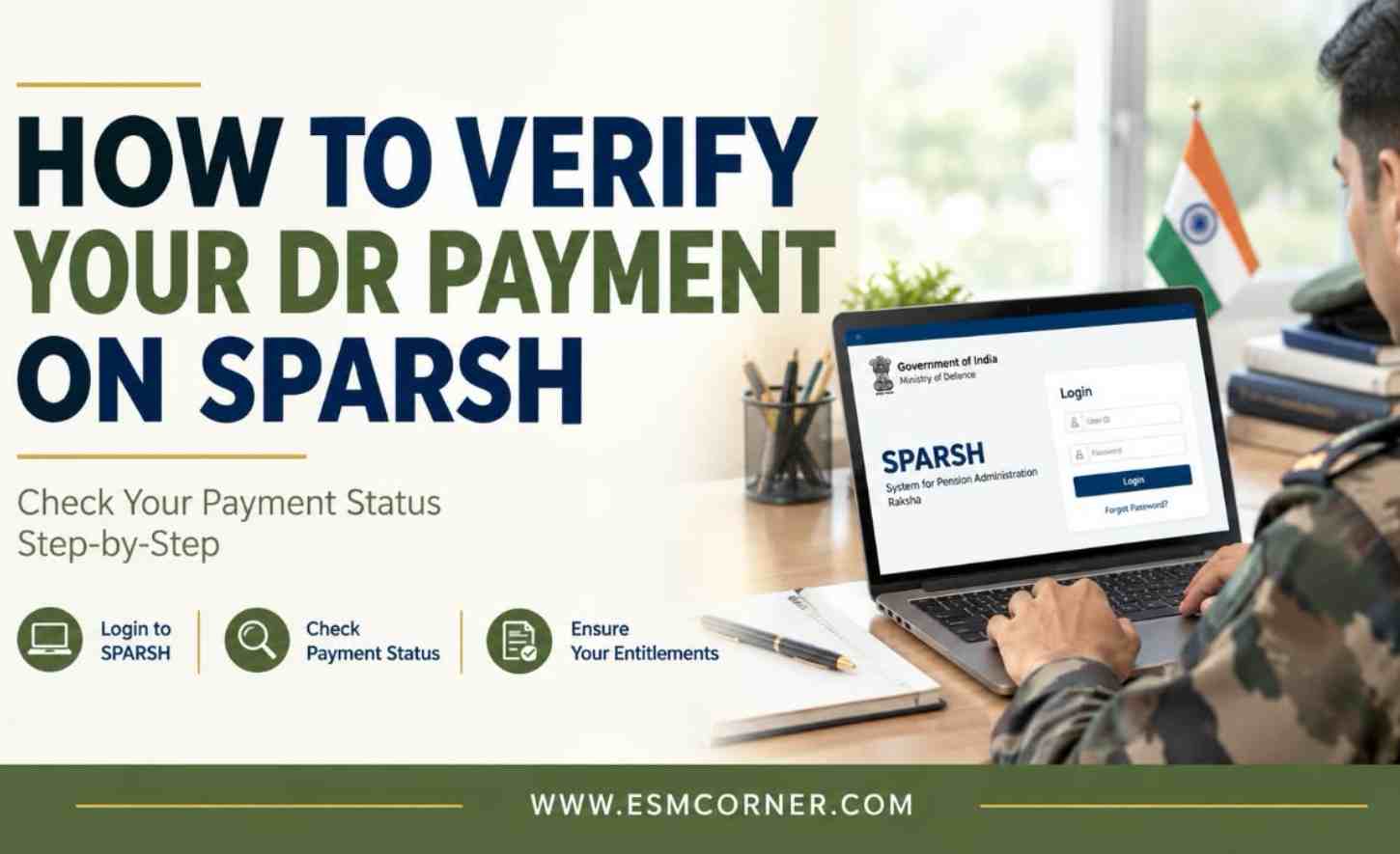
- Check your payment status on the SPARSH portal regularly. Stay updated on defence-related matters — join our WhatsApp group.
Frequently Asked Questions
Q1: Do I need a life certificate for my first SPARSH payment?
A1: No, a life certificate is not needed for your very first payment. This covers gratuity, commuted pension, and monthly pension. The condition is that payment must go through the SPARSH application at retirement.
Q2: Does this mean I never need a life certificate?
A2: No, this exemption covers only your first pension payment. After that, the usual rule returns. The annual life certificate requirement comes back twelve months later. This matches how it worked before this update.
Q3: What documents do I still need at retirement?
A3: You still need certain documents at retirement. One is an undertaking to refund any excess payment received. Another is a declaration of your re-employment status. This second one applies only if it fits your situation.
Q4: Does this apply to family pension after death?
A4: No, this rule does not cover family pension after death. This applies whether death happens in service or after retirement. Proper identification of the claimant is still required. Only then can payment be released.
Q5: What if my pension is not through SPARSH?
A5: This exemption applies only through the SPARSH application. That is the one condition that must be met. If your pension goes through any other channel, this rule does not apply. The older identification rules continue instead.
Q6: Where can I check the latest rules?
A6: You can check the latest process and any recent updates on the official SPARSH portal directly, or you can simply contact your Record Office for clear, case-specific guidance on your particular situation.
For more pension guides and policy updates, browse our Pension section.