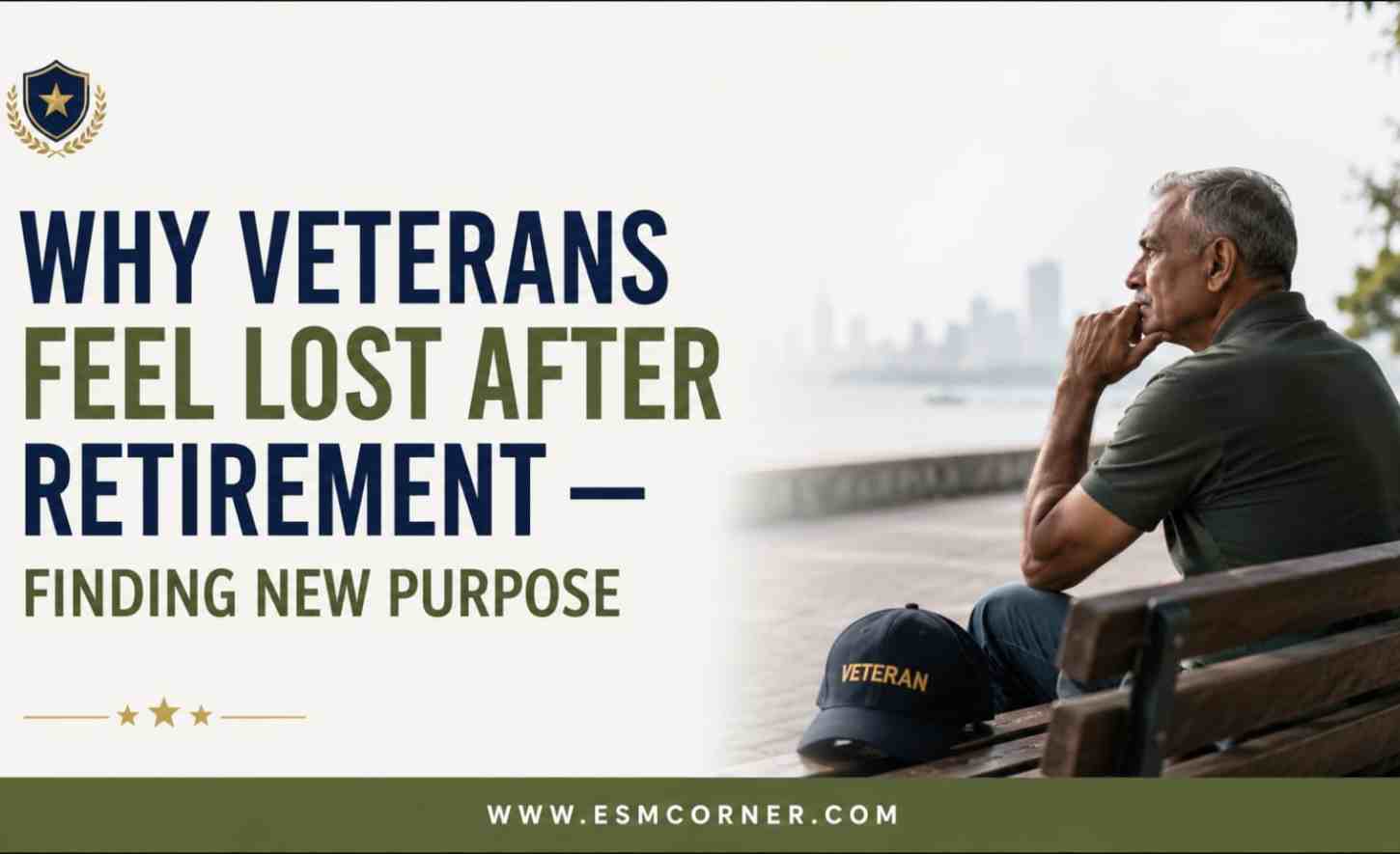
Retirement from the forces is not like quitting a normal job. It’s not just “no more office to go to.” It’s your entire world changing overnight — your routine, your identity, your circle of friends, even your sense of purpose. One day you’re “Major Sahab” or “Havildar Sahab,” and the next day, you’re just… you. And figuring out who “just you” is can be harder than any field posting.
Most veterans look forward to retirement thinking, “Finally, rest karunga, relax karunga.” And for a few weeks, that’s exactly how it feels — peaceful, well-earned. But then that calm slowly turns into something else. A quiet loneliness. A feeling of “ab main kya karu?” This isn’t weakness. This isn’t failure. This is simply what happens when a highly structured life suddenly has no structure at all. It’s completely normal — and with the right approach, this next chapter can actually turn out to be the best one yet.
Why This Transition Hits Differently
A normal person changing jobs still keeps the same house, same friends, same routine. But for a veteran, retirement changes almost everything at once. In service, your day had meaning attached to something bigger than you — the nation. Outside, that instant sense of purpose disappears, and you’re left to build your own meaning from scratch. That’s a big cultural shift, not just a career one.
A few reasons this feels so heavy:
- No more routine — For years, someone else decided your wake-up time, your uniform, your duty. Now, suddenly, nobody’s telling you what to do — and that freedom can feel more confusing than freeing.
- No more “rank identity” — Your rank wasn’t just a title, it was who you were to everyone around you. Losing that title can feel like losing a part of yourself, even though your real qualities — discipline, honesty, courage — never left.
- No built-in sense of purpose — People thrive when they feel they have a meaningful role. Without one, even downtime can begin to feel unfulfilling.
The Emotional Side Nobody Talks About
It’s okay to miss your unit. It’s okay to miss the banter, the trust, the shared hardship with your comrades — that kind of bond is rare and hard to replace. Missing it doesn’t mean you’re stuck in the past; it means those relationships mattered. Let yourself feel that instead of pushing it down — bottled-up emotions only make the adjustment harder.
Confidence can also take a hit early on. Sitting in an interview where the recruiter has no clue what your rank means, or doesn’t understand your leadership experience — that can feel frustrating. But remember: skills like staying calm under pressure, taking quick decisions, and leading a team through crisis are things most civilians never learn in a lifetime. That’s your real superpower, resume or no resume.
And it’s not just about you — your whole family goes through this transition too. After years of managing the house independently, suddenly having you around full-time means roles need to be renegotiated. A little patience and a lot of open conversation go a long way here.
Your Quick Action Plan
| Challenge | What Helps | Daily Habit | What You Gain |
|---|---|---|---|
| No structure | Build your own daily schedule | Fixed wake-up + exercise time | Focus and discipline return |
| Identity confusion | Reconnect with your core values | Journal for 10 minutes | Clarity on who you are now |
| Loneliness | Join veteran or local groups | Message one old friend daily | A real support circle |
| Career doubts | List your transferable skills | Learn something new for 30 mins | New career doors open |
| Feeling purposeless | Do something for others | One small act of service daily | Sense of contribution returns |
Building a Second Career

Here’s the good news — the corporate world actually wants what you have. Reliability, discipline, and the ability to lead a team under pressure? That’s gold in project management, logistics, operations, or corporate security roles.
A few directions worth exploring:
- Start your own business — build a company culture around the same trust and accountability you lived by in service
- Become a consultant or mentor — guide younger professionals while enjoying flexible hours
- Upskill constantly — a short certification course or a new digital tool can bridge the gap between military experience and what today’s job market wants
Don’t let the “civilian resume gap” intimidate you. Your experience just needs translating into terms recruiters understand — it doesn’t need to be reduced.
Taking Care of Yourself
Stay physically active — but shift your goal. It’s no longer about passing a fitness test; it’s about staying strong, sharp, and healthy for the next 30-40 years of your life.
Protect your mental well-being — isolation is the silent enemy after leaving a tight-knit unit. Actively look for community — local clubs, veteran meet-ups, civic groups — anything that keeps you connected to people who get it.
Pick up hobbies you never had time for — gardening, woodworking, music, trekking, whatever calls to you. Set a few long-term personal goals too, so life keeps moving with direction, not just filling up time.
Busting the Big Myths
- “Veterans should adjust to civilian life instantly.” Not true — adapting to a new culture genuinely takes time and patience. Give yourself that time.
- “Retirement means life slows down for good.” Not true — retirement is a launchpad, not a finish line.
- “Employers automatically understand military experience.” Not true — you have to actively translate it into language they relate to.
The Bottom Line
Retiring from the forces closes one proud chapter, but it’s nowhere near the end of your story. The discipline, leadership, and integrity you built in uniform never left you — they’re just waiting for a new direction to point toward.
Yes, losing that structure and mission can feel disorienting at first. But this is also your chance to build a life entirely on your own terms — with a fulfilling career, stronger family bonds, new skills, and a renewed sense of purpose. Your biggest chapter might not be behind you. It might just be getting started.
Also Read: 10 Simple Habits for ESM to Stay Fit & Happy
Q1.Is feeling lost after retirement normal?
Yes, feeling disoriented after leaving military service is completely normal. Stepping away from a structured environment, clear hierarchy, and daily mission requires a significant psychological adjustment. Acknowledging these feelings without self-judgment is the first step toward building a rewarding civilian life.
Q2.Can veterans successfully start a second career?
Veterans frequently thrive in second careers due to their leadership experience, discipline, adaptability, and problem-solving abilities. By translating military accomplishments into civilian language and acquiring industry-specific skills, veterans often advance rapidly across business, public service, and technical sectors.
Q3.How can I explain my military skills to civilian employers?
Focus on functional outcomes rather than military jargon. Translate operational management into project leadership, logistics management into supply chain optimization, and unit leadership into team development. Highlight your ability to manage risk, solve complex problems, and lead teams under pressure.
Q4.What are common mistakes after leaving service?
Common mistakes include isolating yourself, failing to establish a structured daily routine, expecting civilian workplaces to operate like military units, and neglecting personal health. Avoiding these pitfalls requires setting personal goals, staying proactive, and maintaining healthy daily habits.
Q5.How can families support veterans during transition?
Families can offer support by maintaining open communication, exercising patience, and working together to establish new household routines. Encouraging the veteran to pursue personal hobbies, professional goals, and social connections helps ease the shift into civilian life.
Q6.Why are daily routines essential for veterans?
Daily routines replace the external structure previously provided by military service. A consistent schedule maintains discipline, reduces anxiety, promotes healthy habits, and creates momentum, making it much easier to focus on long-term personal and professional goals.
Q7.How do I rebuild my social network outside the military?
Rebuilding a social network involves joining local community organizations, participating in veteran peer groups, volunteering, or engaging in team sports and hobbies. Proactively reaching out to colleagues and neighbors helps establish a supportive network of meaningful civilian friendships.
Q8.How do I maintain mental well-being after service?
Maintain mental well-being through regular physical exercise, consistent sleep, healthy nutrition, and strong social ties. Engaging in meaningful activities and seeking professional guidance when feeling overwhelmed ensures a smooth transition and long-term emotional balance.
For daily defence updates, government notifications, recruitment alerts, welfare schemes, career opportunities, education news, and other important announcements, join our WhatsApp Community. Click here to join our WhatsApp Group.




















I left Airforce, in 1982 after 15 years of service. My civil career: 1982 onwards: Atomic Energy, L&T, Consultant, Sr. Faculty in a management college. Called it a day 2013.Total service: 15+1.5+18+8
During service in Airforce, I kept on upgrading my education. That is the secret