

Many veterans and family members assume they are not eligible for a CSD (Canteen Stores Department) Smart Card simply because they do not fit the most commonly known category. This article lists eight facts about CSD eligibility, based on official rules, so you know exactly where you and your family stand.
- Serving personnel of all major forces are eligible — Active members of the Indian Army, Navy, Air Force, Coast Guard, and Assam Rifles can apply for a CSD (Canteen Stores Department) Smart Card.
- Ex-servicemen need at least 5 years of service — Retired personnel generally qualify if they completed a minimum of 5 years of service, or were medically discharged with a pension, under Army Order AO 32/84.
- War widows and spouses of deceased personnel are eligible — Spouses of service members who died in service or after retirement can apply for a CSD Smart Card to continue receiving canteen benefits.
- Dependents can be added to the card — Spouse, children, and in certain cases parents of serving or retired personnel can be added as dependents under the primary cardholder.
- Medically boarded-out cadets are also entitled — Cadets or recruits who are boarded out on medical grounds, even without completing full service, are entitled to CSD canteen facilities.
- Certain defence civilians qualify too — Employees of organisations like the Defence Security Corps, MES, BRO, and GREF with valid service identification can also apply for CSD facilities.
- Cards are now valid for up to 10 years — Recent updates have moved away from the earlier annual renewal requirement, with CSD Smart Cards now valid until a 10-year expiry.
- Some applicants must apply offline — First-time applicants, those without a PAN card, ex-servicemen with under 5 years of service, and a few other specific categories are required to apply through the physical application form.
CSD eligibility covers a wider group of people than most veterans realise, from serving personnel and ex-servicemen to widows, dependents, and even certain defence civilians. Checking which category you fall under before applying can save you from submitting the wrong form or visiting the wrong office. If you are unsure, your nearest Unit Run Canteen can confirm your specific eligibility category.
Join our WhatsApp community for the latest pension, ECHS, and veteran welfare updates — tap here to join free.
Frequently Asked Questions
Q1. Who is eligible for a CSD Smart Card?
A1. Serving personnel of the Army, Navy, Air Force, Coast Guard, and Assam Rifles, along with eligible ex-servicemen, widows, and dependents, can apply.
Q2. How many years of service does an ex-serviceman need for CSD eligibility?
A2. Generally, a minimum of 5 years of service is needed, unless the person was medically discharged with a pension under Army Order AO 32/84.
Q3. Can dependents be added to a serving or retired member’s CSD card?
A3. Yes, spouse, children, and in some cases parents can be added as dependents under the primary cardholder’s CSD Smart Card.
Q4. Are war widows eligible for a CSD Smart Card?
A4. Yes, spouses of service members who died in service or after retirement can apply for a CSD Smart Card to continue receiving benefits.
Q5. How long is a CSD Smart Card valid for now?
A5. Recent updates have made CSD Smart Cards valid for up to 10 years, removing the earlier requirement of annual renewal.
Q6. Who needs to apply for a CSD card offline instead of online?
A6. First-time applicants, those without a PAN card, and ex-servicemen with under 5 years of service are among those required to apply offline.
Found this useful? Explore more helpful guides in our CSD Guide collection — tap here to browse.















Why Should Retired Other Ranks (OR) Ex-Servicemen Be Subjected to Restrictions on Car Purchases?
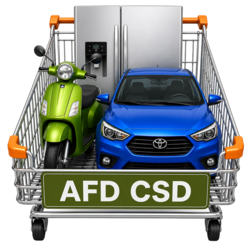
It is difficult to understand why Other Ranks (OR) ex-servicemen are restricted from purchasing top-end car variants through the CSD system and, in certain cases, are eligible only for manual-transmission models.
One can understand the argument that, during active service, financial considerations and affordability may influence eligibility criteria. However, why should such restrictions continue even after retirement?
Many OR ex-servicemen have gone on to build successful careers, establish businesses, and achieve financial stability after their military service. They have worked hard, contributed to the nation, and earned their retirement benefits through years of dedicated service. Their financial standing after retirement should not be presumed or judged solely by the rank they held while serving.
Military rank may determine one’s position during service, but it should not define one’s choices for the rest of one’s life.
If a retired serviceman is financially capable of purchasing a higher variant or an automatic-transmission vehicle, why should his former rank prevent him from doing so under the CSD scheme?
The purpose of CSD benefits should be to recognise the service and sacrifices of our armed forces personnel, not to perpetuate distinctions that may no longer have any relevance after retirement.
I firmly believe that the existing restrictions applicable to retired OR personnel deserve a fresh review. Eligibility could be made more equitable, allowing retired personnel to choose from the available variants and transmission options, subject to reasonable common policy limits.
Our veterans deserve dignity, fairness and equal consideration. Their rank should not become a lifelong restriction on their choices after service.
It is time for the concerned authorities to reconsider these provisions and ensure that retirement brings greater freedom of choice, rather than the continuation of rank-based limitations.
Jai Hind! 🇮🇳