
You’ve just finished Class 10, or maybe you’re already in Class 11 Commerce, and suddenly everyone seems to have an opinion about your future. One relative insists, “Maths is a must, beta—otherwise your future is ruined.” Meanwhile, your friend who skipped Maths is happily planning a career in digital marketing. Your family WhatsApp group has turned into a battlefield of career advice, with every message contradicting the last.
Here’s the reality: choosing Commerce without Maths won’t ruin your future, and choosing Maths doesn’t automatically guarantee a higher-paying career. Both paths can lead to exciting opportunities and successful careers. The reason you’re confused isn’t because you’re making the wrong choice—it’s because you’re surrounded by too much advice and not enough clarity.
That’s exactly what this guide is for. No fear-mongering, no myths, and no unnecessary pressure—just a clear, practical look at where each path can lead, so you can make a decision based on your interests, strengths, and goals, not someone else’s expectations.
Okay, But Is Commerce Even “Relevant” Anymore?
Fair question, especially with everyone talking about tech and AI these days. Here’s the thing though — every single company, whether it’s a five-person startup or a giant MNC, needs people who understand money, law, strategy, and how business actually works. Someone has to handle the finances, make sure the company isn’t breaking any laws, plan how to beat competitors, and figure out where the next big market is.
That “someone” is a Commerce graduate. Tech builds the product; Commerce keeps the business alive, funded, and growing. So no, Commerce hasn’t gone out of style — if anything, it’s needed more than ever.
The Real Difference Between Maths and Non-Maths Commerce
Let’s keep this simple. It’s not that one stream is “smart” and the other is “not smart” — that’s a myth you should delete from your brain right now.
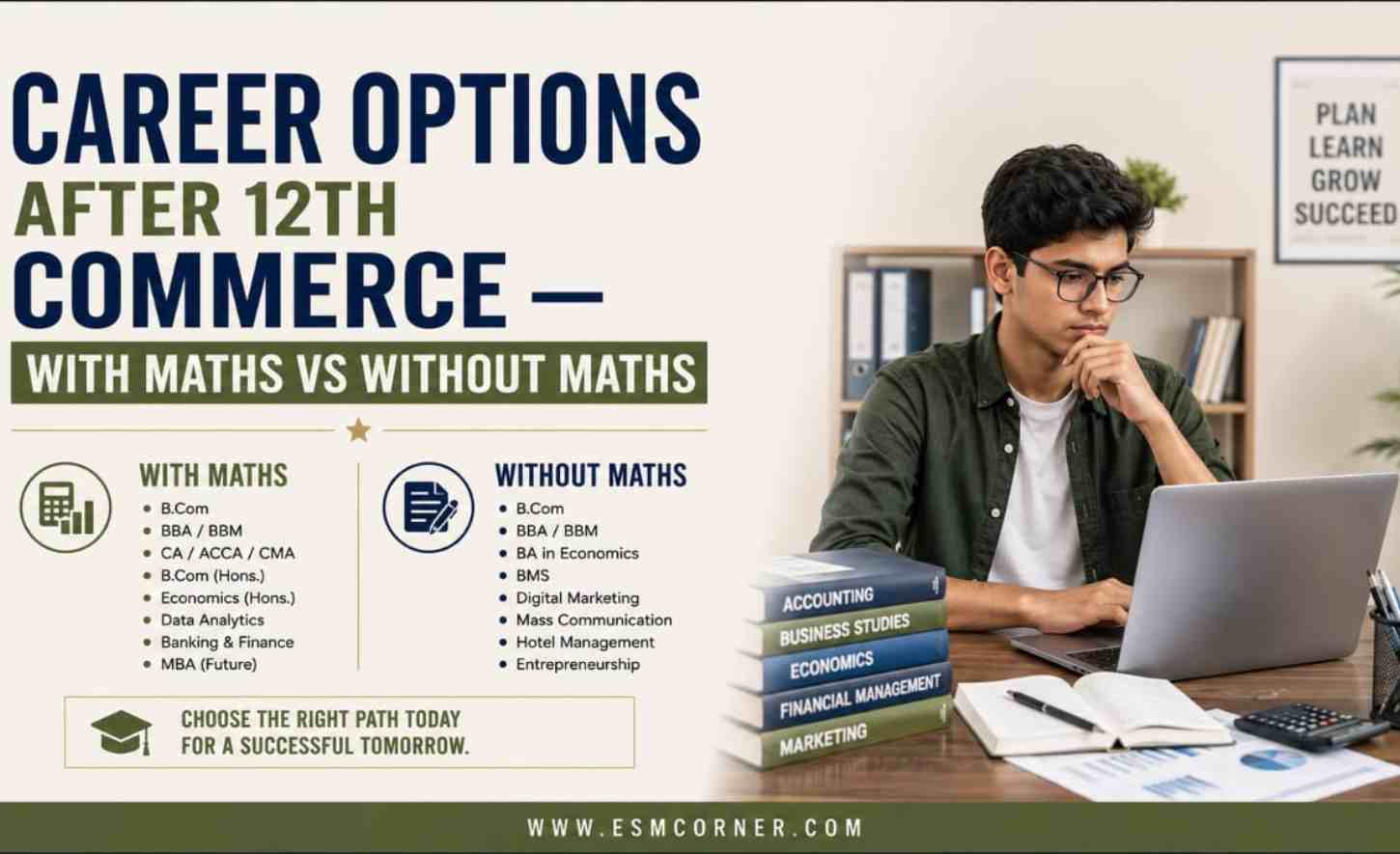
- Commerce with Maths leans into numbers — statistics, calculations, data, formulas. Think actuarial work, quantitative finance, and heavy-duty data analysis.
- Commerce without Maths leans into people, strategy, and words — management, law, marketing, communication. Think leadership roles, legal careers, and creative business fields.
That’s really it. One isn’t a “backup option” for people who “couldn’t handle Maths.” They’re just two different toolkits for two different kinds of thinkers.
“But Won’t Skipping Maths Limit My Salary?”
Short answer: no. This is probably the biggest myth out there, so let’s kill it properly.
Yes, a few specific fields — like actuarial science or heavy data analytics — genuinely need strong Maths. No way around that. But high-paying, respected careers like corporate law, HR leadership, brand management, and even Chartered Accountancy don’t ask you to solve differential equations. They ask you to think clearly, communicate well, and understand how business works. That’s a completely different — and equally valuable — skillset.
So instead of asking “will dropping Maths hurt me,” ask yourself: “what am I actually good at, and what do I enjoy doing for hours without getting bored?” That question matters far more.
If You’re a Numbers Person: Careers in Commerce With Maths
If solving problems, spotting patterns, and working with data genuinely excites you, this list is your playground:
- Actuarial Science – You basically predict risk using maths. Insurance and pension companies pay very well for people who can do this accurately.
- Data and Business Analytics – Turning messy business data into insights companies can actually use. Massive demand right now, especially with every company wanting to be “data-driven.”
- Financial Analysis and Investment Banking – Dealing with company valuations, big investments, and high-stakes financial decisions. High pressure, high reward.
- Economics and Statistics – Understanding how markets, prices, and policies behave, and using that to guide business or government decisions.
- FinTech and Quantitative Finance – The cool new-age mix of finance and coding. Think trading algorithms and digital payment systems.
- B.Com / BBA in Finance – A solid, traditional degree that builds a strong base in accounting, corporate finance, and taxation with a quantitative edge.
If You’re a People and Ideas Person: Careers in Commerce Without Maths
If you’d rather debate, strategise, create, or lead than crunch numbers all day, these fields are built for you:
- Business Administration (BBA/BMS) – All about leadership, managing teams, and understanding how organisations actually function.
- Corporate Law (BA/B.Com LL.B) – Business rules meet legal knowledge. Great for someone who loves logical argument and reading.
- Digital Marketing and E-Commerce – Understanding what makes people click “buy,” and building brands online. Booming field with tons of opportunities.
- HR and Retail Management – Managing people, talent, and customer experience — the human side of business.
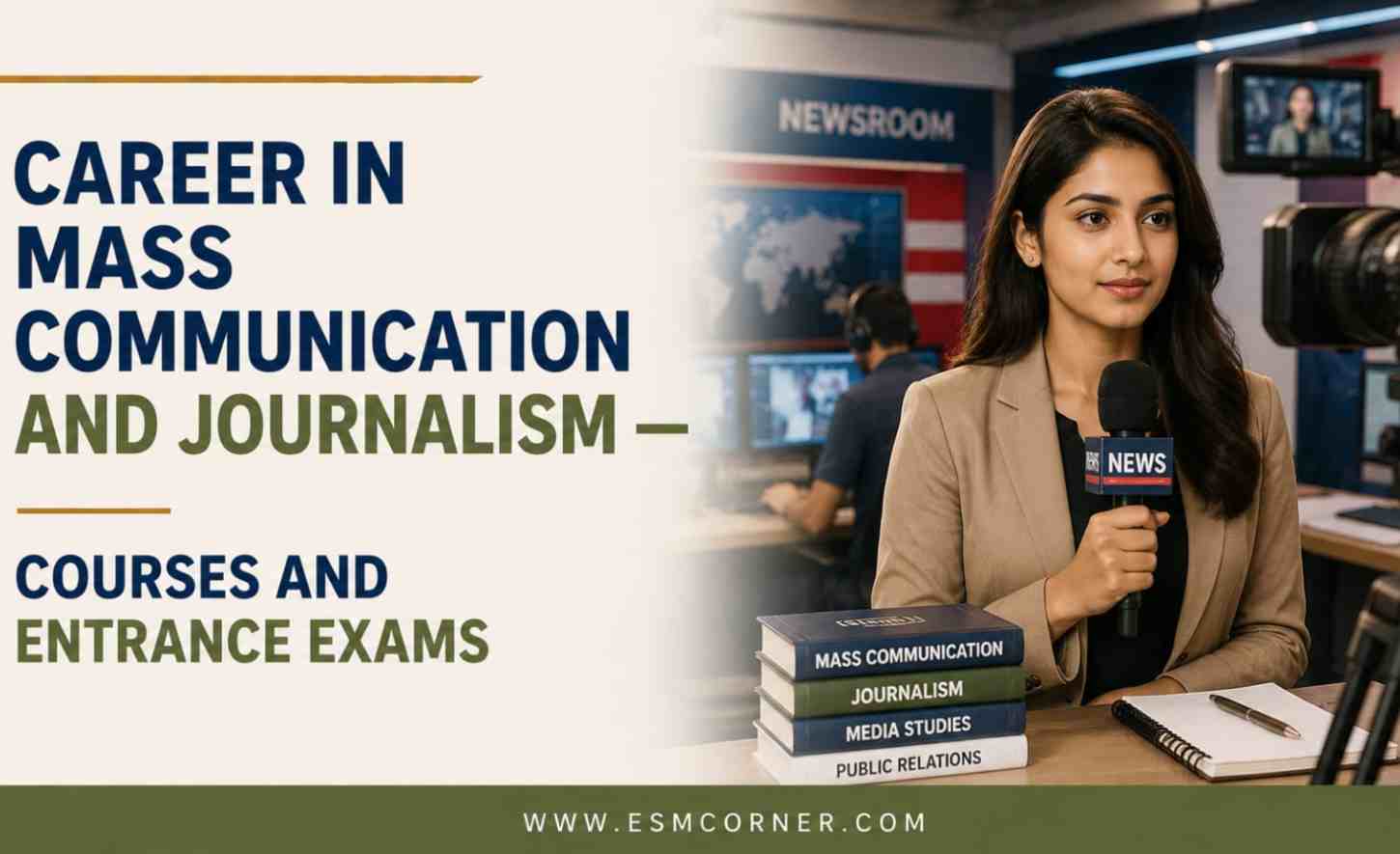
- Mass Communication and Hotel Management – For the ones who love people, media, events, and hospitality. Dynamic, social, and never boring.
- B.Com Accounting & Finance – Focused purely on financial reporting, auditing, and taxation, minus the heavy calculus.
Good News: Some Careers Don’t Mind Which Path You Chose
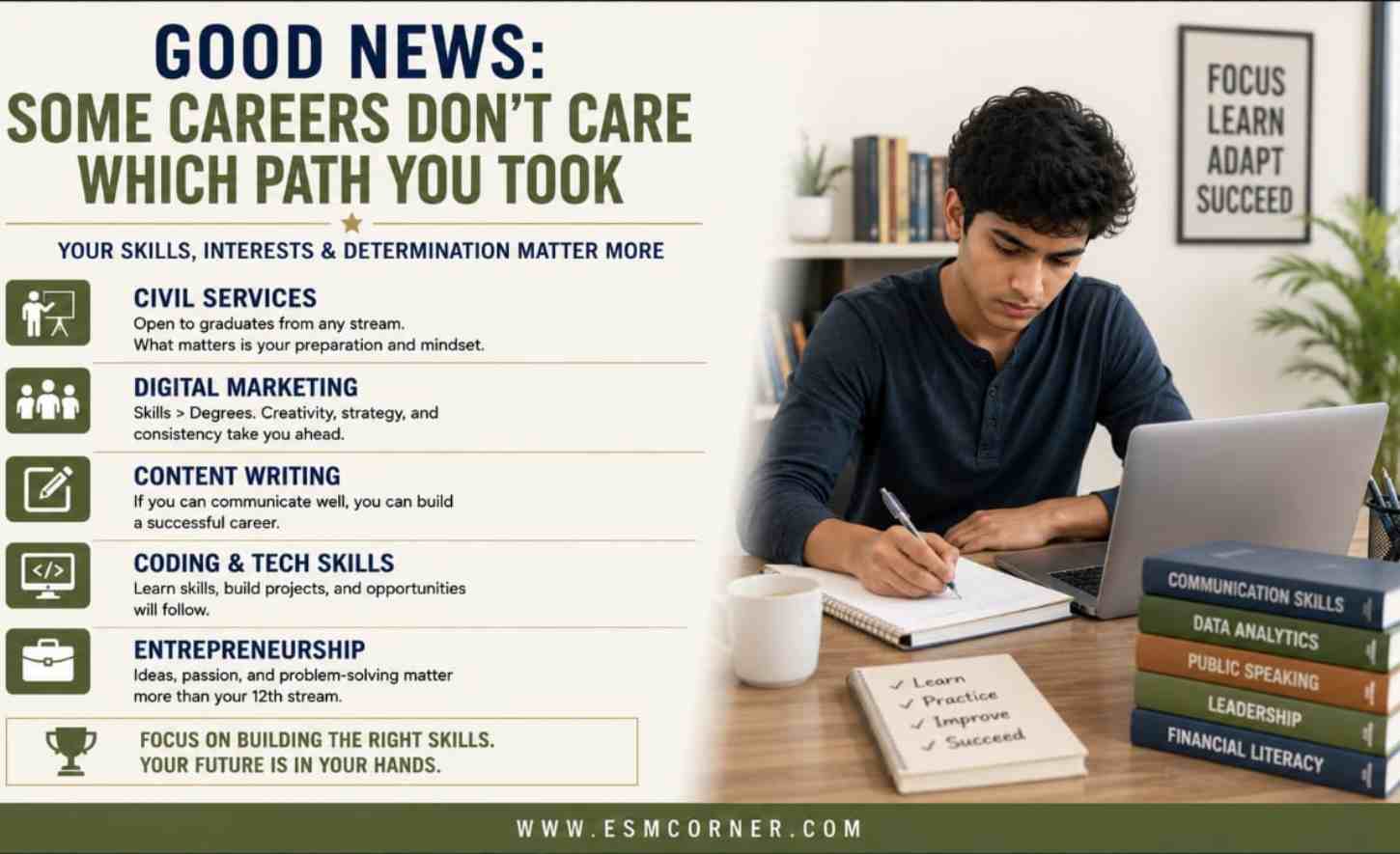
Here’s something that’ll genuinely relax you — several respected, high-paying careers accept students from both Maths and non-Maths backgrounds. Nobody’s checking your Class 12 Maths marks here:
- Chartered Accountancy (CA)
- Company Secretary (CS)
- Cost and Management Accountancy (CMA)
- ACCA and CFA (global finance certifications)
These focus on accounting, law, and business knowledge — skills you build after 12th, not before. So even if you skipped Maths, these doors are wide open.
Similarly, entrance exams like CUET, IPMAT, SET, NNPAT, or law exams like CLAT mostly test logical reasoning, reading comprehension, and basic quantitative skills up to Class 10 level. You don’t need advanced Maths for these — just consistent, smart preparation.
Quick Comparison Table
| Career Path | Maths Required? | Great For People Who Enjoy | Growth Potential |
|---|---|---|---|
| Actuarial Science | Yes, mandatory | Numbers, statistics, risk-solving | Strong demand in insurance & risk fields |
| Data Analytics | Preferred | Logic, patterns, problem-solving | Exploding across tech, banking, e-commerce |
| Corporate Law | No | Arguing, reading, understanding rules | Steady growth in law firms & corporates |
| Digital Marketing | No | Creativity, trends, understanding people | Rapidly growing across brands & agencies |
| Chartered Accountancy | No | Numbers-lite, rules-heavy, structured work | Always in demand, recession-proof |
So, How Do You Actually Decide?
Stop asking “which stream pays more” and start asking these instead:
- Do I enjoy working with numbers, or do I get more excited debating and communicating ideas?
- Am I okay with slow, detailed, calculation-heavy work, or do I prefer fast-paced, people-facing work?
- What kind of work day would I actually enjoy five years from now?
Your answers will tell you far more than any relative’s opinion ever will.
Conclusion
Neither path is the “safe” one or the “risky” one anymore — that thinking is outdated. What actually decides your success isn’t whether you took Maths in Class 12. It’s whether you build real skills — communication, financial literacy, problem-solving, basic Excel know-how — and stay curious and adaptable along the way.
So pick the stream that matches how you think, not what sounds impressive at family functions. Both roads, walked well, lead somewhere great.
READ ALSO: CAREER PLANNING FOR WARDS
Q1.Is Mathematics compulsory to build a high-paying career in Commerce?
No, Mathematics is not compulsory for a high-paying career. While fields like Actuarial Science require advanced math, premier careers in Chartered Accountancy, Corporate Law, Management, Digital Marketing, and Human Resources offer exceptional earning potential without high-school Mathematics.
Q2.Which careers offer the highest salary potential after 12th Commerce?
Investment Banking, Actuarial Science, Data Analytics, Chartered Accountancy, Corporate Law, and Management Consulting consistently offer top-tier compensation packages. Long-term financial growth depends heavily on specialized skills, practical experience, and strategic leadership abilities.
Q3.Can Commerce without Maths students successfully clear professional CA or CS exams?
Yes, Commerce without Maths students frequently excel in CA and CS examinations. These professional courses focus on corporate law, financial accounting, auditing principles, and business taxation, which require logical reasoning and dedication rather than high-school calculus.
Q4.Which major entrance exams should Class 12 Commerce students target?
Commerce students should target national exams like CUET for central university admissions, IPMAT for integrated management programs, CLAT for national law universities, and specific institute tests like SET or NPAT for reputed management and commerce degrees.
Q5.Are there opportunities for Commerce students to study or work abroad?
Yes, global opportunities abound. Degrees like BBA, Economics, or Finance, paired with international professional credentials like ACCA or CFA, prepare students for global master’s programs (MSc Finance, MIM, MBA) and international careers in finance, consulting, and management.
Q6.How do I choose between a traditional B.Com and a professional degree like BBA?
Choose B.Com if you want deep expertise in financial accounting, auditing, taxation, and corporate compliance. Choose BBA or BMS if you prefer operational management, business strategy, marketing dynamics, leadership roles, and early industry exposure.
Q7.should a confused student systematically identify the right career path?
Begin by assessing your natural strengths, interests, and working preferences. Research course curricula, speak with academic counselors, evaluate long-term industry trends, and choose a path that balances your personal aptitude with realistic market opportunities.
Q8.Which core skills are most crucial for long-term professional success?
Essential skills include analytical reasoning, effective business communication, emotional intelligence, digital proficiency, continuous adaptability, and domain-specific financial or managerial literacy. Technical knowledge combined with strong soft skills ensures sustainable career progression.
For daily defence updates, government notifications, recruitment alerts, welfare schemes, career opportunities, education news, and other important announcements, join our WhatsApp Community. Click here to join our WhatsApp Group.