

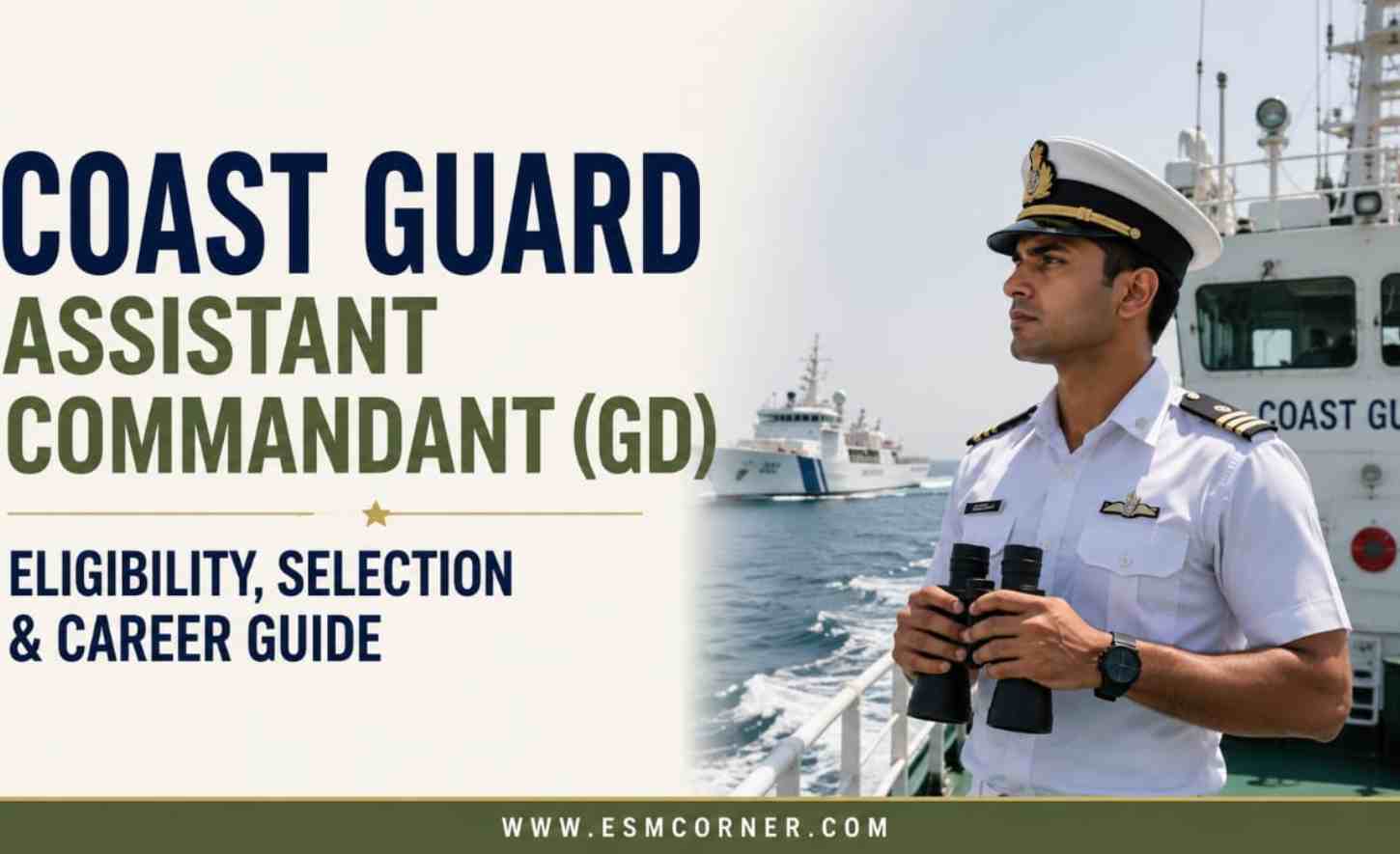
When young defence aspirants dream of wearing a uniform, their minds naturally jump to the Indian Army, Navy, or Air Force. However, many remain unaware of the Indian Coast Guard Officer Entry, a premier force that guards our vast $7,500$ km coastline and exclusive economic zone. Serving as a Coast Guard General Duty Officer is an exhilarating blend of maritime security, military discipline, and humanitarian service.
As an Assistant Commandant General Duty, you do not just command personnel; you pilot ships, execute high-stakes search and rescue operations, intercept international smuggling networks, and respond to environmental disasters at sea. If you are seeking a life less ordinary that combines leadership, adventure, and patriotic duty, this Defence Officer Entry Guide provides the roadmap you need. In this comprehensive guide, we will break down the eligibility requirements, selection stages, rigorous training, shipboard duties, and preparation strategies in a realistic, beginner-friendly manner to help you launch a successful Maritime Security Career.
What is the Coast Guard Assistant Commandant (General Duty) Entry?
Many candidates ask: Is the Coast Guard a civilian agency or an armed force? The Indian Coast Guard is an Armed Force of the Union established under the Coast Guard Act, 1978. The Coast Guard Assistant Commandant General Duty Entry serves as the operational backbone of this maritime force. While technical officers focus on marine engineering and aviation officers fly aircraft, General Duty (GD) officers are the sea-going commanders. They earn their bridge watchkeeping certificates, navigate sophisticated offshore patrol vessels, command weapons systems, and lead boarding parties during law enforcement ops. Choosing this pathway means accepting the responsibility of tactical command at a very young age.
Role and Responsibilities of a General Duty Officer
A General Duty Officer’s day is rarely predictable, transitioning rapidly from peaceful routine patrols to intense tactical situations. Your core responsibilities on board ships and at shore establishments include:
- Command and Navigation: Navigating warships through rough seas, handling complex naval maneuvers, and maintaining safety at sea.
- Search and Rescue (SAR): Coordinating emergency rescues for distressed fishermen, commercial mariners, and victims of natural disasters.
- Maritime Law Enforcement: Intercepting illegal narcotics traffic, preventing poaching in Indian waters, and combating maritime piracy.
- Environmental Protection: Responding to oil spills at sea, preserving marine ecosystems, and enforcing marine pollution regulations.
- Coastal Surveillance: Operating advanced radar networks and coordinating with the Indian Navy to prevent sea-borne security threats.
Why This Career Is Unique
What makes this Coast Guard Officer Career truly stand out is its dual character: military readiness combined with active, everyday peacetime operations. Unlike traditional combat forces that train extensively for potential war scenarios, Coast Guard officers are deployed in active duty every single day. The moment your ship casts off from the jetty, you are engaged in real-world missions. Furthermore, the satisfaction of saving lives during ocean storms offers a sense of humanitarian fulfillment that few other military roles can match.
Eligibility Criteria and Basic Standards
A common dilemma among graduates is: Do I need an engineering degree to join the General Duty branch? The simple answer is no. Let us look closely at the academic and physical prerequisites required for this entry.
Educational Qualifications Required
To apply for the General Duty branch, you must hold a recognized Bachelor’s Degree from any university with a minimum aggregate of $60\%$ marks. Additionally, you must have studied Physics and Mathematics as mandatory subjects in your Class $12$th ($10+2$) board examinations, securing at least $55\%$ marks aggregate in these two subjects combined. This ensures you have the fundamental analytical ability required for maritime navigation and naval tactical training.
Basic Eligibility & Medical Factors
Candidates must be unmarried Indian citizens who fulfill the required physical and medical standards. These criteria are set to ensure that individuals are capable of handling challenging sea environments and meeting the demands of maritime operations.
- Height: Minimum $157$ cm (relaxations apply for candidates from specific regional backgrounds like North-East states).
- Visual Standards: $6/6$ in one eye and $6/9$ in the other without glasses for standard entry.
- General Health: Free from color blindness, active medical conditions, spinal deformities, or chronic sea-sickness issues.
The Multi-Stage Selection Process Explained
A frequent question aspirants ask is: Is the selection process identical to the Service Selection Board (SSB)? While the core testing philosophy evaluates Officer Like Qualities (OLQs), the Coast Guard conducts its own structured recruitment process known as the Coast Guard Selection Board (CGSB).
Selection Process Stages
| Stage | Purpose | Candidate Focus | Outcome |
| Stage I: CGCAT | Computer-based screening exam | Aptitude, reasoning, English, and general knowledge | Shortlisting for preliminary stage |
| Stage II: PSB | Preliminary Selection Board | Picture Perception & Discussion Test (P&DT) and cognitive tests | Screening for final selection stage |
| Stage III: FSB | Final Selection Board | Psychological testing, GTO tasks, and Personal Interview | Recommendation for medicals |
| Stage IV: Medicals | Comprehensive health assessment | Meeting military physical and physiological standards | Fit/Unfit status for merit list |
| Stage V: Merit List | Final ranking based on marks | Consistent high performance across all stages | Joining instructions issued |
Every stage of the selection process evaluates a different aspect of a candidate’s personality, aptitude, fitness, leadership potential, and suitability for maritime service. The initial screening ensures academic competence, while the Preliminary Selection Board (PSB) tests your quick thinking and group communication. The Final Selection Board (FSB) dives deep into your personality over several days to verify whether you possess the core Officer Like Qualities (OLQs) needed to lead sailors under extreme ocean conditions.
Training, Life after Commissioning, and Career Growth
Many ask: What happens after clearing the final merit list? Your journey transforms from a civilian student into a military commander through rigorous ocean-oriented training.
Training Process
Newly selected cadets undergo initial naval orientation training at the prestigious Indian Naval Academy (INA) at Ezhimala, Kerala. Here, you train alongside Indian Navy cadets, undergoing physical conditioning, drill, military tactics, small arms training, and naval orientation. Following basic naval training, cadets transition to professional Coast Guard specialist schools and afloat units to earn their bridge watchkeeping qualifications and ocean navigation certifications.
Life on Board and Career Progression
Life at sea is physically demanding yet deeply satisfying. As an Assistant Commandant, your early years are spent on board ships, leading divisions of sailors, maintaining round-the-clock bridge watches, and executing real-time interdiction operations. As you gain sea time and professional experience, your career progresses through clearly defined ranks:
Practical Preparation Strategy for Aspirants
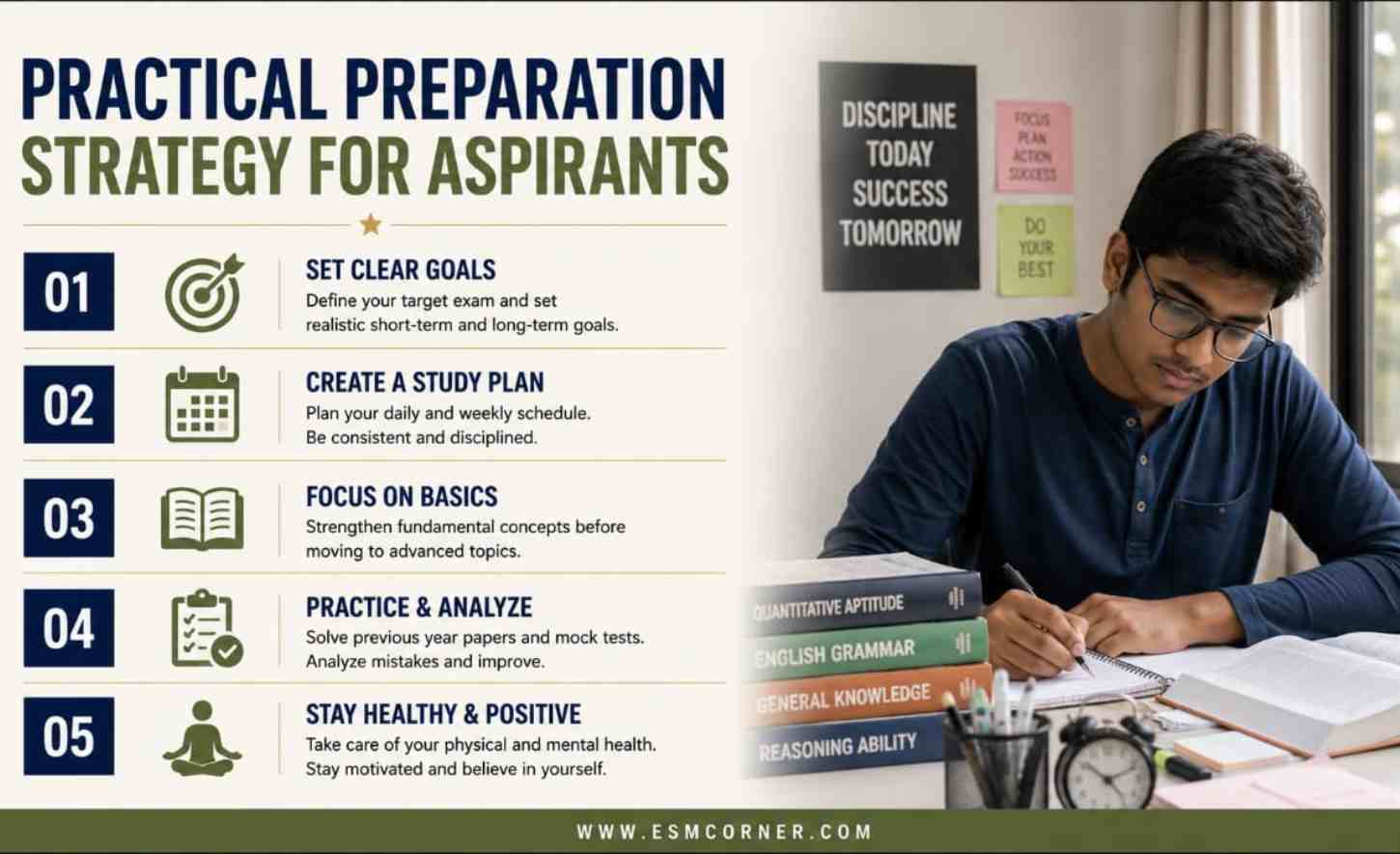
A common doubt among beginners is: How do I balance written exam preparation with SSB personality development? Successful candidates build a balanced routine that addresses both academic testing and holistic personality growth.
Mastering Written Preparation & OLQs
For the Screening Test (CGCAT), focus on sharpening your general mental ability, quantitative aptitude, spatial reasoning, and current affairs knowledge. Consistent practice with timed mock tests builds both speed and accuracy. However, academic preparation alone is insufficient for this entry. You must actively cultivate Officer Like Qualities (OLQs) in your everyday life:
- Communication Skills: Practice speaking clearly, logically, and confidently in English. Group discussions require articulate expression, active listening, and persuasive argument framing.
- Physical Fitness: Develop a regular running routine, build core body strength, and maintain cardiovascular endurance. Physical stamina directly boosts your confidence during military obstacle tasks.
- General Awareness: Stay updated on current national events, maritime security challenges, international ocean laws, and Indian defence developments.
Conclusion
The Coast Guard Assistant Commandant (General Duty) Entry represents an extraordinary opportunity to serve India through maritime security, tactical leadership, and humanitarian service. As a General Duty officer, you accept a life of responsibility where your decisions directly safeguard our national sea frontiers and save lives in stormy oceans. Rather than searching for shortcuts or waiting for notification deadlines, focus your energy on holistic personal growth. Build your academic foundation, refine your communication abilities, boost your physical stamina, and embody the Officer Like Qualities that selection boards seek. With disciplined preparation and unwavering dedication, you can successfully earn your Commission and lead from the front on the high seas.
READ ALSO: MILITARY NURSING SERVICE (MNS) COMPLETE GUIDE: ELIGIBILITY, EXAM, SALARY & CAREER
Frequently Asked Questions (FAQs)
Who can apply for General Duty Entry?
Unmarried male and female Indian citizens holding a recognized bachelor’s degree with minimum $60\%$ aggregate marks can apply. Candidates must also have studied Physics and Mathematics in Class $12$th with at least $55\%$ aggregate marks in these subjects combined.
Is engineering compulsory for General Duty?
No, an engineering degree is not compulsory for the General Duty branch. Graduates in B.Sc, B.A, B.Com, or B.B.A can apply, provided they meet the aggregate degree percentage and completed Physics and Mathematics during their $10+2$ school education.
What medical standards are important for ICG?
Candidates must possess robust physical health, good visual acuity ($6/6$ and $6/9$), correct height-to-weight proportion, and clear color vision. Candidates should be free from chronic bone deformities, sea-sickness tendencies, ear discharge, or cardiovascular ailments.
Is SSB conducted for Coast Guard Selection?
The Coast Guard conducts its own interview process called the Coast Guard Selection Board (CGSB), divided into PSB and FSB stages. It uses testing methodologies similar to the armed forces SSB, evaluating psychological traits, group performance, and personal interviews.
What does a General Duty Officer do?
General Duty Officers serve as executive commanders on ocean ships and shore units. They navigate vessels, direct tactical weapons, coordinate search and rescue missions, enforce maritime law, combat marine pollution, and command crews during maritime operations.
Is physical fitness important for the selection process?
Yes, physical fitness is vital throughout testing and military service. Strong physical conditioning helps candidates excel in Outdoor Group Tasks, build endurance for intense training, and cope with demanding shift patterns and rough sea weather conditions.
How difficult is the Coast Guard selection process?
The selection process is rigorous and competitive, designed to filter candidates who possess leadership traits, psychological resilience, and quick decision-making under pressure. However, structured preparation, clear conceptual understanding, and genuine personality development make it achievable.
How should beginners start preparation?
Beginners should first confirm their eligibility, review the CGCAT exam syllabus, and establish a daily study schedule. Concurrently, build habit loops around regular running, reading national news daily, practicing picture perception tests, and refining spoken English skills.
For daily defence updates, government notifications, recruitment alerts, welfare schemes, career opportunities, education news, and other important announcements, join our WhatsApp Community. Click here to join our WhatsApp Group.



























My nephew is interested to join Coast Guard.