
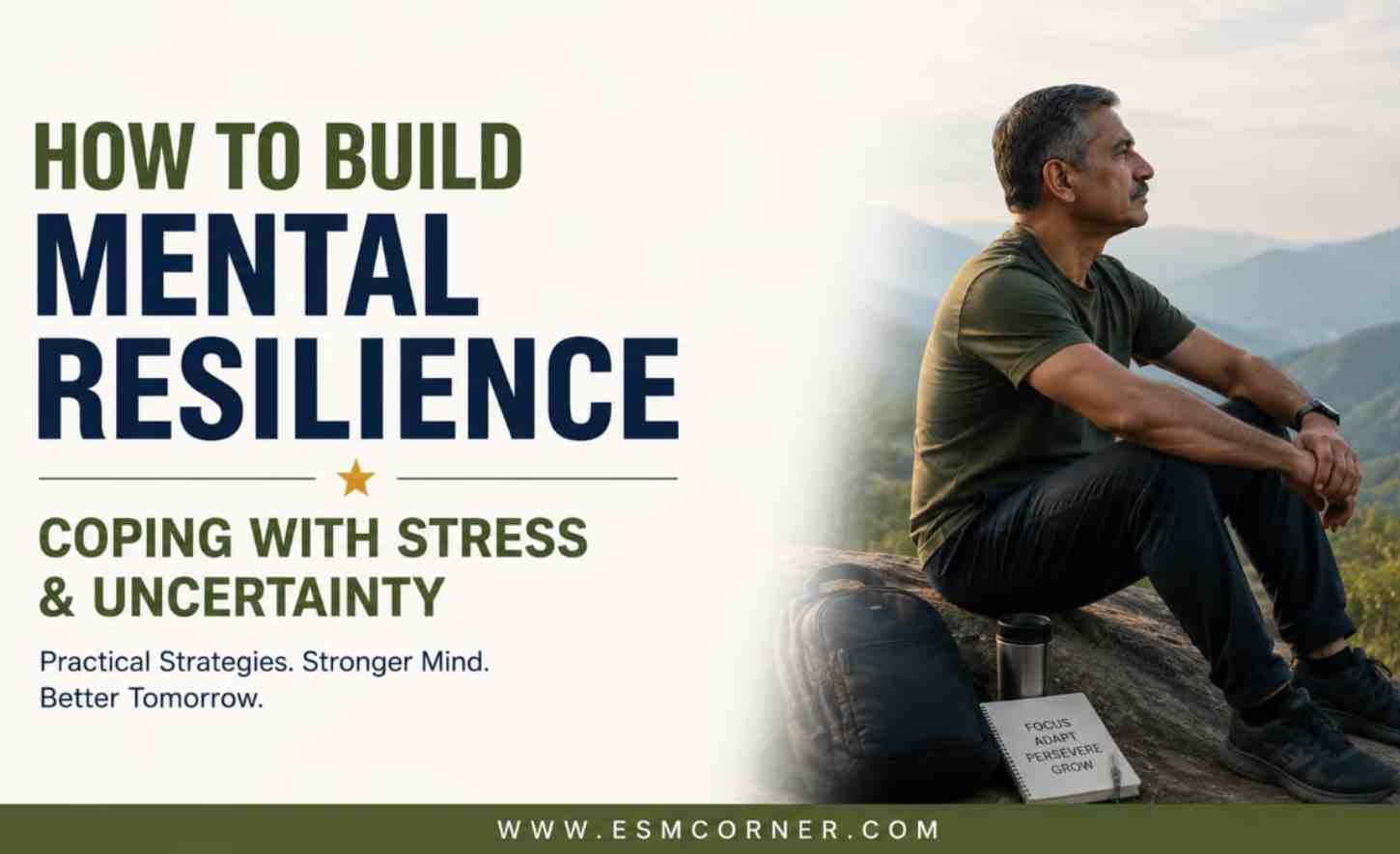
3 AM on the tarmac. A transport plane’s tail lights disappearing into the dark sky. Whether you’re the one boarding it or the one watching it leave — that tight feeling in the chest is the same for everyone. Nobody talks about it enough, but that’s the real, human side of military life: constant uncertainty, sudden postings, long separations, and pressure that never really switches off.
A lot of people believe surviving all this means becoming emotionless — just “switch off and push through.” But here’s the truth: that mindset burns people out faster than anything else. Real resilience isn’t about never feeling fear or stress. It’s about bouncing back and staying sharp even when things are falling apart around you.
And here’s something important — resilience is not something you’re either “born with” or “without.” It’s exactly like physical fitness. You build it. You train it. You maintain it, day by day, through small habits — not some rare gift only a lucky few get.
Toughness and Resilience Are Not the Same Thing
Most people use these two words like they mean the same thing. They don’t.
- Mental toughness = pushing through pain right now to complete the task in front of you
- Resilience = recovering and processing everything after the mission is over, so it doesn’t pile up inside you
Relying only on toughness without ever building resilience is like running on a phone battery that never gets charged — eventually, it just dies. You need both: toughness to get through the moment, resilience to survive the years.
Why Uncertainty Feels So Heavy
Imagine your unit’s deployment suddenly gets extended, and on top of that, you barely have any way to contact home. That combination — high alert, unpredictable schedule, and worrying about your family — creates a very specific kind of exhaustion.
Here’s the thing about the human brain — it’s wired to want predictability. So when everything feels uncertain, the stress hits harder than it should. But once you accept that uncertainty is simply part of the job — not a personal crisis, just another variable to manage — it becomes a lot easier to handle.
The Real Pillars of Staying Strong
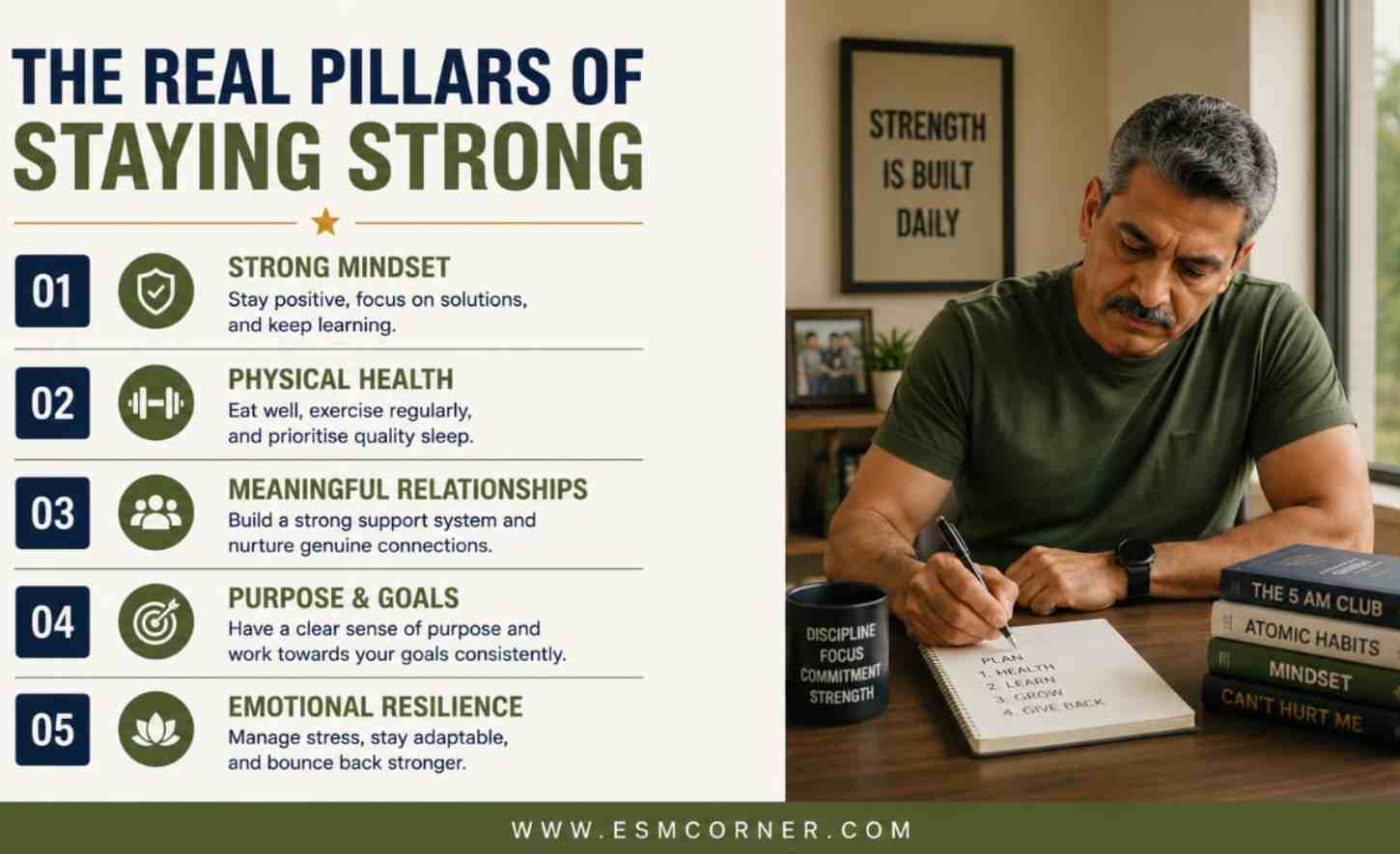
Before any big mission, an operator doesn’t rely on luck — they check their gear, plan their route, prepare properly. Your mental strength deserves the same kind of preparation.
1. Take your body seriously Exercise isn’t just for fitness tests. Regular workouts and cardio actually lower your stress hormones and keep your mind sharper under pressure. And don’t skip sleep or water — both directly affect how clearly you think and how well you control your emotions in tough moments.
2. Learn to breathe on purpose Sounds too simple to matter, but it works. Try box breathing — inhale for 4 seconds, hold for 4, exhale for 4, hold for 4. It calms your nervous system almost instantly and helps you think clearly instead of reacting out of frustration or panic.
3. Talk, don’t bottle it up Whether it’s a friend, family, or a fellow serviceman — talking about what’s going on helps way more than staying silent ever will.
Your Stress-to-Strength Cheat Sheet
| Challenge | Healthy Response | Daily Habit | What You Gain |
|---|---|---|---|
| Constant uncertainty | Focus on what you can control | Set small daily goals | Less anxiety overall |
| Family separation | Keep communication structured | Write or record a daily journal | Deeper trust at home |
| Heavy workload | Rest properly, stay hydrated | 10 minutes of quiet/mindfulness | Sharper focus |
| Setbacks or failure | Review objectively, don’t self-blame | Reflect and write it down | Faster growth |
| Isolated postings | Stay engaged with your peers | Group workouts or activities | Stronger bonds with your unit |
Leadership That Actually Helps
A unit’s morale rarely survives on orders alone — it survives on genuine support between people. Good leaders during hard times don’t pretend everything is fine; they stay calm, speak honestly about the real situation, and actually listen when someone has a concern.
A few things that build real unit strength:
- Replacing silent suffering with honest, open conversations
- Making it normal to ask for help — not something to hide
- Building peer support so nobody processes hard times completely alone
- Keeping family communication transparent, not filtered
Myths That Need Busting
- “Resilient people don’t feel stress.” Wrong. Everyone’s nervous system registers strain — resilience just means you process it efficiently instead of letting it pile up.
- “Staying silent makes you stronger.” Wrong. Bottling things up, turning to alcohol, or isolating yourself are the most common ways resilience quietly breaks down. Catching these habits early is what actually protects you long-term.
For Those Preparing to Join, and Families Standing By
If you’re preparing for a life in the forces, start building discipline and emotional maturity before you report to the academy. A structured routine, regular physical goals, and basic stress-management habits give you a real head start.
And for families — you carry a huge, often invisible part of this journey. Building your own support network, staying openly connected, and keeping realistic expectations makes the hardest days far more manageable for everyone at home.
The Bottom Line
Building real resilience isn’t a one-time achievement — it’s an ongoing practice throughout a career. It’s not about pretending stress, separation, or uncertainty don’t exist. It’s about facing them with the right daily habits, real physical recovery, honest relationships, and a mindset that keeps growing through every challenge.
When you protect your mental fitness with the same seriousness you give your physical training or your weapon maintenance, you’re not just protecting your performance — you’re protecting your entire future. Every hard season becomes training ground for the strength you’ll need next.
Also Read: 10 Simple Habits for ESM to Stay Fit & Happy
Q1.How can service members manage anxiety caused by sudden operational shifts?
Service members can manage anxiety by focusing strictly on immediate, controllable tasks rather than unknown future variables. Utilizing controlled tactical breathing techniques immediately lowers physiological arousal, enabling clear problem-solving. Breaking complex, shifting situations into manageable micro-steps restores a practical sense of agency and mental composure during high-stress operational changes.
Q2.What is the most effective way to handle prolonged family separation?
Maintaining structured, predictable communication whenever operational conditions allow is the most effective approach. Establishing shared family goals, keeping personal journals, and utilizing peer support networks help bridge the emotional distance. Both service personnel and families should focus on active listening and mutual support during conversations to strengthen relational bonds.
Q3.Can mental resilience be learned, or is it an innate trait?
Mental resilience is fundamentally an adaptable skill set that anyone can develop through deliberate practice. While individual baseline temperaments vary, targeted habits such as cognitive reframing, regular physical conditioning, disciplined sleep hygiene, and emotional regulation reliably strengthen psychological endurance over time across all experience levels.
Q4.How does physical fitness directly impact emotional stability under pressure?
Physical fitness regulates stress hormones like cortisol and adrenaline while promoting the release of mood-stabilizing neurochemicals. A well-conditioned body experiences lower baseline physiological strain during stressful events, which preserves mental energy, prevents emotional burnout, and allows for superior cognitive performance during demanding operations.
Q5.What are the main differences between short-term toughness and long-term resilience?
Short-term mental toughness involves pushing through immediate physical or emotional discomfort to complete a task. Long-term resilience focuses on recovery, adaptation, and psychological integration after the stressor ends. Relying solely on toughness leads to exhaustion, whereas resilience ensures sustainable long-term performance and well-being.
Q6.How can military leaders foster psychological resilience within their units?
Leaders foster unit resilience by modeling balanced emotional regulation, encouraging open professional communication, and demystifying mental health support. Prioritizing structured recovery alongside high training standards creates an environment where personnel feel valued, capable, and psychologically equipped to handle operational stress collectively.
Q7.What role does sleep play in maintaining operational stress management?
Sleep is the primary biological mechanism for cognitive restoration, memory integration, and emotional processing. Chronic sleep deprivation severely impairs judgment, emotional control, and reaction times. Prioritizing tactical rest whenever feasible preserves executive decision-making and builds long-term psychological resistance to chronic operational fatigue.
Q8.How can defence aspirants mentally prepare for the rigor of basic training?
Aspirants can prepare by intentionally stepping outside their comfort zones through structured physical training, disciplined time management, and deliberate stress exposure. Developing strong self-talk habits, cultivating a personal growth mindset, and learning basic emotional regulation techniques build the foundational mental fortitude necessary for academy success.
For daily defence updates, government notifications, recruitment alerts, welfare schemes, career opportunities, education news, and other important announcements, join our WhatsApp Community. Click here to join our WhatsApp Group.