


Source: SPARSH
Filing an ITR (Income Tax Return) looks straightforward until a defence pensioner runs into a mismatched PPO number or an unfamiliar document requirement. This article lists eight facts about ITR filing specifically for defence pensioners, based on current filing rules and SPARSH resources, so your return goes through without unnecessary back and forth.
1. Who should file an ITR? — You must file if your total taxable income (after the standard deduction) is above the basic exemption limit:
- New tax regime: ₹4 lakh
- Old regime, senior citizens (60 to 79 years): ₹3 lakh
- Old regime, age 80 and above: ₹5 lakh
You must file even if your tax comes to zero after rebate. You should also file in these cases:
- Tax was cut from your pension and you want a refund
- You got pension arrears and want Section 89 relief
Even if your income is below the limit, filing is a smart move, because many banks and offices ask for ITR proof.
2. Why filing an ITR helps you — Your ITR is proof of your income, and it opens many doors:
- Easy approval for a home loan, car loan, personal loan or loan against your pension
- A credit card without extra paperwork
- Visa applications, which usually need ITR proof
- Refund of any extra tax cut from your pension
- Clean records, so you face fewer tax notices
One small habit gives you many benefits.
3. What happens if you don’t file? — Not filing, or filing late, can hurt you in many ways:
- Late fee of up to ₹5,000 (₹1,000 if your income is up to ₹5 lakh)
- Interest on any unpaid tax
- Loss of the old tax regime option, which can raise your tax
- No carry forward of some losses to future years
- Loss of your refund
- Loans, credit cards and visas get stuck without ITR proof
- Notices from the tax department, and the trouble grows with every year you skip
For FY 2025-26, the last date for a late return is 31 December 2026, so do not wait any longer. Filing takes a little time today, but not filing can cost you much more later.
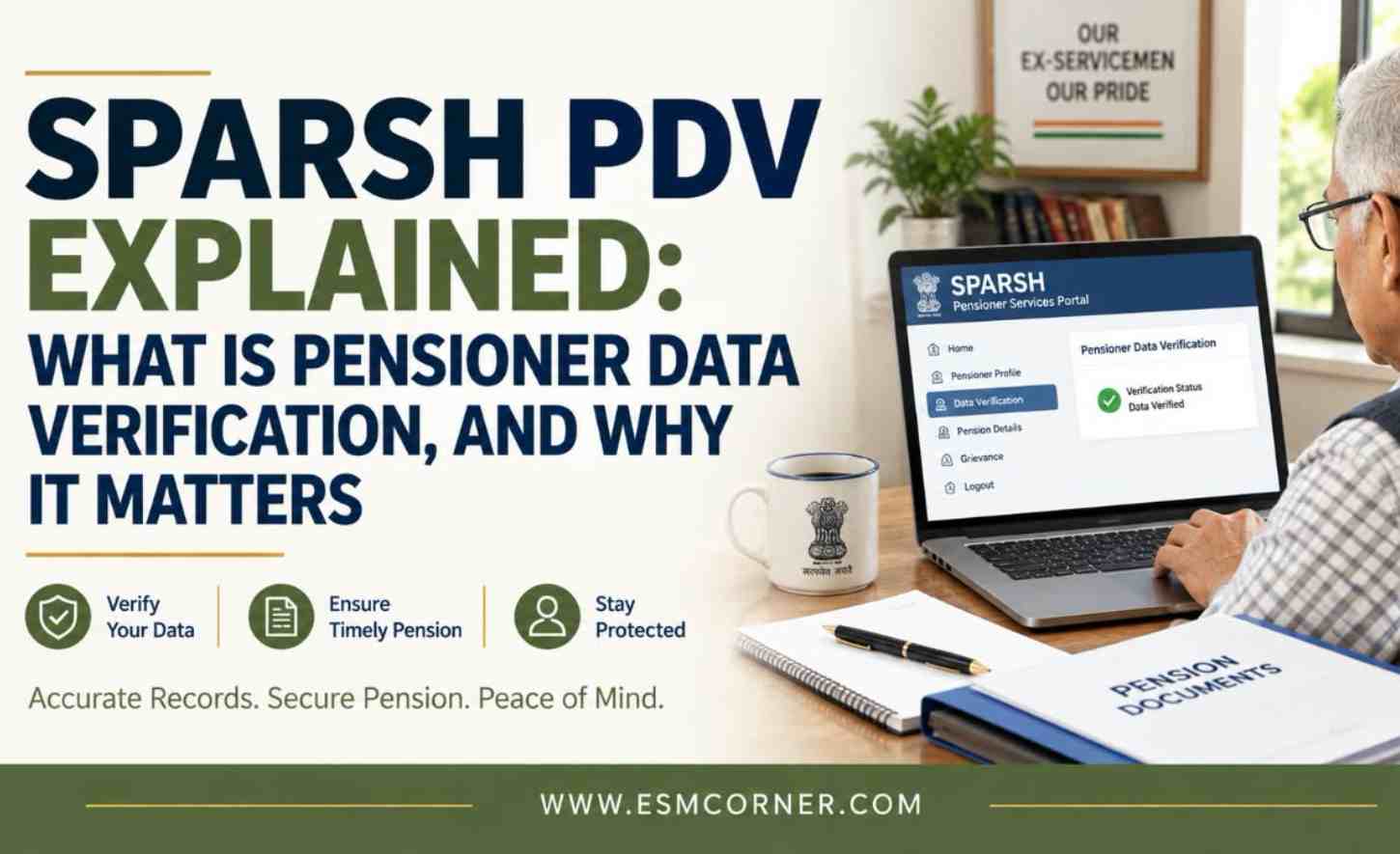
4. Form 16 is available directly on SPARSH — The Ministry of Defence has made Form 16 available on the SPARSH (System for Pension Administration Raksha) portal under “My Documents,” so you do not need to depend only on your bank for it.
5. An Annual Statement of Income is the alternative — If no TDS (Tax Deducted at Source) was deducted from your pension, SPARSH issues an Annual Statement of Income instead of Form 16, which can be used in its place.
6. Most pensioners can use the simpler ITR-1 form — Pensioners with straightforward income, such as pension, one house property, interest, and family pension, up to 50 lakh rupees, can generally file using ITR-1 instead of a longer form.
7. Checking your AIS is strongly recommended — The AIS (Annual Information Statement) reflects income reported by banks and other institutions, so cross-checking it before filing helps you avoid mismatch notices later.
8. PPO mismatches are a common filing issue — Since PPO (Pension Payment Order) numbers changed for many pensioners during the SPARSH migration, a mismatched PPO is a frequent cause of pension and TDS discrepancies while filing.
9. Exempt income should be kept separate — Commuted pension, disability pension, and gratuity are exempt from tax and should be identified and kept out of your taxable income while filing.
10. Form 10E is needed for arrears relief — If you are claiming relief under Section 89 for pension arrears received as a lump sum, Form 10E must be filed before you claim that relief in your return.
11. Missing the deadline has real costs — Filing after the due date attracts a late fee under Section 234F, along with interest on any unpaid tax, and can cost you the ability to carry forward certain losses.
Most ITR filing trouble for defence pensioners comes down to relying on old records instead of checking Form 16 and the AIS directly on SPARSH before filing. This article explains the current filing process and is not personal tax advice, so it is worth consulting a tax professional for anything beyond a straightforward pension-only return. Filing a little before the deadline, rather than at the last minute, gives you time to fix any mismatch you find.
Join our WhatsApp community for the latest pension, ECHS, and veteran welfare updates — tap here to join free.
Frequently Asked Questions
Q1. Where can defence pensioners get their Form 16?
A1. Form 16 is available directly on the SPARSH portal under the “My Documents” section, in addition to being available from your bank.
Q2. What if no TDS was deducted from my pension?
A2. SPARSH issues an Annual Statement of Income instead of Form 16 in such cases, which can be used in its place while filing.
Q3. Which ITR form should most defence pensioners use?
A3. Most pensioners with straightforward income can use the simpler ITR-1 form, provided their total income and sources meet its eligibility conditions.
Q4. Why should I check my AIS before filing my return?
A4. The AIS reflects income reported by banks and other institutions independently, so checking it helps you catch mismatches before the tax department does.
Q5. Why do PPO mismatches cause problems while filing ITR?
A5. Many pensioners’ PPO numbers changed during the SPARSH migration, and a mismatch between records is a common cause of TDS and pension discrepancies.
Q6. What happens if I file my ITR after the deadline?
A6. You will face a late fee under Section 234F, interest on any unpaid tax, and may lose the ability to carry forward certain losses.



















Useful guidance in a simple form to understand. Thank you 😊
As mentioned hereinabove Disability Pension is Exempted from Income.
Is this applicable in the New Regime of ITR also??
And how to get the Disability Pension bifurcated from Total Pension with supporting evidence ??
Yes, the exemption is still applicable under the New Tax Regime also. There has been no change in the existing position under the Income-tax Act, 2025.
If you are receiving Disability Pension, the entire pension is exempt from income tax. Both elements — the Disability Element as well as the Service Element — are tax-free. I repeat, both are tax-free.
For supporting evidence, you can refer to your PPO/e-PPO, Corrigendum PPO and SPARSH pension records.