

Source: ECHS SOP for Online Bill Processing, paras 104–107, p. 33–36, superseded on rates by ECHS Compendium 2022 Letter dated 10 Jun 2022, p. 499–502
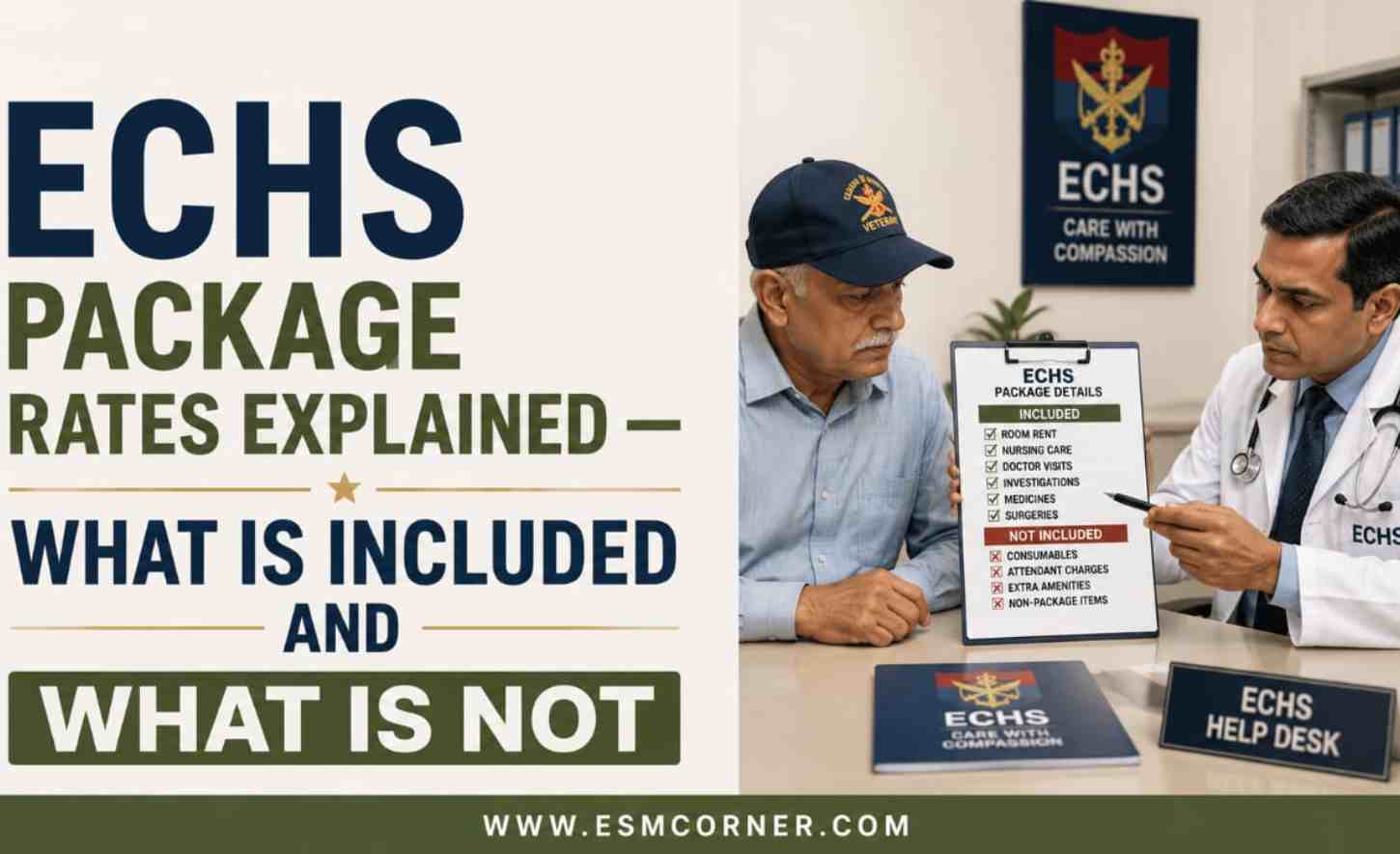
Beyond hospital treatment, ECHS also supports beneficiaries with certain prescribed medical equipment for home use. Understanding ECHS medical equipment reimbursement rules for hearing aids, glucometers, nebulizers, and CPAP/BiPAP machines helps you plan ahead and avoid confusion.
What ECHS Medical Equipment Reimbursement Covers
ECHS permits specified medical equipment under defined conditions. The main categories are hearing aids, artificial limbs and appliances, glucometers, nebulizers, CPAP/BiPAP machines, and spectacles in specific, limited circumstances.
- Hearing aids
- Artificial limbs and appliances (mobility aids)
- Glucometers
- Nebulizers
- CPAP/BiPAP machines
- Spectacles (in specific, limited circumstances)
No other equipment is currently authorised beyond these, unless a future circular adds to the list. Equipment with no listed ceiling rate, like an insulin pump, can still be considered through a separate, higher-level approval route covered below.
Hearing Aids
Hearing aids are issued only on the recommendation of an ENT Specialist, based on audiometric and audiological assessment. The reimbursable categories and rates were revised in 2022, as shown below.
| Hearing Aid Type | Ceiling Rate (+ GST) |
| Digital BTE (Behind-the-Ear) | Rs 8,000 |
| Digital ITC/CIC (In-the-Canal/Completely-in-Canal) | Rs 9,000 |
The BTE rate includes the ear mould, and the ITC/CIC rate includes the customised shell. The older Body-Worn/Pocket and Analogue BTE categories are now obsolete and no longer reimbursed. Replacement is generally permitted after five years, with a condemnation certificate from a technical expert and the ENT specialist’s approval.
CPAP/BiPAP Machines
CPAP and BiPAP machines are recommended by a Respiratory Medicine or Medical Specialist, typically for sleep apnoea. As of the 2022 revision, the ceiling rates are as shown below.
| Equipment | Ceiling Rate (+ GST) |
| CPAP Machine | Rs 45,000 |
| BiPAP (Bi-Level CPAP) | Rs 68,000 |
| Bi-Level Ventilatory System | Rs 1,05,000 |
Reimbursement is limited to actual cost or the CGHS ceiling rate, whichever is lower. Upkeep and maintenance are your own responsibility.
Artificial Limbs and Appliances
Artificial limbs, mobility aids, and related appliances are recommended by a Neuro Surgeon, Neuro Physician, or Orthopaedician, depending on the case. You can get these through Armed Forces Medical Service institutions or empanelled civil facilities, once referred by the Polyclinic. Service-fitted limbs are typically done at the Artificial Limb Centre (ALC), Pune, or its sub-centres. Re-issue is generally permitted after five years for adults, two years for children, and motorised wheelchairs and tricycles after five years regardless of age.
Glucometers and Nebulizers
These are issued when medically essential, under specific conditions. Glucometers are for beneficiaries with complications from diabetes mellitus, on the specific recommendation of a Medical Specialist. Nebulizers are for beneficiaries with Bronchial Asthma or respiratory conditions requiring regular inhalation therapy, again on a Medical Specialist’s specific recommendation. Both require approval from the appropriate medical authority at the Polyclinic level, which then initiates procurement through local purchase procedures.
Spectacles
Spectacles are not routinely provided under ECHS. The one exception is post-operative provision after conventional cataract surgery, capped at a modest fixed amount, needing the surgery date and recommendation of the Polyclinic’s Medical Officer or an Eye Specialist. Replacement is admissible once every three years, on medical recommendation.
How the Equipment Is Actually Issued
There are two routes for listed equipment such as hearing aids, CPAP/BiPAP, and artificial appliances. Through SEMO, the Station Executive Medical Officer, the Polyclinic forwards a demand to SEMO, who procures and issues the equipment
directly, and if not fulfilled within 90 days, the Polyclinic flags this and the order may be cancelled. The other route is individual reimbursement with prior sanction, where you can buy the equipment yourself and claim reimbursement, but only after prior sanction from the Regional Centre Director, capped at the prevailing ceiling rate.
For equipment with no listed ceiling rate, like an insulin pump, prior sanction comes from a High Power Committee chaired by the Joint Secretary (ESW), including a Government Hospital Specialist and other senior representatives.
Documents Needed for Equipment Reimbursement
If you are claiming reimbursement after purchasing equipment yourself, you will generally need the following.
- The prior sanction letter from the Regional Centre Director
- The original bill for the equipment
- A contingent bill
- Cancelled cheque or bank details
- A copy of your ECHS card
Repair, Maintenance, and Replacement
Repair and annual maintenance costs are your own responsibility. Replacement is generally considered after five years, based on an unserviceability certificate from an authorised service engineer, obtained through the Polyclinic if issued via SEMO, or directly if self-purchased. If equipment fails earlier and is still under warranty, warranty terms apply instead.
Final Thoughts
ECHS medical equipment reimbursement is targeted rather than broad, since each category has its own conditions, rates, and approval chain, revised periodically. Knowing which route applies to your situation, SEMO issue versus individual reimbursement, makes the difference between a smooth application and a frustrating back-and-forth.
Stay updated on defence-related matters — join our WhatsApp group.
Frequently Asked Questions
Q1: What medical equipment does ECHS currently cover?
A1: Hearing aids, artificial limbs and mobility appliances, glucometers, nebulizers, CPAP/BiPAP machines, and spectacles in specific circumstances are the categories currently authorised under ECHS equipment rules.
Q2: What are the current ECHS hearing aid rates?
A2: Digital BTE is reimbursed up to Rs 8,000 plus GST, and Digital ITC/CIC up to Rs 9,000 plus GST. Older Body-Worn/Pocket and Analogue BTE categories are no longer reimbursed at all.
Q3: What are the current CPAP/BiPAP reimbursement rates?
A3: CPAP is capped at Rs 45,000, BiPAP at Rs 68,000, and a Bi-Level Ventilatory System at Rs 1,05,000, all plus GST, or actual cost if that turns out lower.
Q4: How do I get equipment like a CPAP machine, through the Polyclinic or by buying it myself?
A4: Either route is possible. SEMO can procure and issue it directly based on a specialist’s recommendation, or you can buy it yourself after getting prior sanction and then claim reimbursement.
Q5: What if my required equipment isn’t in the standard list?
A5: Equipment without a listed ceiling rate, like an insulin pump, can still be approved, but only through a High Power Committee review at a more senior level.
Q6: Who pays for repair, maintenance, and replacement?
A6: You are responsible for ongoing maintenance and repair costs. Replacement is generally considered after five years, based on an unserviceability certificate, sooner only if the item is still under warranty.
For more ECHS guides and policy updates, browse our ECHS section.