
What ECHS AYUSH Coverage Includes
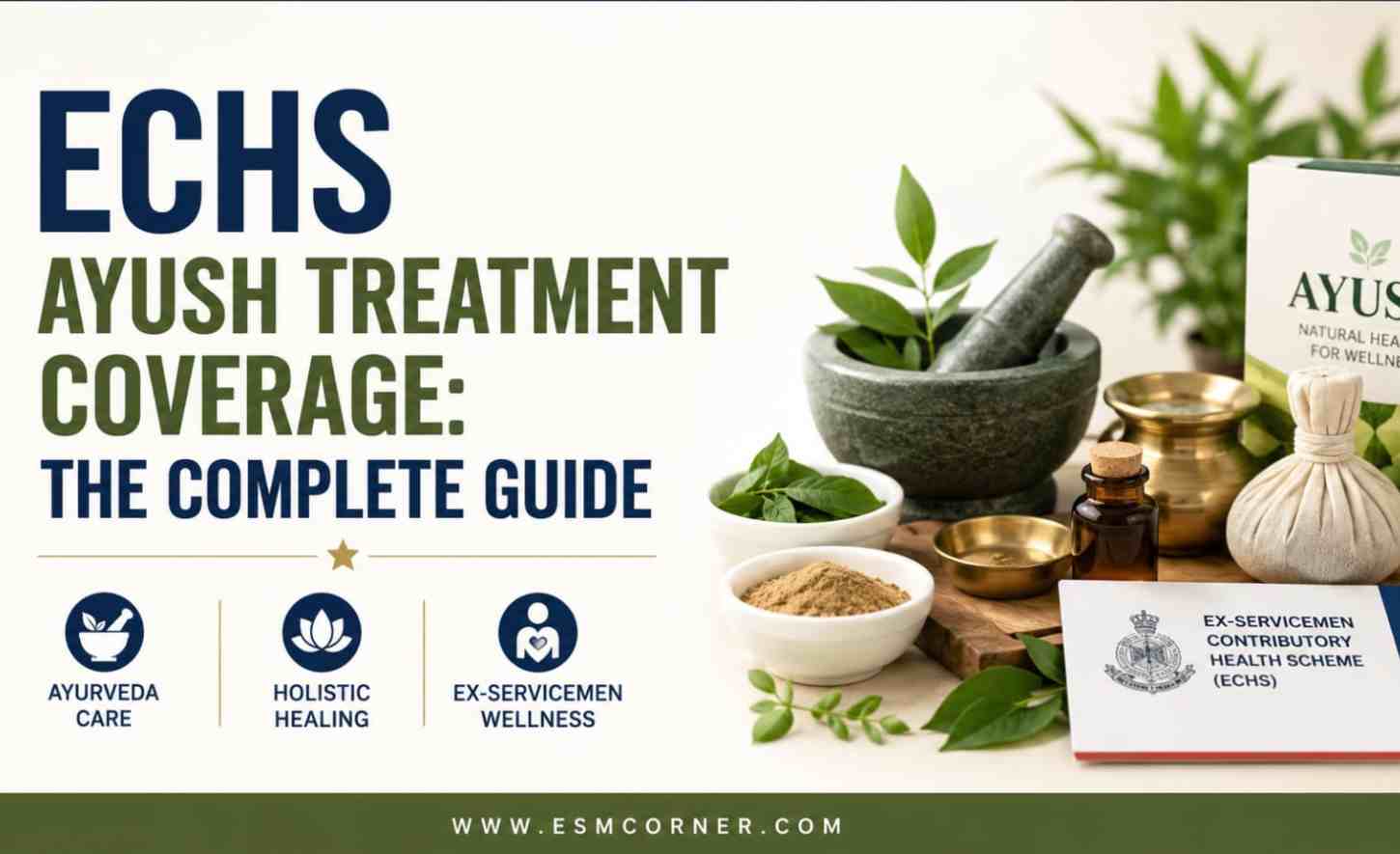
ECHS beneficiaries can use AYUSH treatment, but only at specific government-approved places. This includes Government AYUSH Hospitals and Colleges, National Institutes of AYUSH, and government hospitals or health centres that offer AYUSH services. Both outpatient (OPD) and hospital admission (IPD) treatment are allowed under this rule.
You Must Get Permission First
This is the most important rule to remember. You need permission before starting AYUSH treatment, not after. Apply to your parent Polyclinic, Regional Centre, or Central Organisation ECHS in advance. Fill the form in two copies. Keep one copy for your reimbursement claim. The other stays on record with ECHS.
You Cannot Mix Systems
Here is the second key rule. You cannot get Allopathic and AYUSH treatment for the same condition at the same time. If you are already under Allopathic treatment, you will not get permission for AYUSH treatment at the same time. You can switch from one system to another, but only after you formally stop the first one.
How You Get Your Money Back
You pay for AYUSH treatment first. Then you claim the cost back. This is different from empanelled hospital treatment, where the hospital usually bills ECHS directly. Submit your claim to your parent Polyclinic. Include your original permission letter and all bills and receipts.
Watch the Time Limit
Your permission letter is valid for only three months. If you do not use it within this window, you may need to apply again. Plan your treatment schedule around this deadline.
Choosing Between AYUSH and Allopathic Treatment
Deciding which system suits your condition is a personal and medical choice. Some beneficiaries use AYUSH for long-term conditions like joint pain or digestive issues, while relying on Allopathic care for acute or emergency situations. Whatever you choose, remember the core rule: get permission first, and do not run both systems together for the same condition at the same time.
Discussing AYUSH With Your Regular Doctor Too
Even if you plan to use AYUSH treatment, it is worth discussing this decision with your regular Allopathic doctor as well, especially if you have ongoing health conditions. This helps make sure your overall care stays coordinated, even though you are formally switching treatment systems for a specific condition.
One More Practical Tip
Keep a copy of your AYUSH permission letter in the same place you store your other ECHS documents, such as your card and past claim papers. This makes it easy to find quickly when the three-month window is running out and you need to submit your claim.
Why the Government-Approved Facility Rule Exists
It might feel restrictive that ECHS only covers AYUSH treatment at government-approved institutions rather than any AYUSH practitioner or private clinic you trust. This rule exists mainly for quality and accountability reasons. Government AYUSH Hospitals, Colleges, and National Institutes follow standardised treatment protocols and are subject to regulatory oversight, which makes it easier for ECHS to verify that a claimed treatment genuinely happened, was medically appropriate, and was billed correctly.
If you have a preferred AYUSH practitioner outside this approved list, it is worth checking with your Regional Centre whether any process exists to expand recognised facilities in your area, though this is not guaranteed.
Planning an AYUSH Course of Treatment
AYUSH treatments, particularly Ayurveda and Unani therapies, often involve a structured course spread over several weeks rather than a single visit. Before you apply for permission, it helps to ask the AYUSH facility for a realistic estimate of how many sessions or how long your treatment course will likely take. This lets you plan your three-month permission window sensibly, and helps you decide whether you will need to apply for renewed permission partway through a longer treatment plan.
Final Thoughts
ECHS AYUSH treatment coverage gives you real choice in how you get treated. But it comes with two firm rules: get permission first, and do not mix treatment systems. Getting the permission sorted early is the most important step if you are considering this route.
Stay updated on defence-related matters — join our WhatsApp group.
Frequently Asked Questions
Q1: Does ECHS cover Ayurveda, Homeopathy, and other AYUSH treatments?
A1: Yes, but only at approved Government AYUSH hospitals, colleges, National Institutes, and government facilities that specifically offer AYUSH care under this ECHS provision, under the current policy.
Q2: Do I need permission before starting AYUSH treatment?
A2: Yes. You must get formal permission before treatment starts, not after you have already begun or completed the treatment at a facility, as a standard practice.
Q3: Can I get AYUSH and Allopathic treatment together?
A3: No. You cannot be under both treatment systems at the same time for the same condition. You can switch between them, but only after formally stopping one first.
Q4: How do I get my money back for AYUSH treatment?
A4: You pay for the treatment first, then submit a claim to your Polyclinic along with your permission letter, original bills, and prescription, for a smoother overall process.
Q5: How long is the permission letter valid?
A5: It is valid for three months from the date it is issued, so plan your treatment schedule carefully within this window to avoid delays, before assuming otherwise.
Q6: What happens if my permission expires before I finish treatment?
A6: You may need to apply for fresh permission to continue getting reimbursement for the remaining part of your treatment course, based on the current rules.
Q7: Can I choose any private AYUSH clinic I like?
A7: No. Only specific government-approved AYUSH facilities are covered under this rule, not private clinics of your own choosing or preference, for the most reliable answer.
Q8: Is IPD (hospital admission) AYUSH treatment also covered?
A8: Yes, both outpatient and hospital admission AYUSH treatment are allowed at approved facilities, subject to the same prior permission requirement being met first, as a general rule.
For more ECHS guides and policy updates, browse our ECHS section.