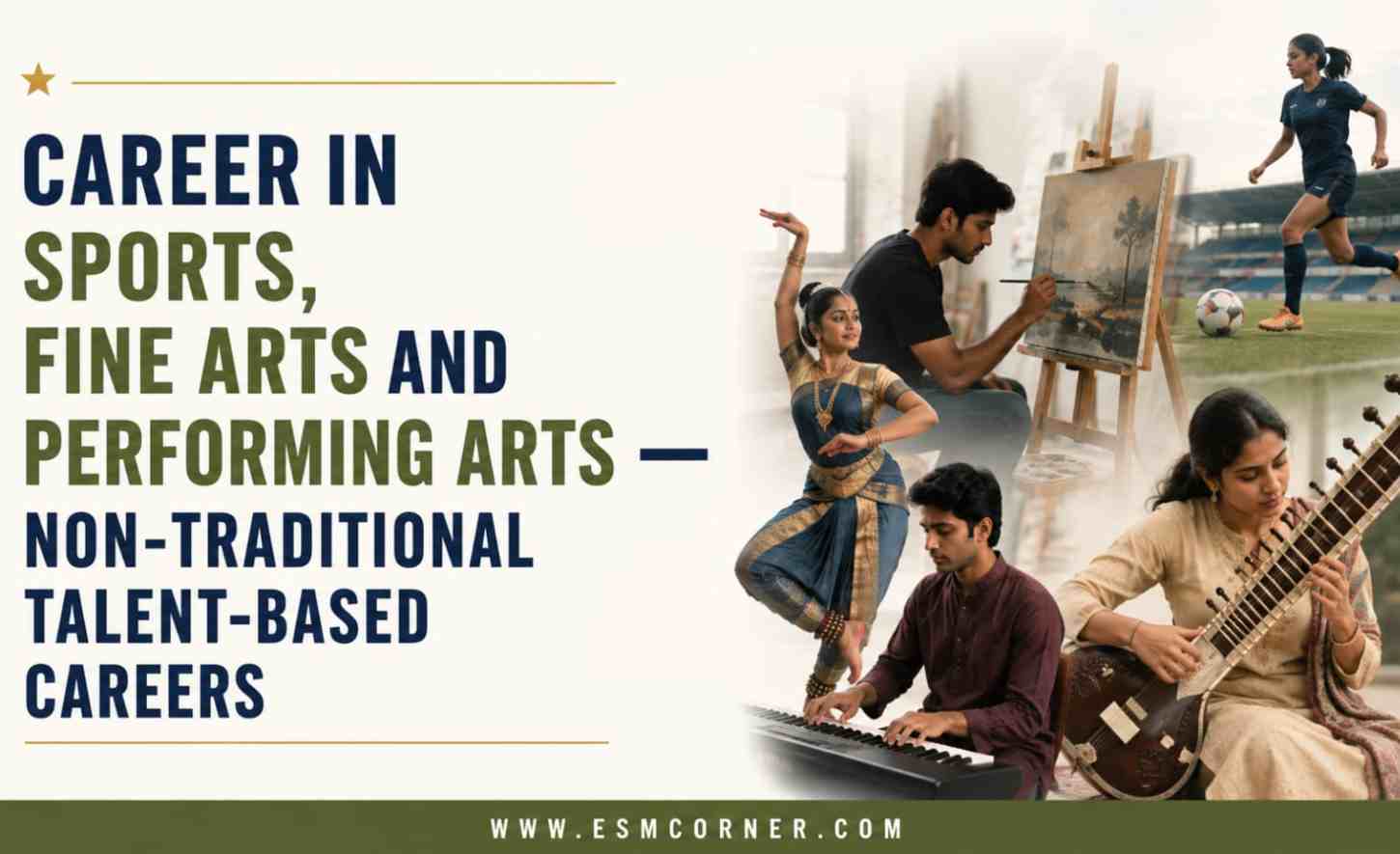
Not every student dreams of sitting at a desk from nine to five as an engineer, doctor, lawyer, or government officer. Across classrooms in India, many young minds are naturally drawn towards playing sports, composing music, dancing, painting, acting, photography, making films, or writing stories.
Yet, the moment a student expresses a desire to pursue these creative fields, parents and relatives naturally get anxious. They worry about job stability, financial security, and whether these non-traditional paths can actually support a family in the long run. Questions like “Can this really become a proper career?” or “Is talent enough to survive in the real world?” frequently cause intense confusion at home.
The simple answer is yes—sports, Fine Arts, and Performing Arts offer genuine, highly fulfilling career opportunities today. However, these fields function very differently from standard academic professions. In traditional jobs, passing exams and earning a degree often opens the door to employment. In talent-based fields, a degree alone is rarely sufficient. Success in creative and athletic industries requires a dedicated blend of talent, formal training, daily discipline, continuous practice, professional networking, emotional patience, and practical business skills. This comprehensive guide explains how Indian students can turn their passion into a sustainable career, covering training options, industry opportunities, major challenges, and realistic career planning.
What Are Non-Traditional Careers and Why Are They Growing?
Non-Traditional Talent-Based Careers are professions where your core earning ability comes from physical skill, artistic creativity, visual expression, or performance ability rather than formal textbook examinations. In past decades, pursuing these paths was seen as a high-risk gamble because job opportunities were limited to a few state academies or competitive national teams. Today, India’s creative economy is expanding rapidly, driven by digital media, streaming platforms, fitness awareness, and private sports leagues.
- Digital Streaming & OTT Platforms: Web series, short films, podcasts, and digital shows have multiplied jobs for actors, voice artists, scriptwriters, and sound engineers.
- Sports Infrastructure: The rise of regional leagues in kabaddi, football, badminton, and cricket has created thousands of support roles beyond playing on the field.
- Visual Media & Branding: Corporate companies hire visual artists, photographers, and graphic creators to manage their visual branding and advertising campaigns.
- Fitness & Wellness Industry: Increasing health awareness has created steady demand for certified trainers, sports coaches, and nutrition specialists.
Exploring Career Opportunities in Sports
Many students believe that a career in sports means playing for the Indian national team. In reality, the sports ecosystem supports dozens of essential professional roles behind the scenes.
- Professional Athlete: Competing at district, state, national, or international levels in games like cricket, badminton, athletics, or wrestling.
- Sports Coach & Physical Trainer: Training young athletes in schools, private sports academies, fitness clubs, and sports complexes.
- Sports Management Professional: Handling event logistics, athlete contracts, brand sponsorships, and team operations.
- Sports Journalist & Content Creator: Writing match reports, producing video content, anchoring sports broadcasts, and managing media channels.
- Fitness Trainer & Sports Nutritionist: Helping athletes and fitness enthusiasts maintain peak physical health, strength, and diet plans.
Exploring Career Opportunities in Fine Arts
Fine Arts focus on visual creation and tangible artistic expressions that communicate ideas, emotions, and concepts visually.
- Painter & Visual Artist: Creating original artwork for art galleries, private collectors, public installations, and interior designers.
- Illustrator & Graphic Artist: Designing visual content for children’s books, comic books, digital magazines, and advertising materials.
- Photographer & Videographer: Working in commercial advertising, fashion shoots, news media, wildlife documentations, and event photography.
- Sculptor & Installation Artist: Working with clay, stone, metal, and modern materials for architectural projects and public spaces.
- Art Educator & Workshop Trainer: Teaching art in schools, colleges, private studios, or running independent online art classes.
Exploring Career Opportunities in Performing Arts
Performing Arts involve using your voice, body, facial expressions, and stage presence to convey artistic concepts directly to an audience.
- Actor & Theatre Artist: Performing in stage plays, television shows, feature films, OTT web series, and commercial advertisements.
- Dancer & Choreographer: Performing live, choreographing dance routines for stage shows or films, and operating dance academies.
- Musician & Singer: Performing live concerts, composing background scores for films, recording vocals, and releasing independent tracks.
- Voice-Over & Dubbing Artist: Lending voice talents to animated movies, foreign film dubs, audiobooks, radio commercials, and corporate videos.
Comparing Talent-Based Career Areas
Understanding the primary demands of each field helps students choose a path that matches their personal strengths.
| Career Area | Example Careers | Best For | Key Requirement |
| Sports | Athlete, Coach, Fitness Trainer | Highly active, disciplined students | Physical fitness and game strategy |
| Fine Arts | Painter, Photographer, Illustrator | Visual thinkers and creative designers | Strong observation and creative skill |
| Performing Arts | Actor, Dancer, Musician | Expressive and confident performers | Stage presence and vocal or body control |
| Support Roles | Sports Manager, Art Director, Sound Tech | Organised and technical creative minds | Technical skills and industry knowledge |
| Media & Education | Sports Journalist, Art Teacher | Strong communicators and guides | Subject expertise and clear communication |
Talent
Building a successful career out of a natural passion requires a structured, step-by-step strategy.
1.Identify Your Core Talent:Test your aptitude early.
Distinguish between a casual hobby and a true professional skill by seeking objective feedback from neutral mentors.
2.Obtain Formal Training:Enroll in academies or degree programs.
Join recognized sports academies, art institutes, or music schools to master underlying techniques and fundamentals.
3.Practice Consistently:Develop strong daily habits.
Dedicate focused hours every single day to refining your physical stamina, vocal range, or artistic craft.
4.Build a Professional Portfolio:Document your finest work.
Create a clean, well-organized compilation of your match records, artwork collections, performance videos, or audio reels.
5.Participate in Competitions and Auditions:Gain crucial industry exposure.
Enter state tournaments, local art exhibitions, open auditions, and talent festivals to evaluate your standing against peers.
6.Develop Backup Skills:Ensure long-term financial stability.
Learn digital media tools, coaching certifications, teaching methodologies, or business management alongside your main artistic focus.
Important Reality Check: Handling Challenges and Misconceptions
A talent-based path comes with unique difficulties that every student and parent must understand before stepping forward.
Common Industry Challenges
- Financial Uncertainty: Earnings can fluctuate wildly, especially during the early years of freelancing or competing.
- Intense Competition: Thousands of talented individuals compete for a limited number of high-profile opportunities.
- High Physical & Mental Strain: Sports injuries or creative burnout can temporarily interrupt your ability to work.
Common Myths vs. Reality
- Myth: Talent alone guarantees success and wealth.
- Reality: Raw talent only opens the door; daily discipline, professional behavior, and networking sustain a career.
- Myth: Non-traditional careers do not require formal education.
- Reality: Structured courses build essential technique, introduce industry mentors, and grant access to professional equipment.
Conclusion
Careers in sports, Fine Arts, and Performing Arts offer rewarding and dynamic futures for students who treat their passion with professional seriousness. Success in these fields is rarely an overnight miracle or a guaranteed shortcut to fame. It requires years of deliberate practice, continuous learning, emotional resilience in the face of rejection, and smart professional management.
By combining natural talent with formal education, physical or creative discipline, and practical backup skills, Indian students can turn their creative passions into lifelong, sustainable professions. Choose a talent-based path not merely for quick popularity, but because you love the daily work and are fully prepared to master the craft.
READ ALSO: CAREER OPTIONS AFTER 12TH ART/HUMANITIES
Frequently Asked Questions
Q1.Can I build a career in sports if I do not reach the national team?
Yes. You can work as a certified coach, sports analyst, fitness trainer, referee, event manager, or sports nutritionist in schools, academies, and private leagues.
Q2.Is formal education necessary for Fine Arts and Performing Arts?
While raw skill matters most, formal degrees or diplomas provide foundational techniques, exposure to professional tools, peer networks, and recognized credentials for teaching roles.
Q3.How can students manage financial instability in creative fields?
Students should develop secondary skills like teaching, graphic design, content writing, or event coordination to generate steady income while pursuing primary artistic projects.
Q4.How do I know if my talent is just a hobby or a career choice?
If you enjoy an activity for relaxation without pressure, it is a hobby. If you are willing to accept strict discipline, criticism, long training hours, and rejection to improve, it can become a career.
Q5.What is the role of digital media in talent-based careers?
Digital platforms allow artists, athletes, and performers to display their work globally, attract direct clients, find sponsors, and build a professional personal brand without middle agents.
Q6.How important is a portfolio for fine artists and performers?
A professional portfolio or showreel is essential. Directors, gallery owners, and clients hire based on proven visual or recorded evidence of your skills rather than written resumes.
Q7.How should parents support children who want non-traditional careers?
Parents should encourage professional training, help set practical goals, ensure academic completion as a fallback option, and maintain open conversations about financial realities.
Q8.What is the biggest mistake young creative students make?
The biggest mistake is relying entirely on natural talent while ignoring regular practice, professional networking, communication skills, and practical backup planning.
For daily defence updates, government notifications, recruitment alerts, welfare schemes, career opportunities, education news, and other important announcements, join our WhatsApp Community. Click here to join our WhatsApp Group.