


Eye problems are extremely common among ageing defence veterans and their elderly dependents. Conditions like macular degeneration, diabetic retinopathy, and retinal vein occlusion often require a specialised injection directly into the eye called an intravitreal injection. This is a delicate and expensive procedure — and it is covered under ECHS.
But the approval process for intravitreal injections under ECHS has specific rules that many beneficiaries and even hospital staff do not fully understand. The result is unnecessary delays, patients being sent back to the polyclinic when they should not be, and treatment getting postponed.
This article explains the complete eye treatment process under ECHS with a focus on intravitreal injection approval rules — who needs approval, who does not, and whose responsibility it is to get that approval. All facts are strictly from ECHS SOP April 2026.
Is Eye Treatment Covered Under ECHS?
Yes. Eye treatment is covered under ECHS. Beneficiaries can be referred to empanelled hospitals that have ophthalmology services for eye-related consultations, investigations, and procedures including intravitreal injections.
What is an Intravitreal Injection?
An intravitreal injection is a medical procedure where medicine is injected directly into the vitreous — the gel-like substance inside the eye. It is used to treat conditions affecting the retina such as macular degeneration, diabetic macular oedema, and retinal vein occlusion. It is a procedure that may need to be repeated multiple times depending on the patient’s condition.
Because this procedure is expensive and repeated, ECHS has specific approval rules around it.
The Two Situations — When Approval is Needed and When It is Not
This is the most important part of eye treatment under ECHS. Whether online approval is needed for an intravitreal injection depends entirely on who recommended the injection.
Situation 1 — Recommended by an Empanelled Hospital Ophthalmologist
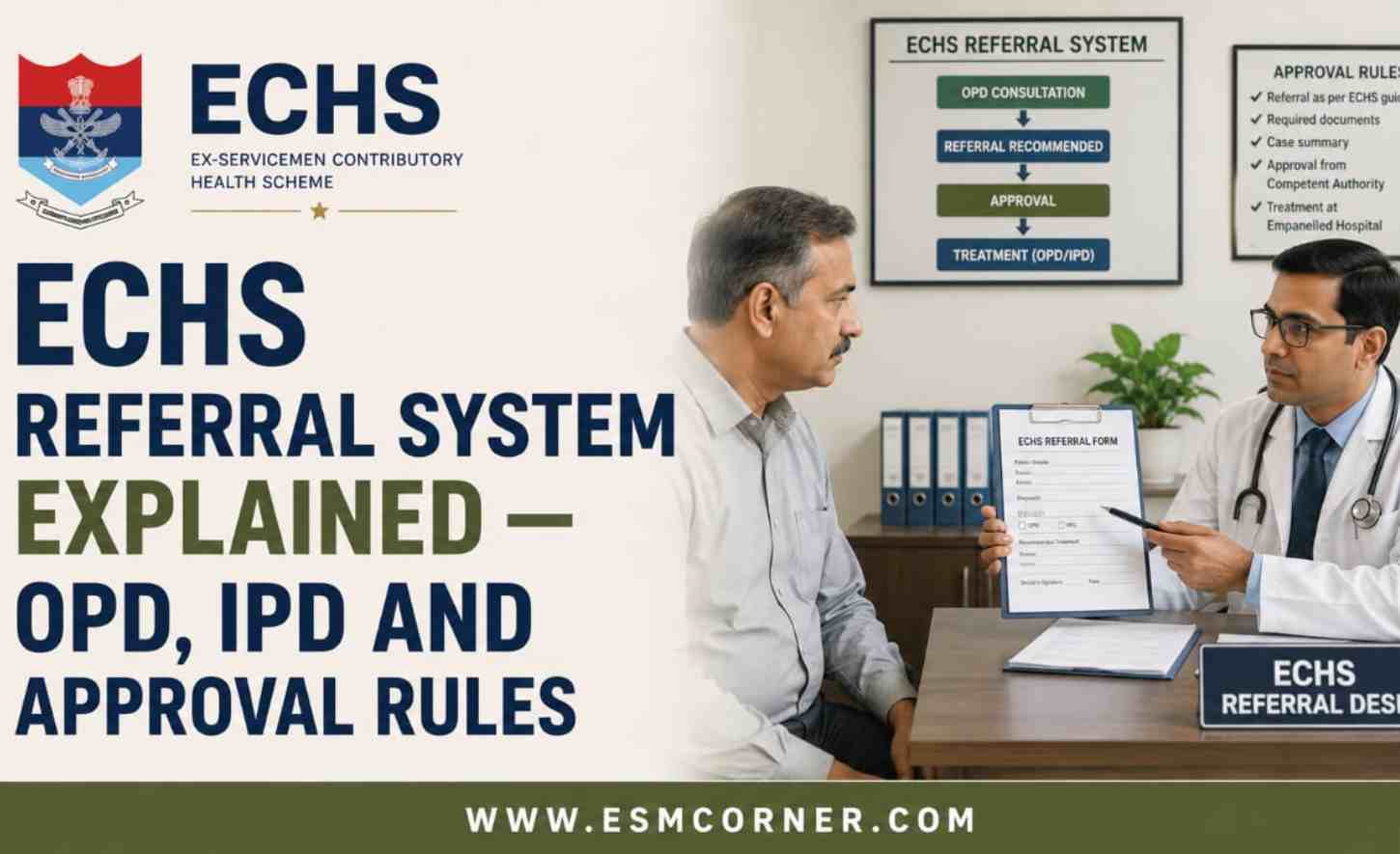
If the ophthalmologist at the empanelled hospital recommends an intravitreal injection — whether the patient visited the hospital directly or was referred from the polyclinic — the empanelled hospital must take online approval from ECHS authorities through the ECHSF-A form.
This applies in two specific cases —
When the ECHS beneficiary visits the empanelled eye hospital directly.
When the patient is referred directly from the polyclinic to the empanelled eye hospital due to non-availability of an ophthalmologist at the Military Hospital.
In both these cases the empanelled hospital must apply for approval online using the ECHSF-A form before proceeding with the intravitreal injection.
Situation 2 — Recommended by a Service or Military Hospital Ophthalmologist
If the ophthalmologist at a Military Hospital or Service Hospital has recommended the intravitreal injection, then there is no requirement for approval from ECHS authorities. The empanelled hospital can directly administer the injection without raising any approval form.
This is a significant relief for patients. If your Military Hospital eye specialist has already assessed your condition and recommended the injection in writing, the empanelled hospital proceeds directly — no waiting, no additional paperwork.
The Patient Does Not Run for Approval — Ever
This is a very important rule that every ECHS beneficiary must remember. Whether approval is needed or not — it is always the responsibility of the empanelled hospital to obtain the online approval from ECHS authorities. The patient does not need to go back to the polyclinic to get this approval.
The ECHS SOP April 2026 is very clear on this — patients are not required to come back to the polyclinic for approval. It is the responsibility of the hospital to get approval online.
This protects elderly eye patients from unnecessary travel and delays.
What Documents the Patient Should Carry
When visiting an empanelled hospital for eye treatment carry —
Original ECHS smart card and a photocopy.
Referral from the polyclinic if below 70 years of age.
Any previous eye examination reports, prescriptions, or imaging.
If the Military Hospital ophthalmologist has recommended the intravitreal injection carry that written recommendation — it removes the need for any ECHS approval at the empanelled hospital.
Ward Entitlement for Eye Procedures
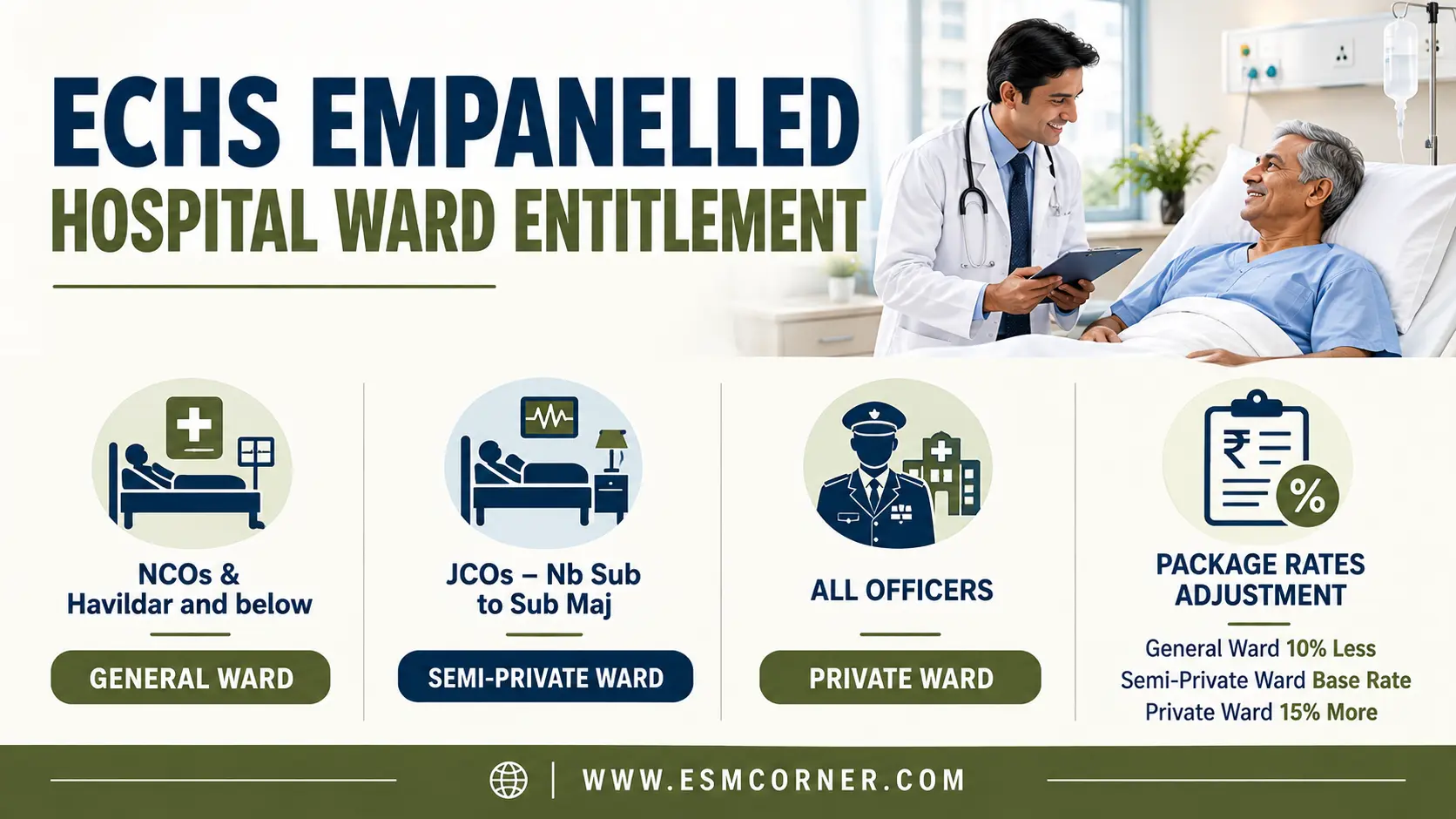
Ward entitlement for any procedure including eye procedures follows the standard ECHS rank-based entitlement — General Ward for NCOs and below, Semi-Private for JCOs, and Private Ward for Officers. This applies to any admission required for eye procedures as well.
Common Mistakes to Avoid
Patients going back to the polyclinic to get approval for intravitreal injections — this is the hospital’s job, not the patient’s.
Not carrying the Military Hospital ophthalmologist’s recommendation when visiting the empanelled hospital — this document removes the need for approval entirely.
Assuming eye treatment is not covered under ECHS and paying out of pocket.
Hospitals sending patients back to polyclinic for approvals when it is the hospital’s responsibility to apply online.
Not knowing that patients referred directly from polyclinic to empanelled eye hospital due to non-availability of Military Hospital ophthalmologist also require the hospital to get online approval.
Conclusion
Eye treatment including intravitreal injections is covered under ECHS. The approval process is straightforward once you understand who recommended the injection. If a Military Hospital specialist recommended it — no approval needed. If an empanelled hospital specialist recommended it — the hospital gets online approval through ECHSF-A form. Either way the patient never runs to the polyclinic for approval. The hospital does its job and the patient receives treatment without unnecessary delay.
Know your rights, carry your documents, and never let a hospital send you back for approvals that are their responsibility.
READ ALSO: ECHS AYUSH TREATMENT POLICY 2026
Frequently Asked Questions
Q1. Is eye treatment covered under ECHS?
Yes. Eye treatment is covered under ECHS. Beneficiaries can be referred to empanelled hospitals with ophthalmology services for eye consultations, investigations, and procedures including intravitreal injections. The correct referral and approval process must be followed as per ECHS SOP April 2026.
Q2. What is an intravitreal injection and why is it needed?
An intravitreal injection is a procedure where medicine is injected directly into the eye to treat conditions affecting the retina. It is used for conditions like macular degeneration, diabetic macular oedema, and retinal vein occlusion. It may need to be repeated multiple times and is covered under ECHS subject to the correct approval process.
Q3. Does an empanelled hospital need approval before giving an intravitreal injection?
It depends on who recommended the injection. If the empanelled hospital’s own ophthalmologist recommended it, the hospital must obtain online approval from ECHS authorities through the ECHSF-A form before proceeding. If a Military Hospital or Service Hospital ophthalmologist recommended it, no approval is needed and the hospital can proceed directly.
Q4. Does the patient need to go to the polyclinic to get approval for an intravitreal injection?
No. The patient never needs to go back to the polyclinic for this approval. The ECHS SOP April 2026 clearly states that it is the responsibility of the empanelled hospital to get online approval from ECHS authorities. The patient simply waits at the hospital while the hospital handles the approval process.
Q5. What form does the hospital use to get approval for intravitreal injections?
The empanelled hospital uses the ECHSF-A form to apply for online approval from ECHS authorities for intravitreal injections recommended by their own ophthalmologist. This form is submitted online by the hospital. The patient does not need to fill or submit any form for this approval.
Q6. If a patient is referred from polyclinic directly to an empanelled eye hospital does the hospital need approval for intravitreal injection?
Yes. If the patient is referred directly from the polyclinic to the empanelled eye hospital due to non-availability of an ophthalmologist at the Military Hospital and the empanelled hospital ophthalmologist recommends an intravitreal injection, the empanelled hospital must obtain online approval through the ECHSF-A form before administering the injection.
Q7. What documents should a patient carry when visiting an empanelled hospital for eye treatment?
Carry your original ECHS smart card and a photocopy, polyclinic referral if you are below 70 years of age, previous eye examination reports and prescriptions, and if available the written recommendation from a Military Hospital ophthalmologist. The Military Hospital recommendation removes the need for ECHS approval at the empanelled hospital entirely.
Q8. Does the intravitreal injection approval rule apply to beneficiaries aged 70 and above?
Beneficiaries aged 70 and above can visit the empanelled eye hospital directly without a polyclinic referral for OPD consultation. However the approval rules for intravitreal injections remain the same — if the empanelled hospital ophthalmologist recommends the injection the hospital must still obtain ECHSF-A approval unless a Military Hospital ophthalmologist has already recommended it.
Q9. Can a hospital refuse to give an intravitreal injection while waiting for ECHS approval?
The hospital must follow the approval process as required. However the responsibility of getting that approval lies entirely with the hospital. Patients should not face delays because of hospital administrative processes. If you face unreasonable delays contact the Officer in Charge of your ECHS Polyclinic or the Regional Centre ECHS.
Q10. What should a patient do if the hospital asks them to arrange approval themselves?
If an empanelled hospital asks you to go to the polyclinic or arrange the ECHS approval yourself for an intravitreal injection, this is incorrect as per ECHS SOP April 2026. Politely inform the hospital that obtaining online approval is their responsibility. If the hospital still insists, contact the Officer in Charge of your ECHS Polyclinic or escalate to the Regional Centre ECHS immediately.
For daily defence updates, government notifications, recruitment alerts, welfare schemes, career opportunities, education news, and other important announcements, join our WhatsApp Community. Click here to join our WhatsApp Group.



























When situation 1 arises and empanelled hospital forwards ECHSF-A to service center (INS Ashwini) ,they do not recommend injection to be given by ophthalmologist of empanelled hospital.They say that facilities are available at INS Ashwini.The patients are running from pillar to post for intravirteal injections