
Think about it — years of marching on the drill ground, attending back-breaking Republic Day or Thal Sainik Camps, learning basic fieldcraft, showing up again and again in the name of selfless service. Sounds familiar? If you’re an NCC cadet, this is probably your story. Yet here’s the surprising part — a huge number of cadets have absolutely no idea that all this hard work opens a direct gateway into the Indian Army officer cadre.
The NCC Special Entry Scheme is exactly that gateway. It’s a unique pathway that lets senior NCC cadets become commissioned officers without appearing for a written exam — as long as they meet the eligibility conditions. It genuinely values the discipline, camaraderie, leadership, and grit you’ve already built through years of active cadet life.
But here’s the catch, and it’s an important one: skipping the written exam does not mean an easy ride. You still have to clear the entire Selection Centre process, survive the intense five-day SSB Interview, pass strict medical boards, and finally, secure your spot on the merit list. Let’s walk through this entire journey, step by step.
What Exactly Is NCC Special Entry, and Why Is It Different?
This scheme, designed by the Ministry of Defence, acts as a direct bridge for motivated cadets to join the Indian Army as Short Service Commissioned (SSC) officers. Unlike routes such as the Combined Defence Services (CDS) exam, this one skips the written entrance test entirely — because the system already recognizes the military orientation you’ve built over your NCC years.
This route genuinely suits cadets who thrive in hands-on leadership, field exercises, and group settings, rather than those who prefer purely academic, competitive testing. Compare it to CDS or NDA, and the difference becomes obvious — in CDS, thousands get filtered out through written papers on general knowledge and mathematics. Here, shortlisting depends heavily on your graduation marks and your performance in the NCC ‘C’ Certificate exam, and that takes you straight to the SSB interview.
Do You Qualify? Eligibility, In Plain Terms
Before you get excited, make sure you actually tick these boxes — it saves you from last-minute disqualification during document verification:
- Educational Qualification — A degree from a recognized university (or an equivalent qualification) with at least 50% aggregate marks across all years. If you’re in your final year, you can still apply, as long as you meet the required percentage before the course begins.
- NCC ‘C’ Certificate — Non-negotiable. You need at least two academic years of service in the Senior Division/Wing of the NCC, and a minimum ‘B’ Grade in your ‘C’ Certificate exam.
- Marital Status & Nationality — Both male and female candidates must be unmarried and fulfill the standard nationality criteria for joining the Indian Armed Forces.
The Selection Journey: What Actually Happens
Since there’s no written exam here, the entire weight of screening shifts onto two things — your academic consistency and your personality evaluation. Here’s how it flows:
| Stage | What It Checks | What You Should Focus On | What You Get |
|---|---|---|---|
| Application & Shortlisting | Academic performance and eligibility | Accurate graduation marks with valid certificates | SSB call letter |
| SSB Interview (5 Days) | Officer Like Qualities (OLQs) and leadership | Authentic personality, logic, and physical grit | Recommendation from the SSB Board |
| Medical Examination | Physical fitness and medical standards | Maintaining high physical health | Medically fit declaration |
| Final Merit List | Ranking based on SSB marks | Achieving maximum performance scores | Joining letter for OTA Chennai |
| Officer Training | Transforming cadets into leaders | Building tactical capability, discipline, stamina | Commissioned as Lieutenant |
Mastering the SSB Interview: Where Your NCC Background Actually Helps
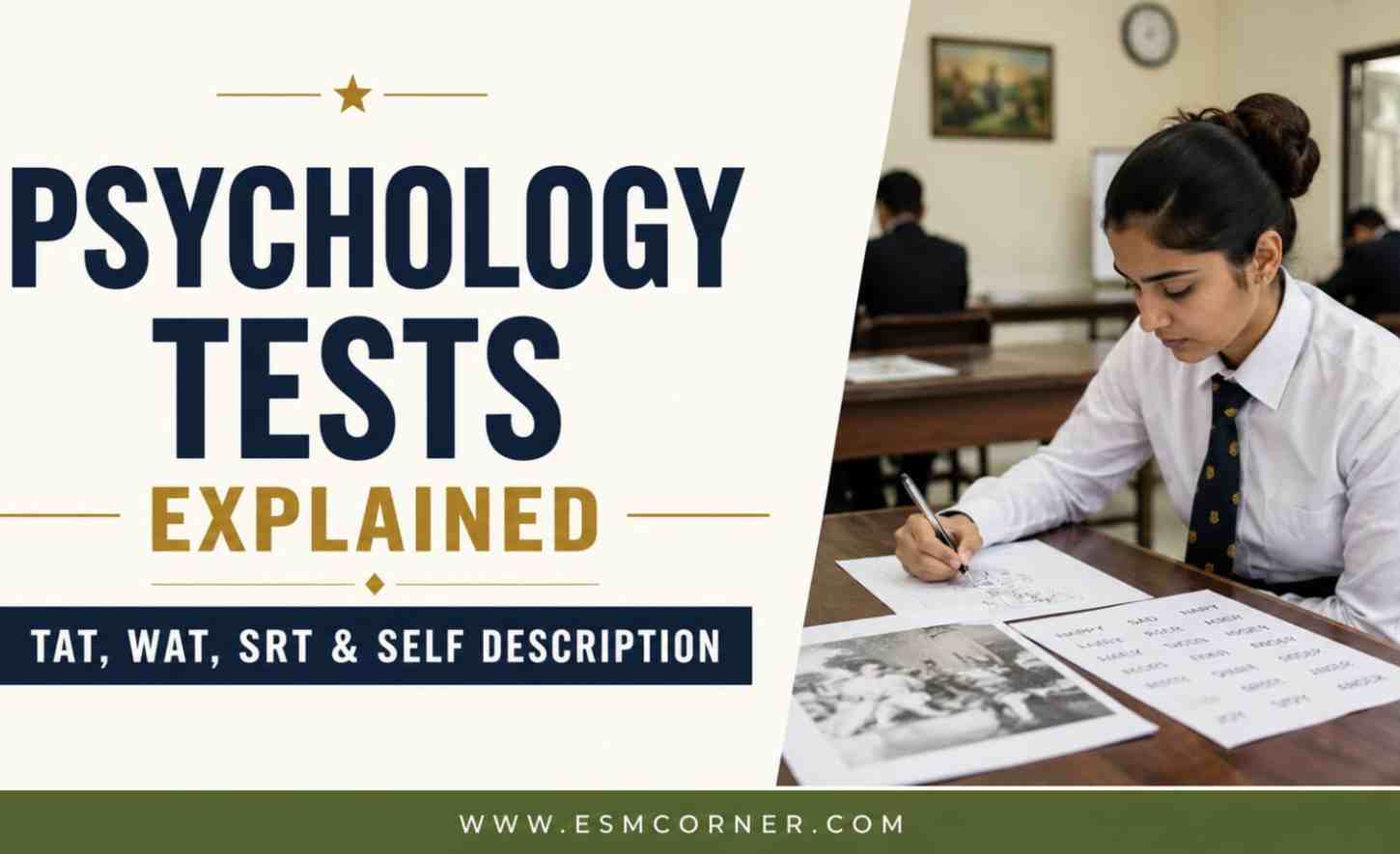
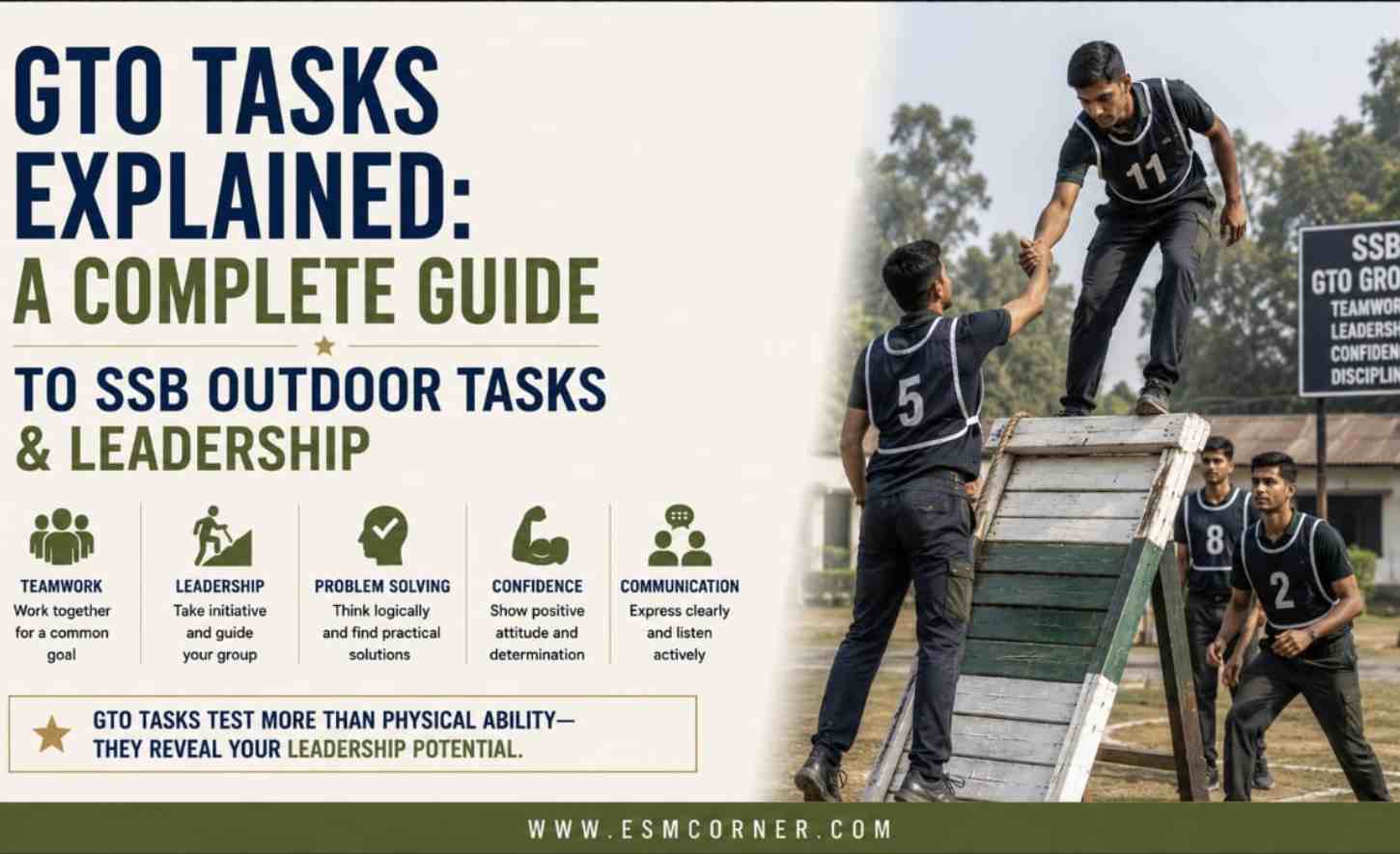
The SSB is a five-day evaluation that studies your personality through three lenses — the Psychological Tests, the GTO tasks, and the Personal Interview.
How does your NCC experience actually give you an edge?
Quite a lot, honestly — but only if you use it right:
- You already know how to stand at attention, wear a uniform with pride, and understand basic military terminology.
- During GTO tasks, your familiarity with command tasks, obstacle courses, and rope climbing gives you instant, real confidence — no starting from scratch here.
- In the Personal Interview, your practical camp experiences — managing a tent line, leading a cultural contingent, handling logistics — give you genuine, real evidence of your initiative and decision-making. That’s gold in an interview room.
Where do NCC cadets usually slip up?
- Overconfidence. A lot of cadets assume that holding an ‘A’ Grade in their ‘C’ Certificate practically guarantees selection. It doesn’t. Some even come across as arrogant during group discussions, trying to dominate peers with aggressive drill-instructor language. Remember — the SSB is looking for trainable, empathetic, flexible leaders, not rigid disciplinarians.
- Ignoring current affairs. Assuming your military knowledge alone is enough is a common and costly mistake.
A simple and balanced preparation strategy that delivers results:
- Sharpen your communication — practice expressing your thoughts clearly and logically in English, especially during Group Discussions and Lecturettes.
- Build genuine OLQs — focus on real qualities like effective intelligence, social adaptability, sense of responsibility, determination, and courage.
- Work on physical fitness — cardiovascular endurance, push-ups, sit-ups, pull-ups — you want to clear individual obstacles comfortably, not painfully.
- Know your own NCC background inside out — your unit, the weapons you trained on, camp details, basic military structure. Don’t get caught off guard on your own history.
Life After Selection: OTA Chennai and Beyond
Once your name shows up in the All India Merit List, you’ll receive your joining instructions for the prestigious Officers Training Academy (OTA), Chennai.
What does training at OTA actually involve?
It runs for 49 weeks, and it’s genuinely transformative — the kind of experience that reshapes a civilian graduate into a battle-ready military leader. Expect rigorous physical conditioning, weapon training, tactical field exercises, military law studies, drill instruction, and leadership development. And here’s something worth knowing — the bonds you build with your course mates during night marches and gruelling tactical exercises tend to last a lifetime.
What happens once you’re commissioned?
You step in as a Lieutenant in the Indian Army under the Short Service Commission (SSC), for an initial 10 years, extendable by 4 more. Right from the start, you take command of a platoon of 30 to 40 soldiers. Your daily responsibilities include keeping operational readiness up, leading your men, managing troop welfare, handling logistics, and making sharp, decisive calls under pressure.
Career progression typically looks like this:
- Lieutenant — On commissioning
- Captain — After 2 years of service
- Major — After 6 years of service
- Lieutenant Colonel — After 13 years of service
Officers can also apply for a Permanent Commission (PC) during their tenure, subject to service requirements, performance reports, and official criteria.
Advantages and Challenges of NCC Special Entry
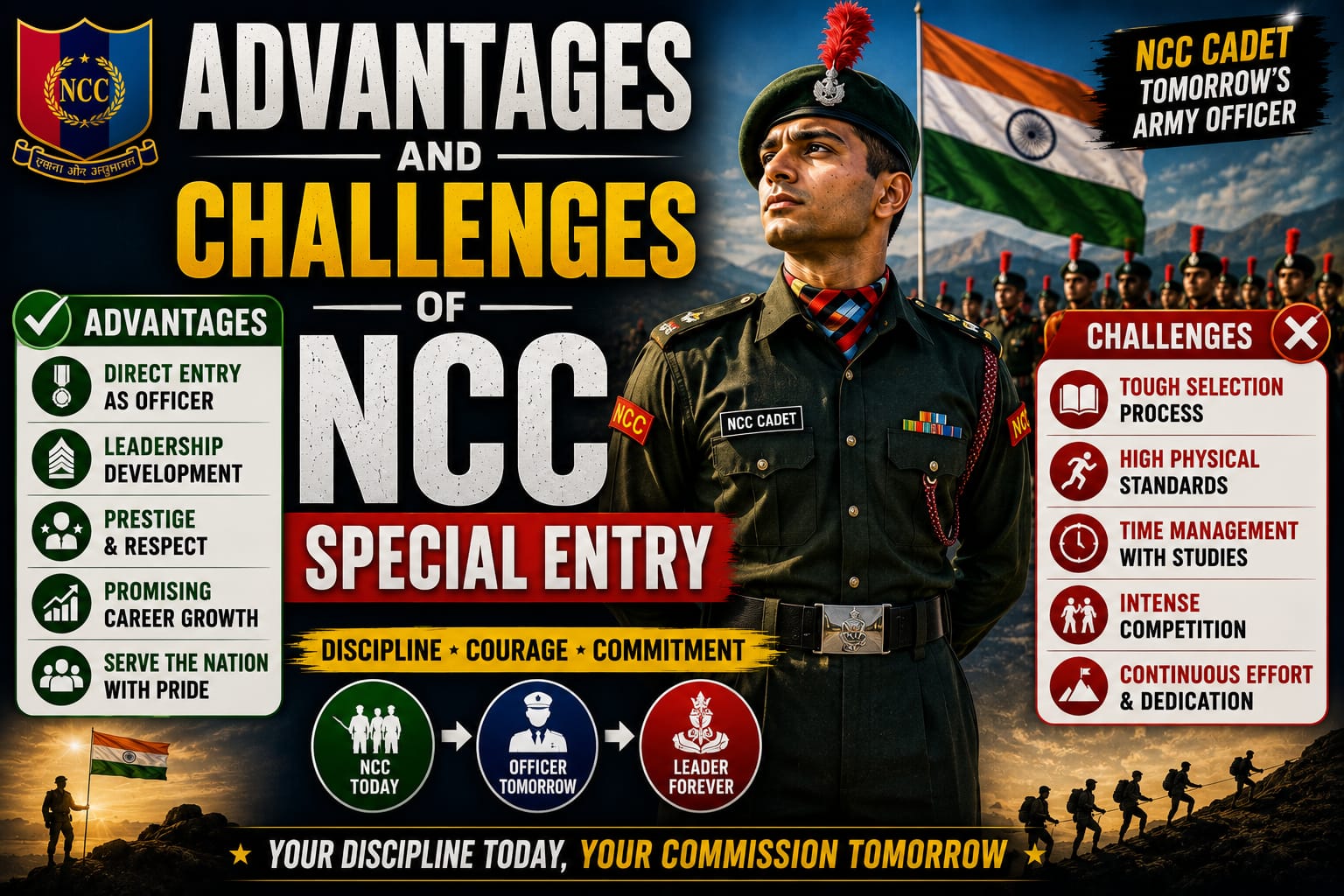
Key Advantages:
- Direct Access — Skips competitive written exams like CDS entirely.
- Recognition of Merit — Directly rewards the years of hard work, field discipline, and leadership you’ve already put in through NCC.
- Head Start — Gives you prior familiarity with military culture, rank structures, and basic weapons handling, well before your peers.
Real Challenges:
- High Cut-Offs — Shortlisting based on graduation percentage can get genuinely competitive depending on how many people apply.
- Pure SSB Pressure — Without a written exam score to fall back on, your entire selection rests solely on your SSB marks and medical fitness.
Conclusion
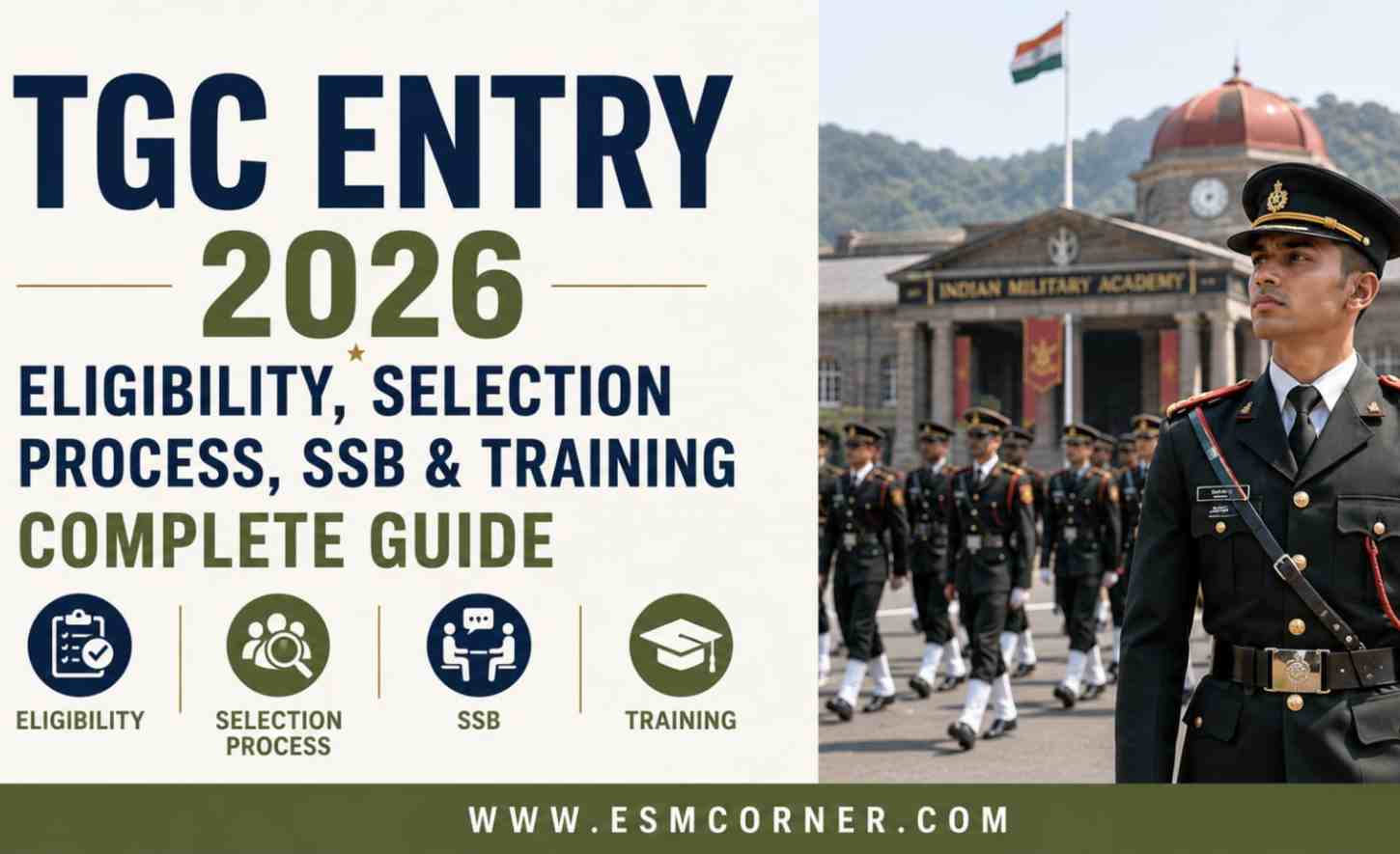
The Complete NCC Special Entry Guide highlights one of the most prestigious direct pathways into the Indian Armed Forces. For an NCC cadet who has already spent mornings on the parade ground, nights in field camps, and days learning unity and discipline, this scheme represents the ultimate reward for hard work. It bridges the gap between being a cadet and standing as a commissioned officer leading soldiers in service of the nation. However, direct entry should never be mistaken for an easy entrance.
The SSB selection process demands absolute authenticity, mental agility, sharp intelligence, emotional maturity, and physical stamina. Start preparing early by refining your communication skills, keeping track of national affairs, staying physically fit, and cultivating true Officer Like Qualities in your daily life. Wear your NCC background with humility, approach the SSB with thorough preparation, and step forward confidently to turn your dream of wearing the Indian Army officer uniform into reality.
Also Read: 10 Simple Habits for ESM to Stay Fit & Happy
Frequently Asked Questions
What is NCC Special Entry?
It is a direct entry scheme by the Indian Army allowing eligible Senior Division NCC cadets with a ‘C’ Certificate to apply directly for the SSB interview without appearing for a written examination.
Who can apply for Indian Army NCC Entry?
Unmarried male and female graduates holding a recognized university degree with a minimum 50% aggregate score and a valid NCC ‘C’ Certificate with at least a ‘B’ Grade can apply.
Is there a written examination in this entry?
No, there is no written test. Candidates are shortlisted directly based on their university graduation aggregate marks and NCC ‘C’ Certificate grading before being called for the SSB interview.
Is the NCC ‘C’ Certificate compulsory?
Yes, holding a valid NCC ‘C’ Certificate with a minimum ‘B’ Grade obtained after two years of service in the Senior Division or Wing is mandatory for this entry scheme.
Is SSB mandatory for NCC Special Entry?
Yes, clearing the 5-day SSB interview is completely mandatory. Every shortlisted candidate must clear psychological testing, GTO tasks, personal interview, and subsequent medical fitness tests to be merit-listed.
How does NCC experience help during SSB?
NCC training provides practical confidence in drill, group dynamics, outdoor activities, physical stamina, and basic military knowledge, giving candidates authentic life experiences to highlight during interviews and GTO tasks.
How should candidates prepare for the selection?
Candidates should focus on improving spoken English, expanding general awareness, building physical fitness, practicing psychological testing sets, and developing authentic Officer Like Qualities through active daily responsibility and leadership.
What are the career growth opportunities?
Candidates are commissioned as Lieutenants on Short Service Commission for 10 years (extendable to 14). They can seek Permanent Commission, advance through regular officer ranks, and gain exceptional leadership experience.
For daily defence updates, government notifications, recruitment alerts, welfare schemes, career opportunities, education news, and other important announcements, join our WhatsApp Community. Click here to join our WhatsApp Group.