
Source: HC Kerala
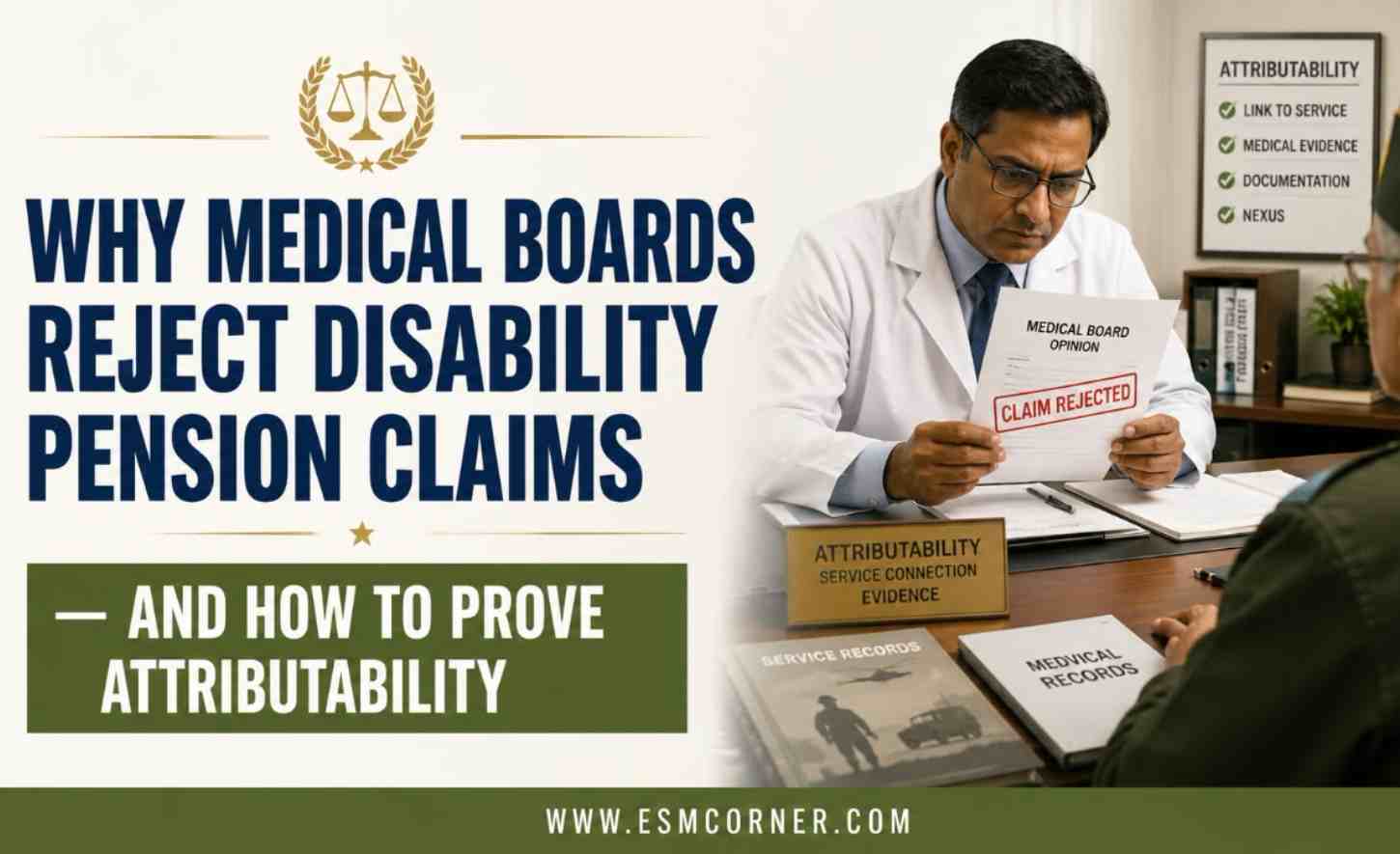
One of the most frustrating experiences for a veteran is receiving a disability pension rejection that offers almost no explanation. If you’ve asked yourself why disability pension rejected your claim with barely a line of reasoning, you’re far from alone — and importantly, courts have increasingly ruled that this kind of bare rejection isn’t good enough.
The Core Legal Concept: Attributability
At the heart of every disability pension claim is the question of attributability disability pension — whether your disability is connected to your military service. Under the Entitlement Rules for Casualty Pensionary Awards, 2008, this determination is left to medical experts. But that doesn’t mean their conclusion can simply be a one-line statement.
Why a “One-Line Opinion” Isn’t Enough
Courts have made this point repeatedly and clearly. In one detailed ruling, a High Court held that a bare, one-line opinion from medical authorities, without proper reasoning, is not determinative of whether a disability is attributable to or aggravated by military service. In another case, the Supreme Court set aside a rejection because the discharge order and the denial of disability pension were based on a medical opinion that lacked adequate reasons.
Common Reasons Given for Rejection
Rejections typically cite one or more of the following:
- The disability is classified as “Neither Attributable to Nor Aggravated” (NANA) by service
- The condition is described as a “constitutional disorder” or “lifestyle disease”
- The disability manifested during a peace-time posting
- The claimant did not raise the claim promptly after discharge Each of these grounds, on its own, has been successfully challenged in court when not backed by proper medical reasoning and evidence.
What Proper Medical Board Reasoning Looks Like
For a rejection based on lack of attributability to hold up legally, the Medical Board is generally expected to provide specific, evidence-based reasoning — not just a conclusion. This means explaining, with reference to your actual service
record and medical history, why the condition is genuinely unconnected to your duties, rather than simply asserting it.
Step 1: Request the Full Medical Board Proceedings
Don’t rely only on the summary rejection letter. Request the complete Medical Board proceedings, which will show whether genuine reasoning was recorded or whether the conclusion was largely unexplained.
Step 2: Compare Against Your Service and Medical History
Gather your enrolment medical examination report and service record. If you were found fit at entry and the condition developed only during your service, this strengthens the case for attributability.
Step 3: File a First Appeal, Then Approach the AFT If Needed
If the Medical Board’s reasoning appears thin or absent, this is strong ground for a first appeal, and if that fails, for a case before the Armed Forces Tribunal, citing the now well-established requirement for properly reasoned findings.
Final Thoughts
A disability pension rejection is not automatically final, especially where the medical board rejection reasons given amount to little more than a bare conclusion. Courts have consistently insisted on real, evidence-based reasoning before a claim can be denied.
section for guidance tailored to your case.
Frequently Asked Questions
Q1: Can a disability pension be denied with just a one-line rejection?
A1: Courts have held that a bare, one-line medical opinion without proper reasoning is not sufficient to determine that a disability is unrelated to military service.
Q2: What does “attributability” mean in disability pension cases?
A2: It refers to whether your disability is connected to, or was worsened by, your military service — a central question in deciding disability pension eligibility.
Q3: What if my rejection letter just says “NANA” without explanation?
A3: This is exactly the kind of unreasoned rejection that has been successfully challenged in multiple court rulings, and is worth reviewing with your full Medical Board proceedings.
Q4: Can I request the full Medical Board proceedings, not just the summary letter?
A4: Yes, and doing so is an important first step, since it reveals whether genuine reasoning was recorded behind the rejection.
Q5: Does being fit at the time of joining help my case?
A5: Yes. If no disability was recorded at entry and the condition developed during service, this is an important factor supporting attributability.
Q6: What should I do if the Medical Board’s reasoning seems inadequate?
A6: You can pursue a first appeal, and if unsuccessful, take the matter to the Armed Forces Tribunal, citing the established legal requirement for properly reasoned medical findings. Meta Title Kit