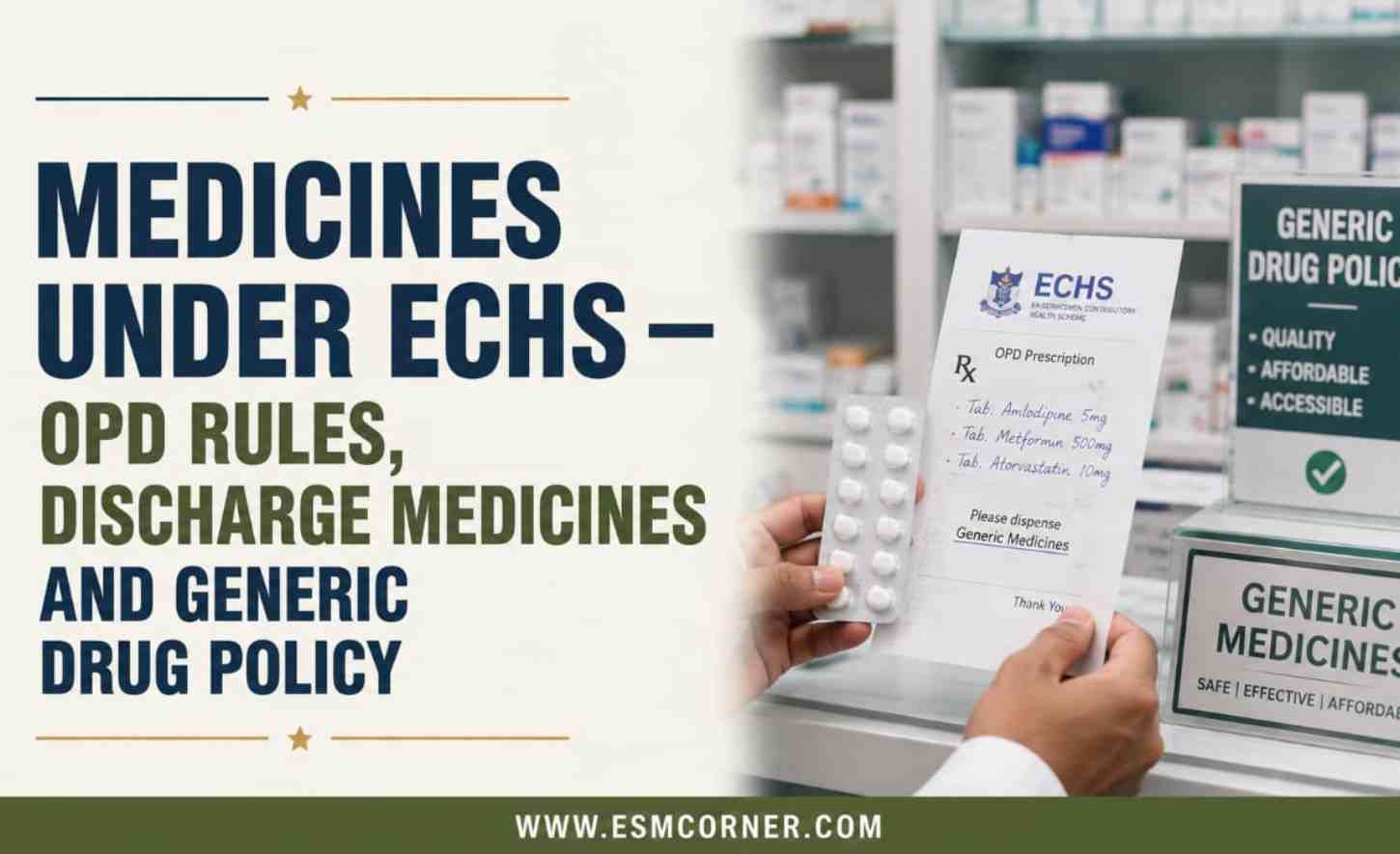
Medicines are the most frequently needed part of any medical treatment. For defence veterans and their families enrolled in ECHS, knowing exactly how medicines are handled — where to get them, how many days supply you receive, and what type of medicines are prescribed — is essential everyday knowledge.
Many ECHS beneficiaries make costly mistakes simply because they do not know the medicine rules. Some buy medicines from outside the polyclinic unnecessarily. Others expect the hospital to give them medicines during an OPD visit when that is not the correct process. And some accept branded medicine prescriptions without knowing they are entitled to generic medicines.
This article explains the complete medicine policy under ECHS — for OPD patients, admitted patients, and patients at discharge. All facts are strictly from ECHS SOP April 2026.
OPD Patients — No Medicines from the Hospital
This is one of the most important rules to understand clearly.
When you visit an empanelled hospital as an OPD patient — meaning you are not admitted and you go home the same day — the hospital will not give you any medicines.
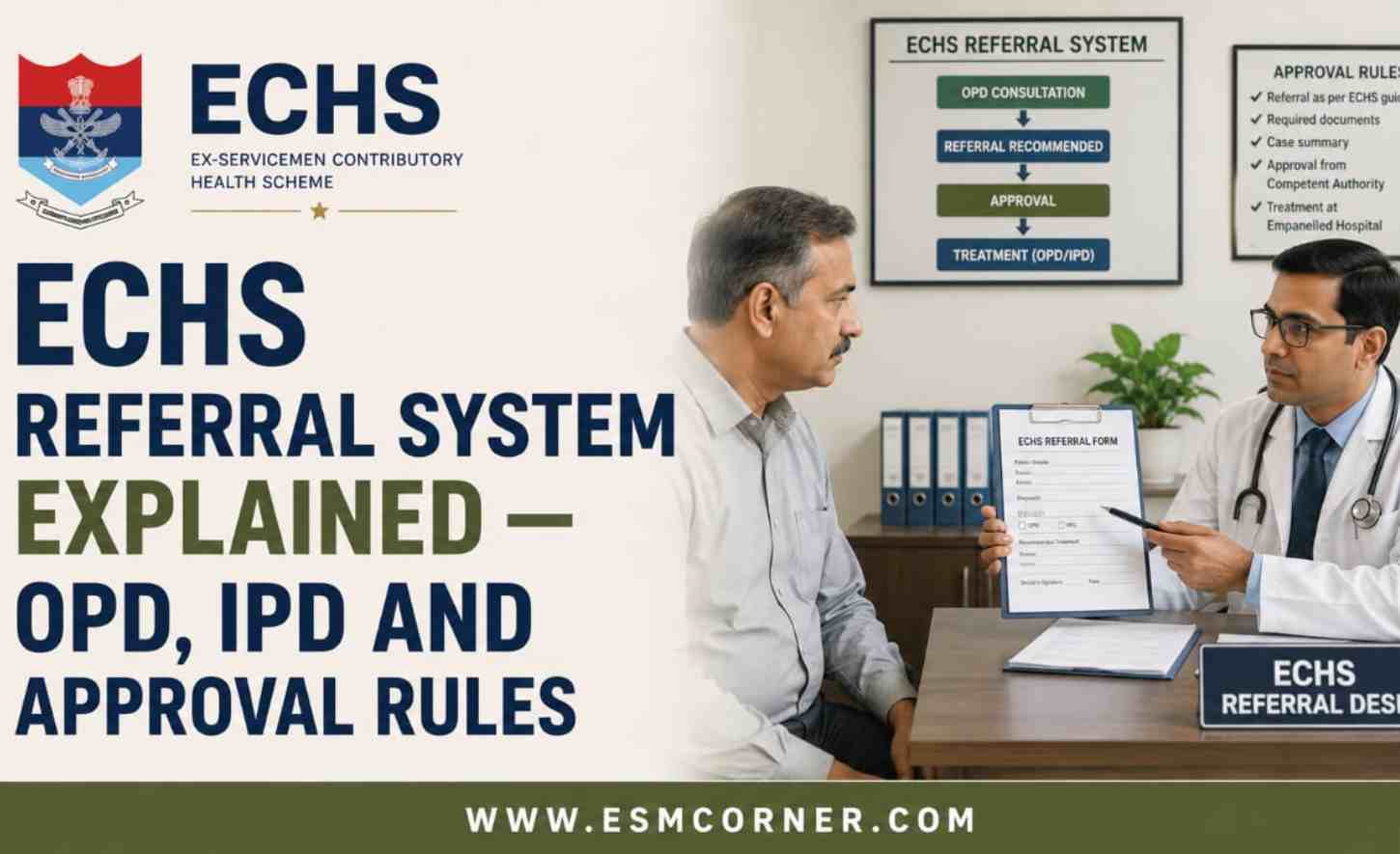
The specialist at the empanelled hospital will examine you and write a prescription. But the medicines on that prescription must be collected from your dependent ECHS polyclinic — not from the hospital.
This is the correct and only process for OPD medicine collection. Do not expect the empanelled hospital to hand over medicines during an OPD visit. They will not and they should not.
One exception exists — any medication that is directly involved in a test or investigation during the OPD visit will be provided by the hospital. For example if a contrast dye is needed for a CT scan during your OPD visit, the hospital provides that. But routine prescription medicines go to the polyclinic.
Admitted Patients — Medicines During Hospital Stay
When you are admitted to the hospital, all medicines required during your hospital stay are covered under your ECHS package rate. The hospital provides all medicines needed for your treatment during admission. You do not pay separately for medicines during your stay.
This includes all medicines, injections, IV fluids, and related items used during treatment. These are part of the package and cannot be billed separately.
Discharge Medicines — Seven Days Supply
When you are discharged from the hospital, the hospital must provide you with medicines for continuity of treatment. The rules are clear —
The hospital provides seven days of medicines not exceeding Rs 2,000 in value at the time of discharge.
These must be essential medicines in generic form only — for continuity of the treatment you received during admission.
What the Hospital Cannot Give at Discharge
The ECHS SOP April 2026 specifically lists items that the hospital cannot include in the discharge medicine package —
Nutritional supplements, tonics, cough syrups, vitamins, and injections are not to be issued at discharge. Non-drug items, equipment, and appliances are also not to be issued.
Only essential medicines directly related to your ongoing treatment are permitted in the seven-day discharge supply.
Generic Medicines — The Rule for All ECHS Patients
This is a firm and non-negotiable rule under ECHS. All empanelled hospitals are bound to prescribe only generic medicines to all ECHS patients — whether they are OPD patients, admitted patients, or being discharged.
Generic medicines are medicines that contain the same active ingredient as a branded medicine but are sold without a brand name and at a significantly lower cost.
What if a Branded Medicine is Necessary?
There are situations where generic medicines may not be available or where the treating specialist genuinely believes a branded medicine is essential for the line of treatment. In such cases —
The treating specialist must submit a written justification for using the branded medicine. This justification must be uploaded along with the medical claim on the BPA portal.
If the justification is not provided, ECHS will not reimburse the cost of the branded medicine. The hospital will bear that cost — not the patient.
This rule protects ECHS beneficiaries from being over-prescribed expensive branded medicines when cheaper generic alternatives are available.
Cancer Medicines — Separate Rule
Cancer patients follow a different medicine collection process. All cancer patients must collect their anti-cancer medicines from their dependent ECHS polyclinic on the prescription of the oncologist of the empanelled hospital. The empanelled hospital does not issue cancer medicines directly to the patient.
Common Mistakes to Avoid
Expecting medicines from the empanelled hospital during an OPD visit — go to your polyclinic for OPD medicines.
Accepting branded medicines without asking if generic alternatives are available.
Not knowing the seven-day discharge medicine limit of Rs 2,000 and being charged extra.
Expecting vitamins, tonics, or nutritional supplements in the discharge medicine package — these are not covered.
Not reporting to the polyclinic when a hospital prescribes branded medicines without written justification.
Conclusion
The ECHS medicine policy is clear and patient-friendly when you understand it correctly. OPD medicines from the polyclinic, all medicines during admission covered in the package, seven days of generic discharge medicines up to Rs 2,000, and generic prescription as the default rule. Know this process, follow it correctly, and you will never pay unnecessarily for medicines that ECHS is designed to provide.
READ ALSO: CANCER TREATMENT UNDER ECHS
Frequently Asked Questions
Q1. Will the empanelled hospital give medicines during an OPD visit?
No. When you visit an empanelled hospital as an OPD patient the hospital will not give you medicines. The specialist will write a prescription and you must collect the medicines from your dependent ECHS polyclinic. The only exception is medication directly involved in a test or investigation conducted during the OPD visit which the hospital provides.
Q2. How many days of medicines does a patient receive at hospital discharge under ECHS?
On discharge from an empanelled hospital the patient receives seven days of medicines not exceeding Rs 2,000 in value. These are essential generic medicines for continuity of treatment only. Nutritional supplements, tonics, cough syrups, vitamins, injections, and non-drug items are not included in the discharge medicine package.
Q3. Are medicines during hospital admission covered under the ECHS package rate?
Yes. All medicines required during your hospital stay are covered under the ECHS package rate. This includes medicines, injections, IV fluids, and all related items used during treatment. The hospital cannot charge separately for medicines used during your admission as they are part of the all-inclusive package rate.
Q4. Why does ECHS insist on generic medicines?
ECHS insists on generic medicines because they contain the same active ingredients as branded medicines but cost significantly less. This keeps treatment affordable and sustainable under the scheme. All empanelled hospitals are bound by their agreement with ECHS to prescribe only generic medicines to all ECHS patients by default.
Q5. Can a doctor prescribe a branded medicine to an ECHS patient?
A doctor can prescribe a branded medicine only if the generic version is not available or if the branded medicine is genuinely essential for the line of treatment. In such cases the treating specialist must submit a written justification which is uploaded on the BPA portal along with the medical claim. Without this justification ECHS will not reimburse the branded medicine cost.
Q6. What happens if a hospital prescribes branded medicines without justification?
If a hospital prescribes branded medicines without providing the required written justification ECHS will not pay for those medicines during claim processing. The cost is borne by the hospital — not by the patient. This rule protects ECHS beneficiaries from being unnecessarily prescribed expensive branded medicines.
Q7. Where do cancer patients collect their medicines under ECHS?
Cancer patients must collect their anti-cancer medicines from their dependent ECHS polyclinic on the prescription of the oncologist of the empanelled hospital. The empanelled hospital does not issue cancer medicines directly to the patient. This is a separate and specific rule for cancer medicine collection under ECHS.
Q8. Can a hospital include vitamins or nutritional supplements in the discharge medicines?
No. The ECHS SOP April 2026 specifically states that nutritional supplements, tonics, cough syrups, vitamins, and injections are not to be issued in the discharge medicine package. Only essential generic medicines directly related to continuity of treatment are permitted in the seven-day discharge supply up to Rs 2,000.
Q9. What is the maximum value of medicines given at discharge?
The hospital provides seven days of medicines at discharge not exceeding Rs 2,000 in total value. This is the ceiling set by ECHS SOP April 2026. Only essential medicines in generic form for continuity of treatment are included. If your treatment requires more expensive medicines beyond this limit you collect the remaining prescription from your ECHS polyclinic.
Q10. Can a patient buy medicines from outside and claim reimbursement for OPD prescriptions?
The ECHS SOP April 2026 states that OPD medicines prescribed by the specialist at the empanelled hospital must be collected from the dependent ECHS polyclinic. For specific reimbursement rules applicable to your situation and card type contact your ECHS polyclinic or Regional Centre ECHS directly for guidance.
For daily defence updates, government notifications, recruitment alerts, welfare schemes, career opportunities, education news, and other important announcements, join our WhatsApp Community. Click here to join our WhatsApp Group.