
What Is the ECHS Smart Card?
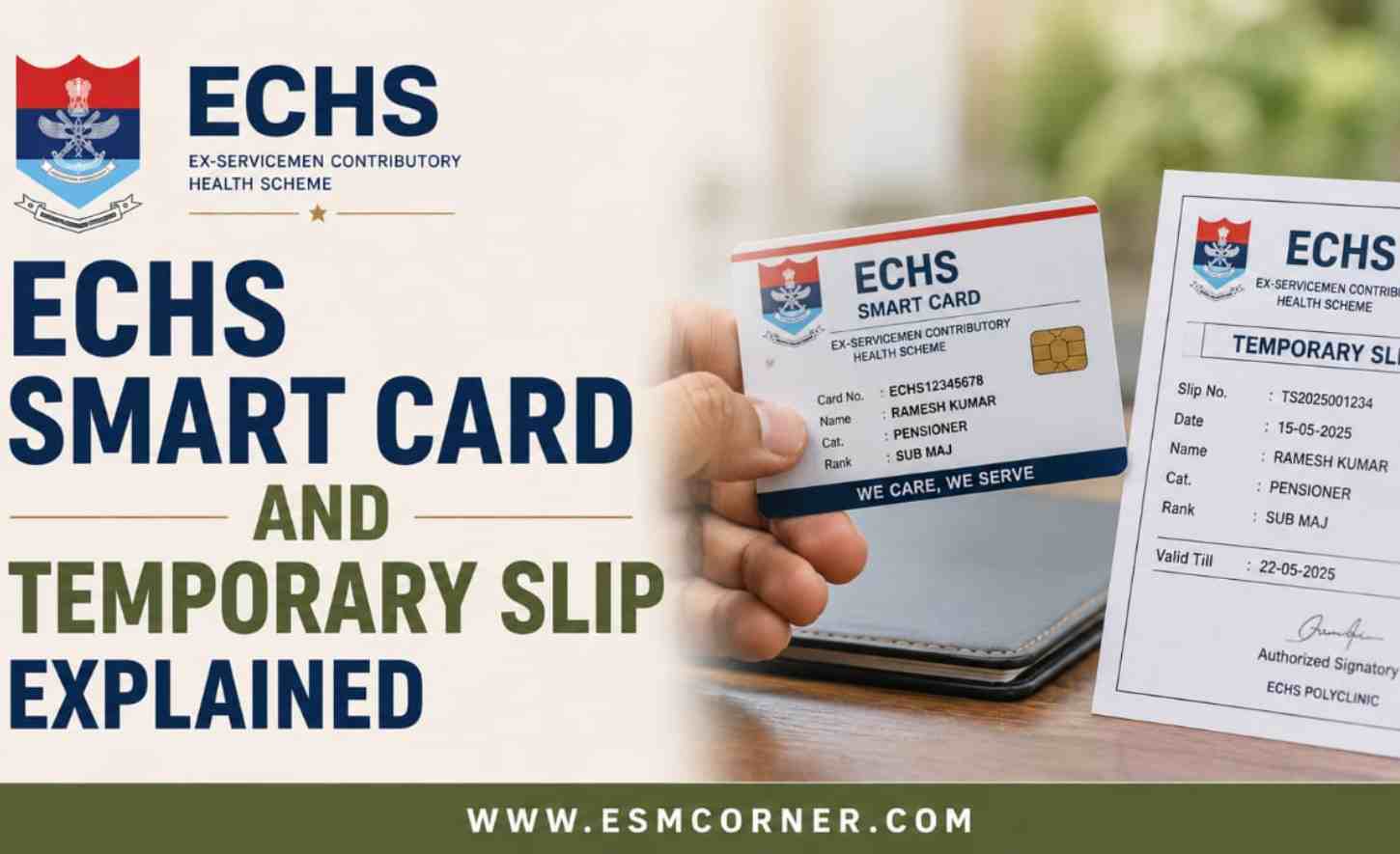
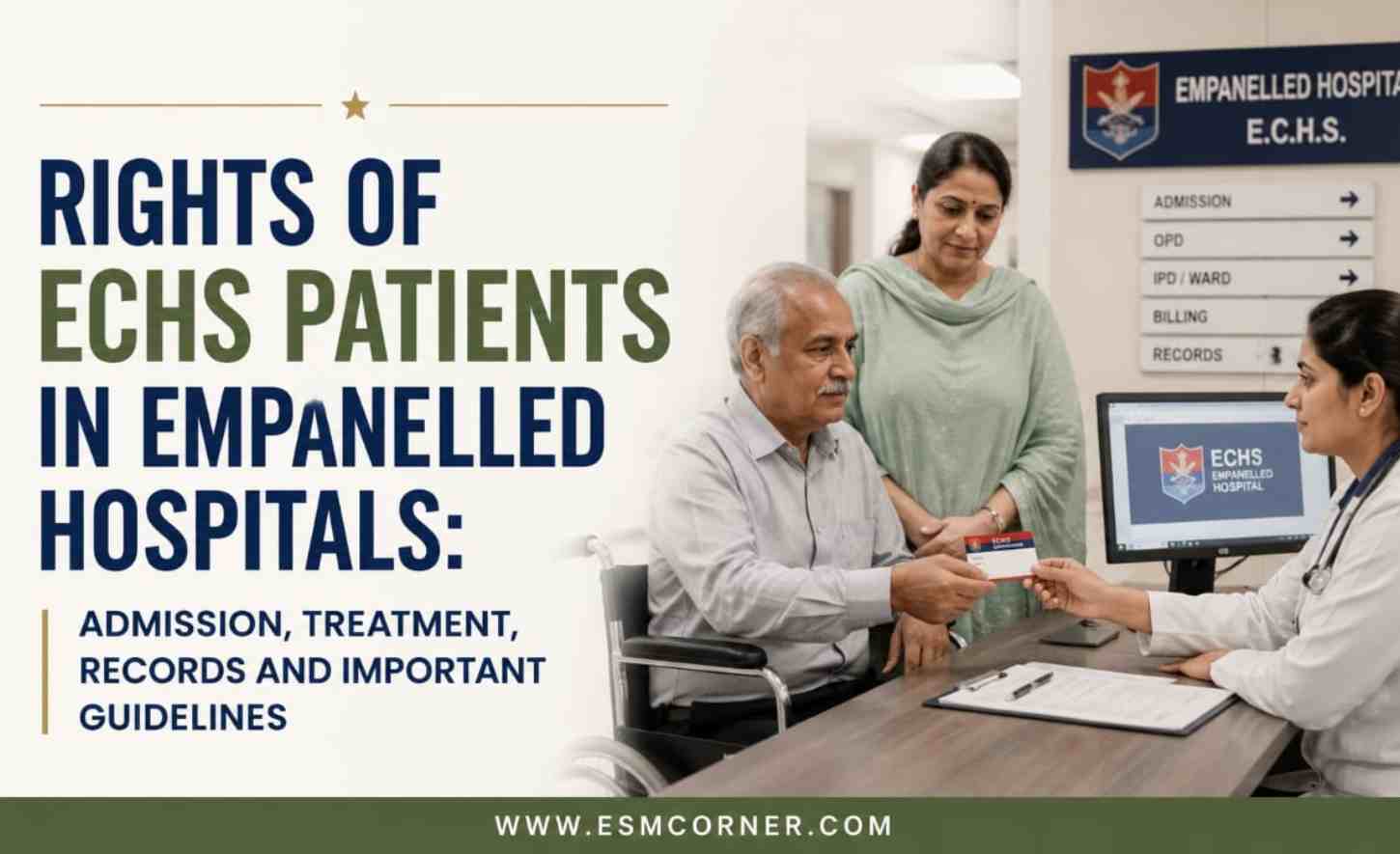
The ECHS Smart Card is the most important document for every retired defence person and their family. Without this card, you cannot get treatment at ECHS polyclinics or empanelled hospitals. Think of it like your identity proof plus your treatment permission card — both in one.
Every ECHS beneficiary is issued a 64 KB Smart Card. This card contains your name, rank, date of birth, date of membership, blood group, defence force, and a 12-digit card number. The first two letters of this number tell you which region your card belongs to. For example, if you are registered in Dehradun, your card number starts with DH.
Three Types of ECHS Cards You Must Know
This is where most people get confused. There are not one but three different card situations under ECHS — and each works differently.
First — The Regular 64 KB Smart Card. This is the standard card given to most ECHS beneficiaries. If you have this card, you are entitled to full cashless treatment at empanelled hospitals. You do not pay anything out of pocket for consultation, tests, surgery, or admission — unless you personally choose a higher-cost implant or procedure that is not covered under ECHS rates.
Second — The Only Reimbursement Card. This is a completely different card that many beneficiaries do not know about. If your card has “ONLY REIMBURSEMENT” printed on the side, you are NOT entitled to cashless treatment at empanelled hospitals. You pay first and then claim reimbursement later at ECHS rates. The SOP specifically warns that hospitals often wrongly give cashless treatment to such beneficiaries — which is incorrect and creates billing problems later. Always check what type of card you hold.
Third — Temporary Slip. When you have applied for your ECHS Smart Card but it has not been generated yet, the Polyclinic gives you a Temporary Slip. This slip is ink-signed by the Officer In Charge of the Polyclinic. The good news is that this slip gives you the same full treatment rights as a regular Smart Card holder. Its validity is six months from the date of issue and can be extended every three months if your card is still being processed.
Special Rule for Newborn Babies
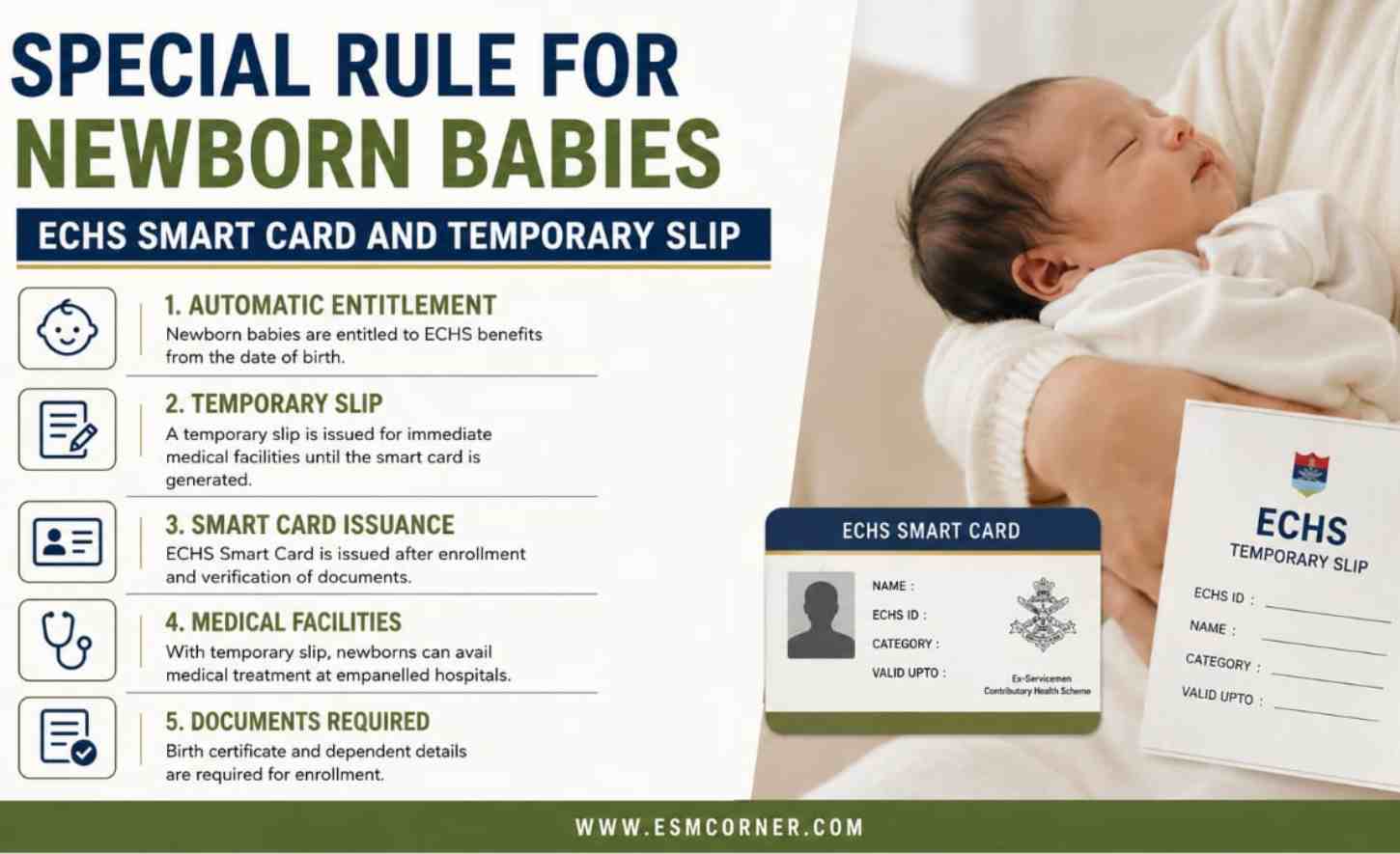
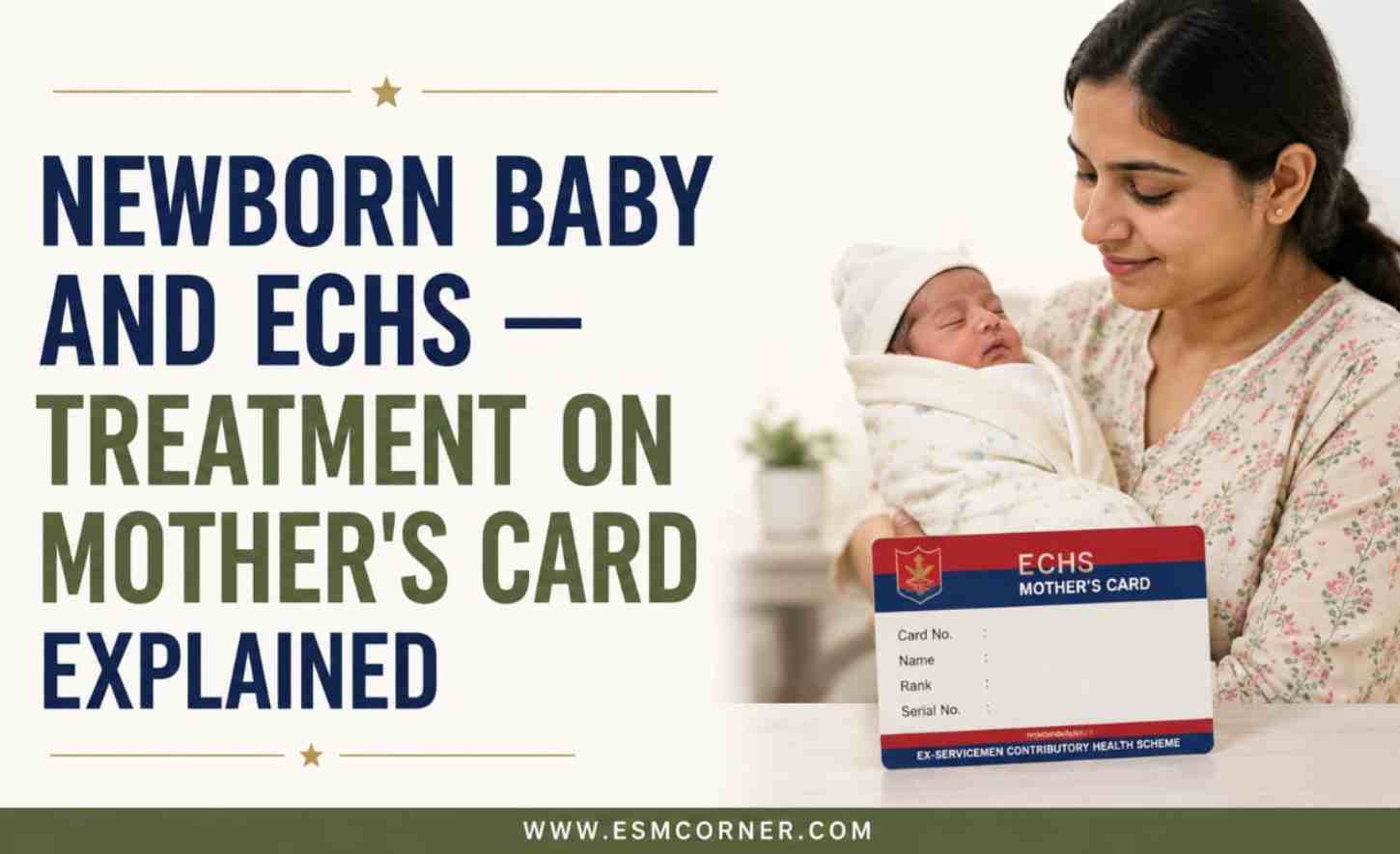
Many new parents in defence families do not know this rule. A newborn baby does not need a separate ECHS card for the first three months of life. The baby is treated as a dependent on the mother’s ECHS card. All treatment is billed in the mother’s name with the baby’s details mentioned separately. After three months, a separate card must be applied for.
Common Smart Card Problems to Watch Out For
Many beneficiaries face problems because of outdated or incorrect card details. Common issues include wrong spelling of name, incorrect date of birth, outdated dependent information, damaged card, or lost card. These problems become very serious during emergency hospitalization when hospitals need to verify your details immediately. If there is a mismatch between your card and referral details, the hospital may ask for your Aadhaar card as supporting identity proof.
Always keep a photocopy of your Smart Card ready. Carry it with your referral whenever you visit an empanelled hospital.
What You Should Do Right Now
Check your card type today. If it says “ONLY REIMBURSEMENT” on the side, you need to understand that cashless is not your entitlement. Verify that your dependent details are updated. If your card is lost or damaged, report it to your Polyclinic immediately and apply for a fresh card. Do not wait for an emergency to discover a problem with your card.
Also Read:ECHS EXPLAINED: EVERYTHING YOU MUST KNOW ABOUT IN 2026
Frequently Asked Questions
Q1. What is the ECHS Smart Card used for?
The ECHS Smart Card is your official proof of ECHS membership. Hospitals and polyclinics check this card to confirm that you are an eligible beneficiary before starting treatment, referral, admission, or medicine issue. Without a valid card, treatment processing can get delayed or stopped.
Q2. What details are printed on the ECHS Smart Card?
Your card contains your name, rank, date of birth, date of ECHS membership, blood group, defence force name, and a 12-digit card number. The first two letters of the card number indicate which ECHS region you belong to — for example DH means Dehradun region.
Q3. What is the Only Reimbursement ECHS Card?
This is a special card given to certain beneficiaries — mostly Short Service Commission officers with service up to 10 years. Holders of this card are NOT entitled to cashless treatment. They must pay at the hospital first and then claim reimbursement from ECHS at approved rates. Many hospitals mistakenly give cashless treatment to such card holders which is officially incorrect.
Q4. What is a Temporary Slip and when is it given?
A Temporary Slip is issued by the Polyclinic when your regular Smart Card is still being processed or generated. It is ink-signed by the Officer In Charge of the Polyclinic. This slip gives you the same full treatment rights as a regular Smart Card holder. Its validity is six months and can be extended every three months.
Q5. Can a Temporary Slip be used for hospital admission?
Yes. A Temporary Slip gives you the same treatment entitlements as a regular 64 KB Smart Card. You can use it for OPD consultation, referral, investigations, admission, and all other ECHS facilities during its validity period.
Q6. Does a newborn baby need a separate ECHS card?
No. For the first three months after birth, a newborn baby is treated as a dependent on the mother’s ECHS card. No separate card is needed during this period. Treatment is billed in the mother’s name with the baby’s details mentioned. After three months, you must apply for a separate card for the child.
Q7. What happens if my Smart Card details are wrong?
If there is a mismatch between your card and your referral or records, the hospital may ask for your Aadhaar card for identity verification. Wrong details can delay treatment, referral processing, or claim submission. Get all errors corrected at your Polyclinic as early as possible — do not wait for an emergency.
Q8. What should I do if my Smart Card is lost or damaged?
Report the loss or damage to your Polyclinic immediately. Apply for a duplicate or fresh card through proper ECHS channels. Always keep a photocopy of your Smart Card safely at home so that you have at least a copy available if the original is misplaced.
Q9. Can I carry only a photocopy of my Smart Card to the hospital?
You must carry the original Smart Card along with a photocopy. The photocopy is submitted at the hospital reception as part of treatment documentation. The original is used for identity and eligibility verification. Carrying only a photocopy without the original may create problems.
Q10. What is the biggest mistake ECHS beneficiaries make with their Smart Card?
The biggest mistake is not checking the card type — many people do not know whether they hold a regular cashless card or a reimbursement-only card. The second biggest mistake is not updating dependent details regularly. Both problems cause serious treatment and claim complications that could have been easily avoided.
For daily defence updates, government notifications, recruitment alerts, welfare schemes, career opportunities, education news, and other important announcements, join our WhatsApp Community. Click here to join our WhatsApp Group.








મારા વાઈફ ને બ્લડ કેન્સર હતું અમદાવાદ HCG Cancer center માં ECH મારફત સારવાર ચાલુ હતી દોઢ વર્ષ જેવી સારવાર ચાલી પરંતુ હોસ્પિટલ હર ડીસચારજ વખતે મિનીમમ 50000Rs નું બીલ બનાવીને પકડાવી દેતા અને કહેતા કે આ તમારે ડીસપોજલ આઇટમ નું પેમેન્ટ કરવું પડશે અને મારે મજબૂરી માં પેમેન્ટ કરવું પડતું આ કેવો નિયમ છે સર
please e mail us on esmcorner@gmail.com
Please guide me how to apply for fresh ECHS CARD
As I have not applied at all. My date of discharge is 31 may 1992 from Air Force.
Very good information. A lot of thanks pls.
No comments
It is fantastic plateforms for exservice men to get cashless treatment