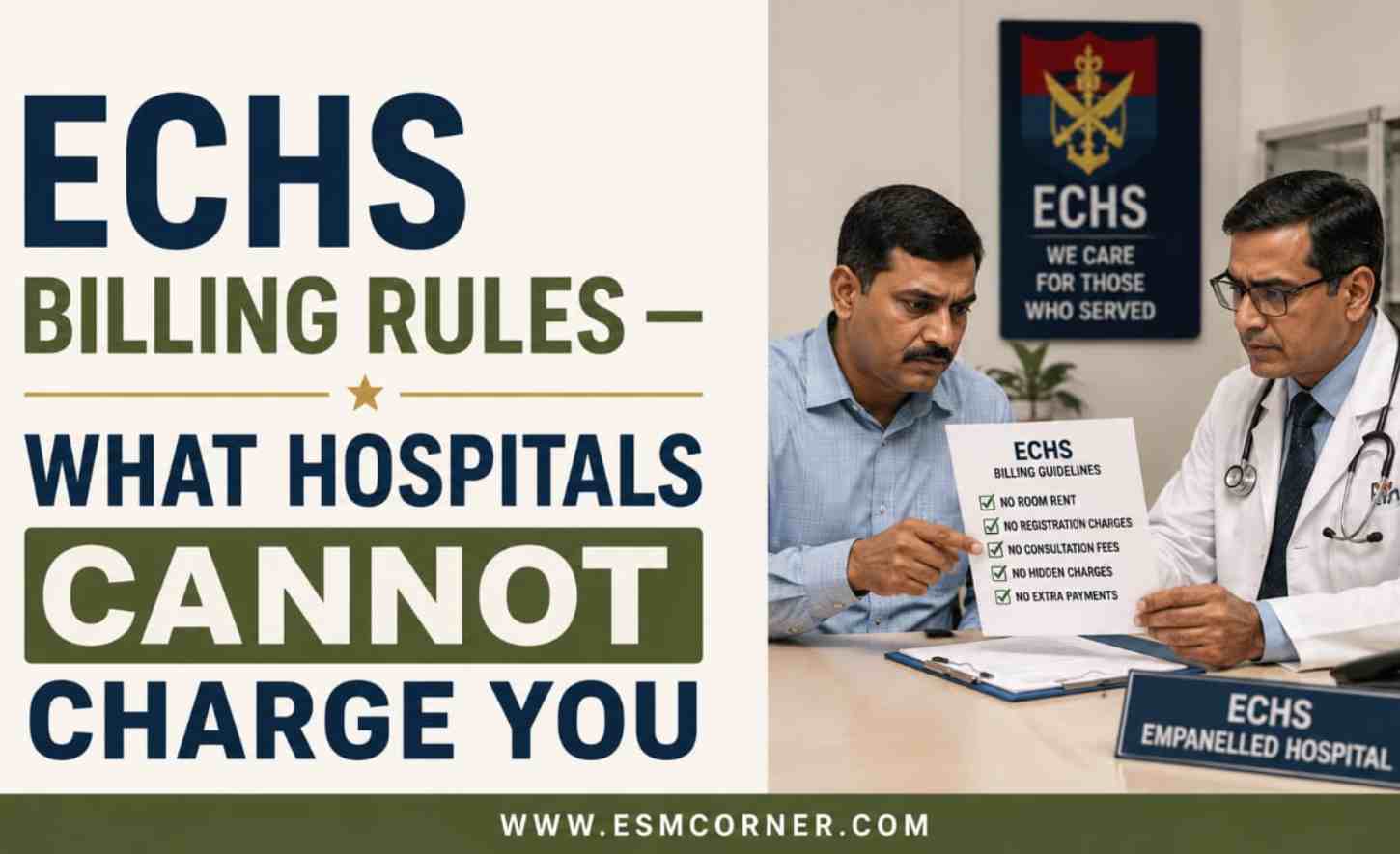
One of the biggest complaints from ECHS beneficiaries across the country is unexpected bills at empanelled hospitals. A patient gets discharged and suddenly finds charges for glucometer strips, ECG electrodes, ventilator consumables, or a bag of cotton — items that should never appear on an ECHS bill.
This is not just unfair — it is a direct violation of the hospital’s agreement with ECHS. The ECHS SOP April 2026 has a detailed and very specific section on what hospitals can bill, what they cannot bill, and what they absolutely cannot collect from the patient. Every ECHS beneficiary must know these rules before discharge.
This article explains the complete ECHS billing rules in plain simple language — based strictly on ECHS SOP April 2026.
The Basic Principle
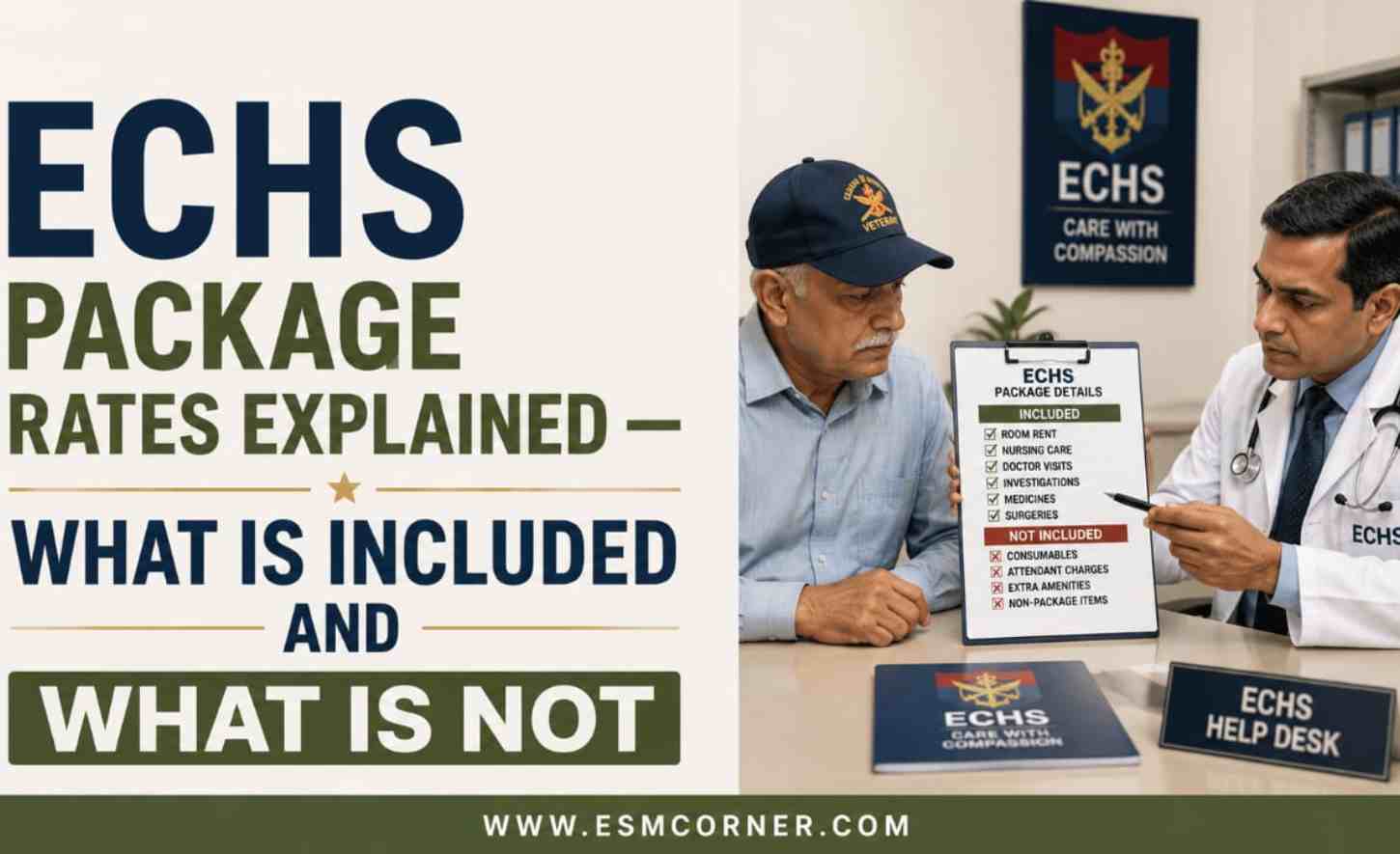
The fundamental rule of ECHS billing is simple. Anything that is directly related to your medical treatment and is part of a standard package, ward service, or procedure — the hospital cannot charge you separately for it. Only items that are personal, non-medical, or purely for your own convenience can be collected from you.
What Hospitals Can Legitimately Collect From You
The ECHS SOP April 2026 lists specific non-admissible items that hospitals can collect from the patient because ECHS does not reimburse them —
Toiletries and personal use items — soap, shampoo, toothbrush, toothpaste, comb, sanitary pads, diapers, hand sanitisers for personal use, mouthwash, and tissue papers.
Cosmetics and personal items — razors, shaving blades, beauty creams, powders, deodorants, oils such as coconut oil, talcum powder, and makeup items.
Non-medical services — telephone charges for patient calls, bedside television charges, internet fees, patient attendant food, hospital gown for attendant, and carry bags for medicines or belongings.
Attendant charges — any charge for providing an attendant specifically to the patient such as an ayah or ward boy, or charges for extra bedding for the attendant. The exception is one attendant bed which is included in a private ward entitlement.
Mortuary or cremation charges — if a patient expires, any mortuary fee or transportation charges for last rites are not covered by ECHS.
Implant upgrades — if the patient chooses a higher value implant than what CGHS covers, the difference in cost is paid by the patient. This must be agreed in writing before the procedure.
What Hospitals Absolutely Cannot Charge You
This is the most important section. The ECHS SOP April 2026 lists specific items that hospitals cannot bill to ECHS and also cannot collect from the beneficiary —
Glucometer strips — the cost of blood glucose test strips is included in the cost of a bedside Random Blood Sugar test. No separate charge per strip is admissible.
ECG leads and electrodes — included in the cost of an ECG. The hospital cannot charge separately for ECG electrodes or leads.
Ventilator consumables — when a patient is on a ventilator, all disposables including tubing, filters, and circuits are included in the ventilator and ICU charge. No separate line item for ventilator consumables is permitted.
Ward facility items — air bed, water bed, alpha bed or ripple mattress for bedsore prevention, routine air conditioning or heating charges, infusion pumps, DVT pump usage in ward, pulse oximeter, basic monitors, and medical record photocopy charges are all included in the room and ward daily charge. They cannot appear as separate charges.
Medical records and films — providing the patient with discharge summary, lab reports, X-ray films, CT or MRI films, and CD copies of scans is part of the treatment rates. No fee can be charged for giving these to the patient at discharge.
Blood collection items — vacutainers, syringes, needles, and lancets used for drawing blood samples are part of the laboratory test cost. They cannot be billed separately as consumables to ECHS.
Vague Billing Is Not Accepted
The ECHS SOP April 2026 specifically states that vague billing entries like “consumables kit” or “procedure kit” without specific details are not acceptable. Items must be named specifically — for example “lumbar puncture kit” or “dressing kit”. Generic entries without clinical specifics will be disallowed.
Common Mistakes to Avoid
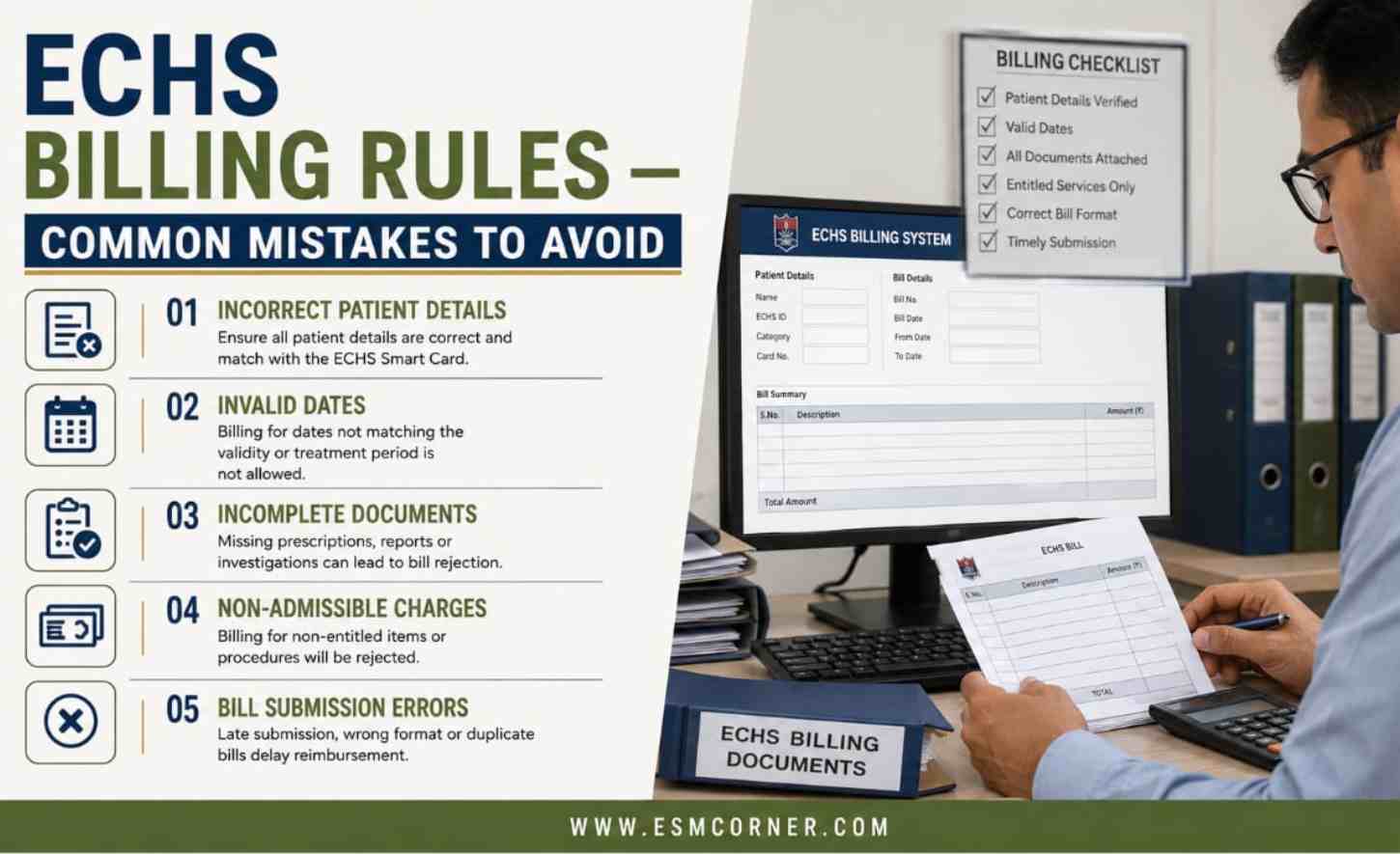
Paying for glucometer strips, ECG leads, or ventilator consumables without questioning the bill.
Not checking your bill carefully before discharge — you have the right to review it.
Paying for medical records or CD copies of your scans at discharge.
Not knowing that air bed, pulse oximeter, and infusion pump charges are already inside your ward rate.
Accepting vague entries like “consumables kit” on your bill without asking for specifics.
Conclusion
ECHS billing rules are designed to fully protect the beneficiary. The package rate covers almost everything related to your treatment. Personal convenience items are the only legitimate charges a hospital can collect from you. If your discharge bill contains items that are already part of your package or ward charges — question them, refuse to pay, and report to your polyclinic or Regional Centre immediately.
You have the right to see your bill before discharge. Use it every single time.
READ ALSO: ECHS EXPLAINED: EVERYTHING YOU MUST KNOW ABOUT IN 2026
Frequently Asked Questions
Q1. Can a hospital charge an ECHS patient for glucometer strips used during their stay?
No. The cost of glucometer strips used for bedside Random Blood Sugar testing is included in the cost of the test itself. No separate charge per strip is admissible under ECHS billing rules. If a hospital includes this charge in your bill it must be questioned and reported to the polyclinic.
Q2. Can a hospital charge separately for ECG electrodes or leads?
No. ECG electrodes and leads are included in the cost of performing an ECG. The hospital cannot bill for these separately when charging for an ECG test. These items are considered part of the procedure cost and cannot be added as separate line items on the patient’s bill.
Q3. Can a hospital charge for ventilator consumables when a patient is on a ventilator?
No. When a patient is on a ventilator all disposables including tubing, filters, and circuits are considered included in the ventilator and ICU charges. No separate line item for ventilator consumables is permitted. Any such charge on an ECHS bill is inadmissible and should not be paid.
Q4. Can a hospital charge for providing medical records and scan CDs at discharge?
No. Providing the patient with discharge summary, lab reports, X-ray films, CT or MRI films, and CD copies of scans is part of the treatment rates under ECHS. No fee can be charged for giving these to the patient at the time of discharge. This is a right of every ECHS beneficiary.
Q5. What personal items can a hospital legitimately collect payment for?
Hospitals can collect charges for personal use items that ECHS does not reimburse. These include soap, shampoo, toothbrush, toothpaste, sanitary pads, diapers, tissue papers, hand sanitisers for personal use, razors, cosmetics, deodorants, telephone charges, television charges, internet fees, and attendant food.
Q6. Can a hospital charge separately for an air bed or ripple mattress used during admission?
No. Air bed, water bed, alpha bed, and ripple mattress used for bedsore prevention are all included in the room and ward daily charges under ECHS. These items cannot be listed as separate charges on the bill. They are part of the standard ward facility already covered under the package rate.
Q7. Can a hospital charge for blood collection items like syringes and vacutainers?
No. Vacutainers, syringes, needles, and lancets used for drawing blood samples are part of the laboratory test cost under ECHS billing rules. They cannot be billed separately as consumables. If these appear as separate items on your discharge bill they are inadmissible and should not be paid.
Q8. What should an ECHS beneficiary do if they find incorrect charges on their hospital bill?
The ECHS SOP April 2026 states that patients must have a chance to scrutinise their bills before discharge. If you find charges for items already covered under the package or ward rate, refuse to pay and immediately report the matter to the Officer in Charge of your ECHS Polyclinic or the Regional Centre ECHS.
Q9. Are infusion pump and DVT pump charges included in the ward rate?
Yes. Infusion pump and DVT pump usage in the ward are included in the room and ward daily charges under ECHS SOP April 2026. These cannot be billed separately. Equipment charges related to inpatient or surgical procedures are considered inclusive within room rent or procedural package rates.
Q10. What is the ECHS rule on vague billing entries like consumables kit?
The ECHS SOP April 2026 specifically states that vague billing entries like consumables kit or procedure kit without specific details are not acceptable. Items must be named specifically such as lumbar puncture kit or dressing kit. Generic entries without clinical specifics will be disallowed by ECHS during claim processing.
For daily defence updates, government notifications, recruitment alerts, welfare schemes, career opportunities, education news, and other important announcements, join our WhatsApp Community. Click here to join our WhatsApp Group.














Sir really these are important and nice guidance.