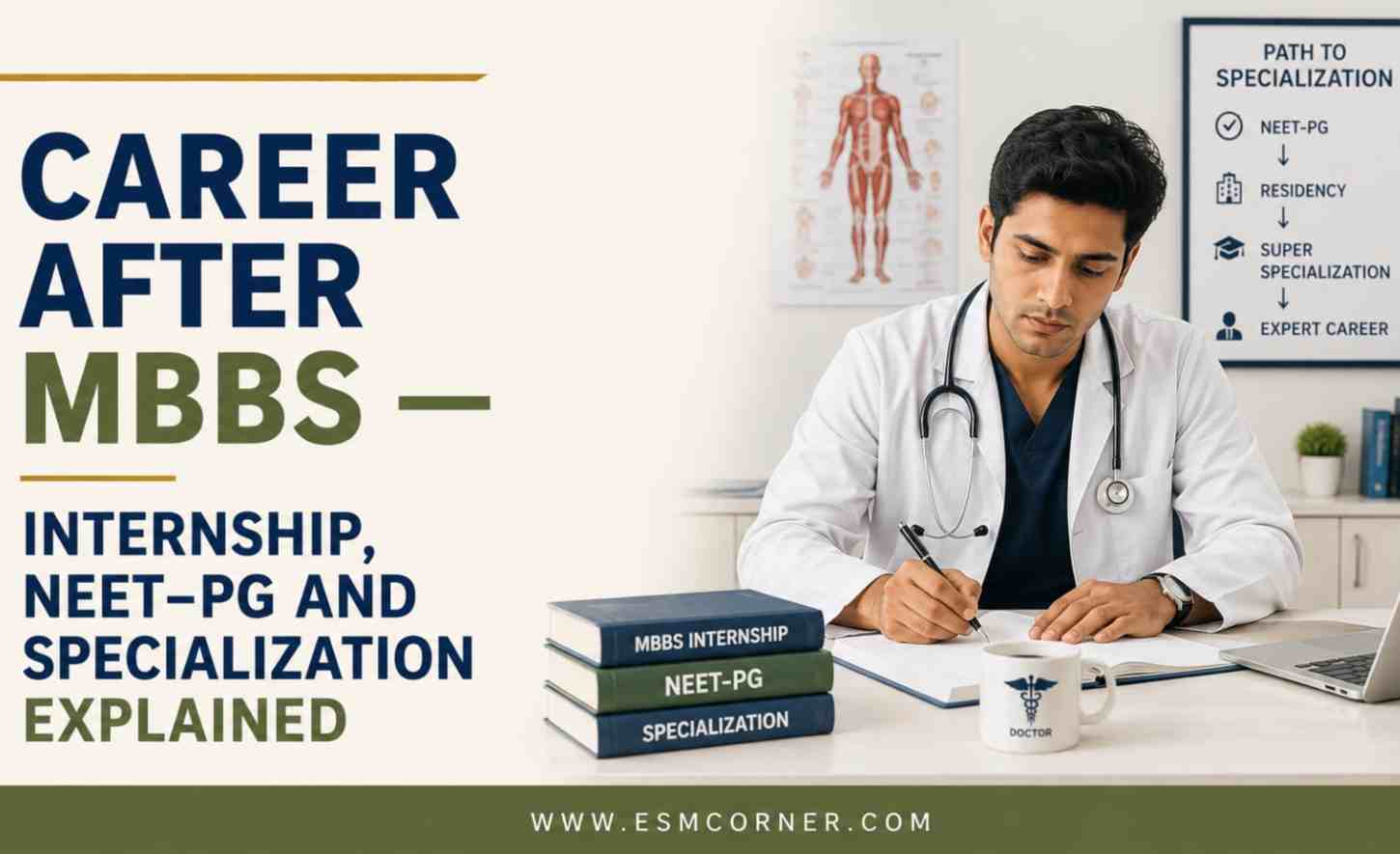
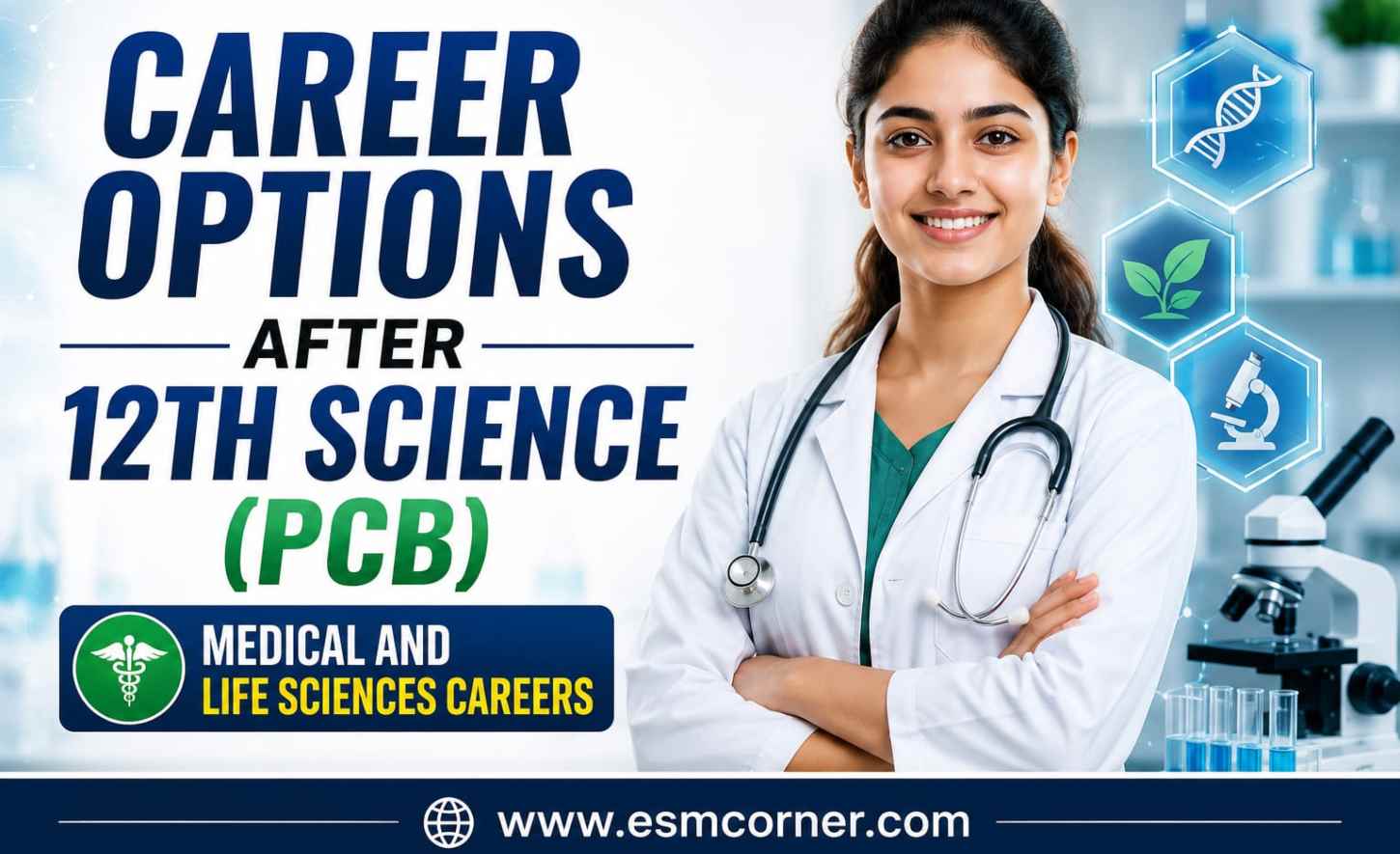
The moment you tell someone that you are a PCB student, the most common question you hear is, “Are you preparing for NEET? Planning to become a doctor?” It often feels as though MBBS is the only career options after 12th for biology students.
But the reality is different — biology offers far more opportunities beyond medicine. Whether it is developing vaccines, using DNA technology to solve crimes, improving food production through genetic engineering, or helping athletes with injury recovery, a PCB background can lead to a wide range of rewarding and well-paying careers that do not require becoming a doctor
This guide explores those options in a clear and honest way — without exaggeration or false promises — to help you understand which career path truly matches your interests and goals.
First, Let’s Talk Money vs. Passion (Because Both Matter)
Everyone loves saying “follow your passion,” but let’s be real — you also need to pay your bills someday. So how do you actually balance the two?
Being a clinical doctor comes with huge respect and eventual financial security, but it also means almost a decade of study before the real money starts rolling in. On the other hand, fields like biotechnology, pharma, and clinical research let you enter the high-paying corporate world much earlier in life.
Ask yourself a few honest questions:
- Do I want to interact directly with patients, or am I more excited by lab work?
- Would I rather work in a hospital, a corporate office, or a research institute?
- Am I okay waiting 8-10 years for financial stability, or do I want to start earning sooner?
Your answers here will narrow things down more than any relative’s advice ever could.
Government Job or Private Sector? Know the Difference Early
This is something most students figure out way too late. Government positions — think government hospitals, ICMR, CSIR, or civil services — offer serious job security, pensions, and social respect. Private sector jobs — multinational pharma companies, corporate hospital chains, biotech startups — offer faster promotions, global exposure, and juicier bonuses.
Neither is “better.” It depends on whether you value stability or growth speed. Figuring this out early saves you years of second-guessing later.
“I Want to Treat Patients, But MBBS Isn’t For Me” — Here Are Your Options
A lot of students assume patient care equals MBBS and nothing else. That’s simply not true. Here’s what else is out there:
- MBBS, BDS, BAMS, BHMS, BUMS – The classic clinical routes covering allopathic, dental, ayurvedic, homeopathic, and unani medicine.
- BVSc (Veterinary Science) – For those who love animals and want to build a career in animal healthcare, treatment, and surgery.
- BPT (Physiotherapy) & Occupational Therapy – Great for people interested in rehab, sports recovery, and movement-based treatment.
- B.Sc Nursing & B.Pharm – Extremely stable career paths with strong overseas opportunities.
- Radiology, Medical Lab Technology, Optometry, Audiology – Behind-the-scenes diagnostic experts who keep hospitals running.
- Nutrition and Dietetics – Perfect if you’re into preventive health and how food affects the body.
- Public Health – A non-clinical field focused on epidemiology and health policy, ideal if you want to think big-picture.
Every single one of these plays a genuinely important role in healthcare — none of them require an MBBS degree to be respected or well-paid.
Beyond Hospitals: Careers in Labs, Research, and Beyond
Can a biology student create a successful, high-paying career without working in a hospital? Absolutely.
- Biotechnology, Microbiology, Biochemistry, Genetics – Work at the crossroads of biology and cutting-edge tech, from cancer research to genetic sequencing.
- Forensic Science – Help solve crimes through DNA profiling and evidence analysis. Yes, it’s as fascinating as it sounds on TV.
- Psychology – A growing field both clinically and in corporate consulting, using biology to understand human behaviour.
- Agriculture, Fisheries Science, Food Technology, Environmental Science – For students who care about sustainability, food security, and the planet’s future.
Government bodies, agritech startups, and food companies are actively hiring from these fields, so the opportunities are real and growing.
Quick Comparison: Popular Non-MBBS Career Options
| Course | Duration | Best For | Career Scope |
|---|---|---|---|
| B.Pharm (Pharmacy) | 4 Years | Chemistry lovers interested in drugs and pharma corporate roles | Drug manufacturing, clinical trials, R&D |
| B.Sc Biotechnology | 3-4 Years | Students passionate about genetics and lab research | Pharma, bio-manufacturing, genomics research |
| BPT (Physiotherapy) | 4.5 Years | Those wanting direct patient care and rehab work | Sports teams, hospitals, private clinics |
| B.Sc Nursing | 4 Years | Students seeking stability and global work options | Corporate hospitals, healthcare abroad |
| B.Sc Food Technology | 3-4 Years | Students interested in food safety and manufacturing | FMCG companies, quality control, agritech |
Biggest Mistakes PCB Students Make (Don’t Repeat These)

- Betting everything on one exam. NEET isn’t the only door — CUET, ICAR AIEEA, and various state-level exams also lead to great universities.
- Assuming non-MBBS means low salary. Completely false. Senior pharmacists, clinical trial managers, and experienced biotechnologists often out-earn doctors mid-career.
- Ignoring skill development beyond your degree. Today’s employers look for graduates who have knowledge of data analysis, digital diagnostic tools, and effective communication — not just a strong foundation in textbook biology.
- Choosing a college only because of its reputation. Before making a decision, evaluate the lab facilities, faculty expertise, and internship opportunities it offers.
- Not considering studying abroad. Several countries offer advanced biomedical research facilities and strong international career exposure.
AI and precision medicine are already reshaping healthcare, so students who stay adaptable and keep learning will have a real edge in the coming years.
Conclusion
Navigating life science career options after Class 12 PCB is a journey of self-discovery, strategy, and informed decision-making. As we have explored throughout this guide, the belief that failure in medical entrance exams equates to career failure is an outdated myth. The modern world demands diverse healthcare professionals, innovative agricultural scientists, dynamic biotechnologists, and passionate researchers to solve global health and environmental challenges.
There is no single “best” career path that fits every student universally; the right choice depends entirely on your unique interests, strengths, and personal aspirations. Success is not determined by the prestige of a specific degree title, but by your dedication, continuous skill acquisition, and passion for your chosen domain. By looking beyond social pressure, evaluating practical opportunities objectively, and preparing strategically for higher education, you can build a meaningful and prosperous future in life sciences. Trust your abilities, remain curious, and take confident steps toward building a career that truly inspires you every single day.
READ ALSO: FREE SKILL DEVELOPMENT COURSES FOR EX-SERVICEMEN : COMPLETE GUIDE FOR 2026
Q1.Is MBBS the only good Career Options After 12th: PCB?
No, MBBS is certainly not the only rewarding option after Class 12 PCB. Thriving fields like Biotechnology, Pharmacy, Physiotherapy, Nursing, Forensic Science, and Biomedical Research offer exceptional financial growth, high social respect, and rapid career advancement without requiring an MBBS degree or lengthy clinical residencies.
Q2.Which PCB careers have the highest salary?
High-paying PCB careers outside MBBS include Biotechnology Research, Pharmaceutical Management, Biomedical Engineering, Clinical Trial Management, and Specialized Data Diagnostics. Experienced professionals in global pharmaceutical firms, agritech multinationals, and corporate hospital management frequently command lucrative salary packages matching or exceeding traditional clinical practice incomes.
Q3.Can PCB students join research?
Absolutely, PCB students can build highly successful careers in scientific research. By pursuing undergraduate and postgraduate degrees in subjects like Microbiology, Genetics, Biochemistry, or Biotechnology, graduates can join esteemed national laboratories, multinational pharmaceutical R&D centers, or international academic institutions as research scientists and innovators.
Q4.Which entrance exams should students prepare for?
Besides NEET for medical and dental admissions, PCB students should consider appearing for CUET for central university admissions, ICAR AIEEA for agricultural courses, and state-level CETs. Additionally, university-specific entrance tests for pharmacy, nursing, and allied health sciences expand your academic options significantly.
Q5.Which career has better future scope?
Biotechnology, Clinical Data Analytics, Public Health, Pharmacy, and Diagnostic Health Technologies possess extraordinary future scope. As global healthcare shifts toward personalized medicine, AI-driven diagnostics, and sustainable food systems, professionals trained in these interdisciplinary domains will experience rising industry demand and global career growth.
Q6.Can PCB students study abroad?
Yes, PCB graduates have immense opportunities to study abroad for both undergraduate and postgraduate degrees. Countries like Germany, the UK, the US, Canada, and Australia offer world-class programs in life sciences, public health, biotechnology, and healthcare management, accompanied by generous research scholarships and international job prospects.
Q7.How should students choose the right career?
Students should evaluate their choices by analyzing personal interests, academic strengths, course duration, financial budget, and desired work environment. Speaking with career counselors, researching real-world job roles, and assessing long-term industry growth trends ensures you choose a path that aligns with your personal goals.
Q8.What skills matter most for success?
Beyond biological knowledge, long-term success requires strong analytical thinking, digital literacy, research methodology, dynamic communication skills, and adaptability. Familiarity with modern laboratory technology, healthcare regulations, and data interpretation empowers life science graduates to excel in competitive corporate and clinical environments globally.
For daily defence updates, government notifications, recruitment alerts, welfare schemes, career opportunities, education news, and other important announcements, join our WhatsApp Community. Click here to join our WhatsApp Group.