
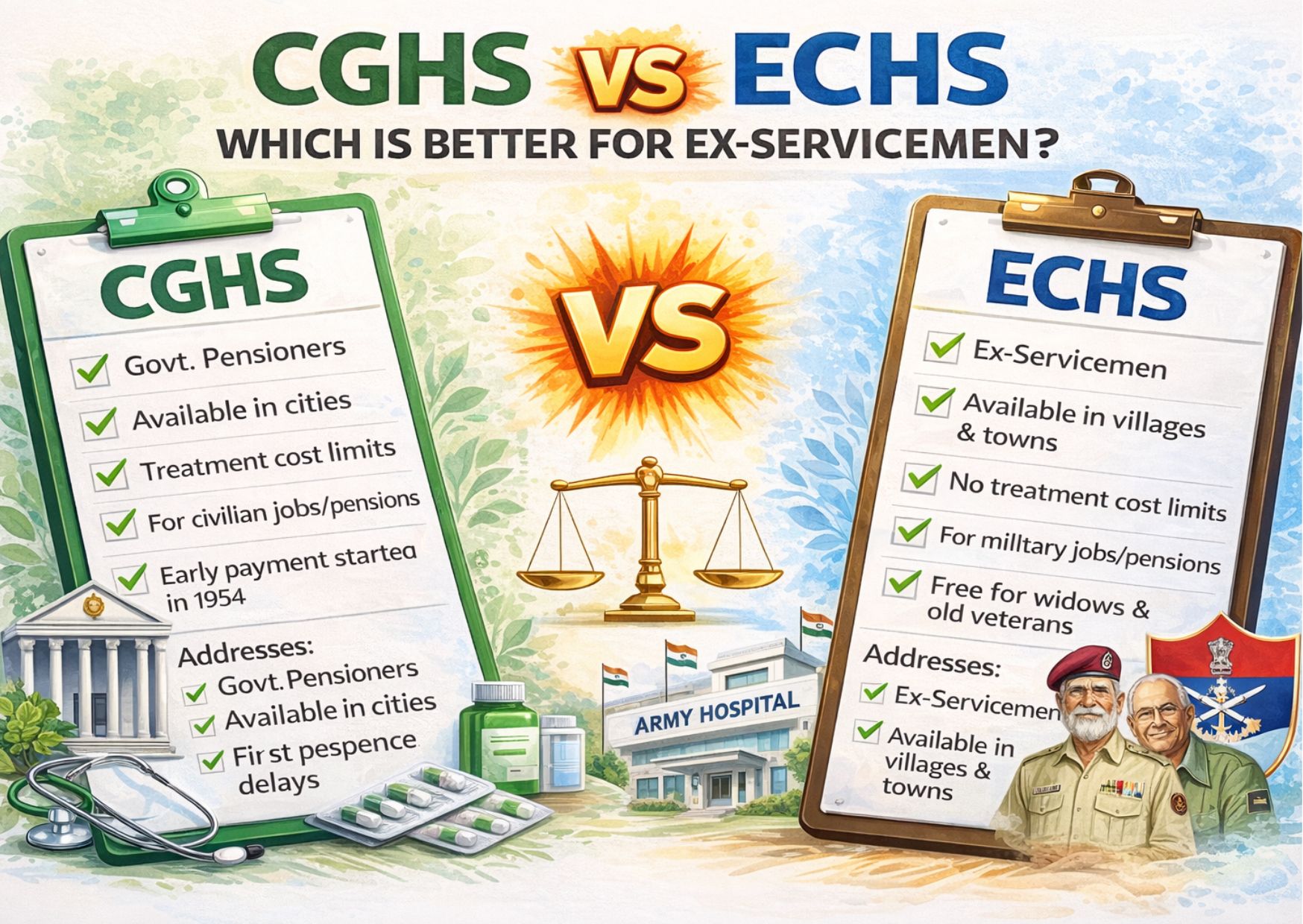
For India’s 26 lakh Ex-Servicemen (ESM) and their families, healthcare becomes one of the most important concerns after retirement. Every year, more than 60,000 defence personnel retire, often at a young age between 35 and 55 years. After leaving active service, choosing the right government health scheme can make a big difference to quality of life.
Two major government healthcare schemes are available:
Both provide medical facilities, but they are not the same. This article explains CGHS vs ECHS in simple language and helps Ex-Servicemen decide which scheme is better for them in 2025.
What Is CGHS?
The Central Government Health Scheme was established in 1954 to provide healthcare to Central Government employees and pensioners. It mainly serves:
- Serving Central Government employees
- Retired Central Government pensioners
- MPs, judges, and certain civilian employees
CGHS provides treatment through government dispensaries and empanelled private hospitals, mainly in big cities.
Can Ex-Servicemen Join CGHS?
Ex-Servicemen can join CGHS only if:
- They were re-employed in a Central Government job after retirement, and
- They are drawing a civil government pension
Most Ex-Servicemen do not qualify for CGHS.
What Is ECHS?
The Ex-Servicemen Contributory Health Scheme (ECHS) was launched on 1 April 2003, specially for defence veterans.
ECHS is meant only for:
- Army, Navy, Air Force, and Coast Guard pensioners
- Disability pensioners
- War widows and family pensioners
ECHS works through polyclinics, service hospitals, and empanelled private hospitals across India.
Eligibility: Who Can Join?
CGHS Eligibility
- Central Government employees and pensioners
- Ex-Servicemen only if re-employed in Central Government
- Dependents: spouse, children, dependent parents
ECHS Eligibility
- All Ex-Servicemen drawing military pension
- Disability pensioners
- War widows and family pensioners
- Pre-1996 retirees (no contribution required)
Verdict on Eligibility
👉 ECHS is clearly better for Ex-Servicemen
Nearly 80% of defence personnel retire directly from service and do not take up Central Government employment. For them, CGHS is not an option, while ECHS covers almost all ESM.
👉 50 MUST-KNOW FACTS ABOUT ECHS FOR EVERY VETERAN
Medical Benefits and Coverage
CGHS Benefits
- OPD consultations
- Medicines and tests
- Hospitalisation and surgeries
- AYUSH treatment (Ayurveda, Homeopathy, etc.)
However:
- Treatment cost limits apply
- Special approvals needed for expensive procedures
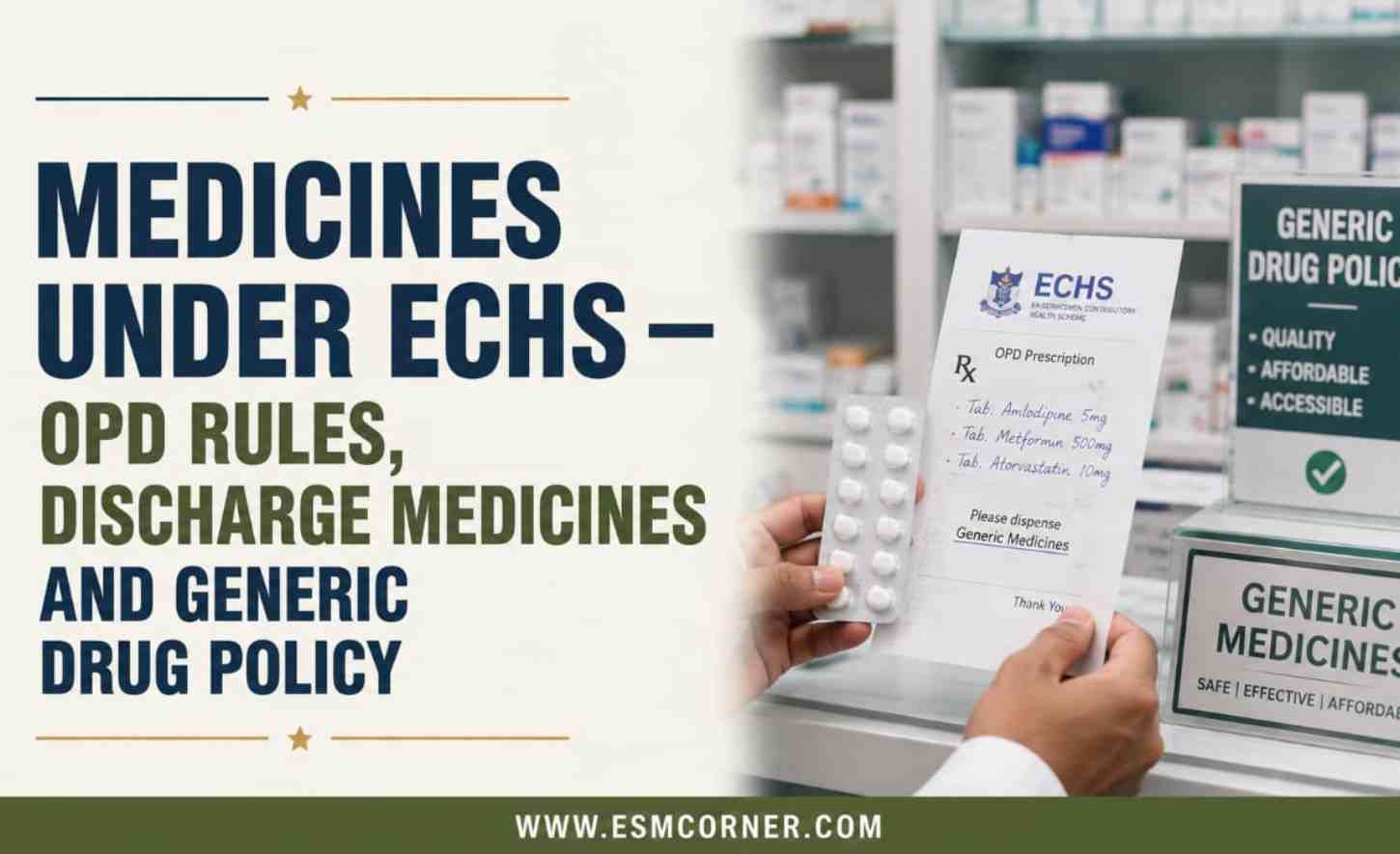
ECHS Benefits
- OPD and IPD treatment
- Cashless treatment at empanelled hospitals
- Specialised care like heart surgery, cancer treatment
- AYUSH treatment
- Emergency treatment reimbursement
No upper financial limit on treatment
Verdict on Benefits
👉 ECHS is better, especially for senior veterans and those with chronic illnesses.
Cost and Contribution
CGHS Cost
- One-time payment based on last pay level
- Ranges roughly from ₹30,000 to ₹1,20,000
- Fixed Medical Allowance (FMA) must be surrendered
ECHS Cost
- One-time contribution based on rank
- Soldiers to officers: ₹30,000 to ₹1,20,000
- Pre-1996 retirees and war widows pay nothing
- Small smart card fee applies
Verdict on Cost
👉 Costs are similar, but ECHS is more beneficial because:
- Many veterans get free entry
- Covers widows and old pensioners better
Accessibility: Cities vs Villages
Central Government Health Scheme Reach
- Available in about 75 cities
- Mostly in metros like Delhi, Mumbai, Chennai
- Limited or no presence in rural areas
Ex-Servicemen Contributory Health Scheme Reach
- 427 polyclinics across India
- Available in rural, semi-urban, and urban areas
- Uses military hospitals and private empanelled hospitals
- Telemedicine and mobile support available
Verdict on Accessibility
👉 ECHS is far better, especially since most Ex-Servicemen settle in villages or small towns after retirement.
Pension System Integration
CGHS
- Well integrated with civilian pension systems
- Easy for re-employed Ex-Servicemen
ECHS
- Linked with SPARSH defence pension system
- Initial digital problems, but now improved
- Help available through CSCs and helplines
Verdict
👉 For military pensioners, ECHS aligns better with defence systems.
Mental Health and Special Care
CGHS
- Basic mental health support
- No special focus on veteran-specific issues
ECHS
- Dedicated mental health helpline
- Veteran-specific counselling
- No cap on specialised treatments
Verdict
👉 ECHS clearly understands veterans’ needs better
👉 ALSO READ I 10 MUST-KNOW BENEFITS AND UPDATES FROM THE DIRECTORATE OF CANTEEN SERVICES IN 2026
Final Comparison: CGHS vs ECHS for Ex-Servicemen
Why ECHS Is Better
- Designed only for Ex-Servicemen
- Better rural coverage
- No treatment cost limit
- Free for old retirees and widows
- Strong mental health and specialised care
When Central Government Health Scheme May Be Better
- If an Ex-Serviceman is re-employed in a Central Government job
- Living permanently in a metro city
Final Verdict: Which Is Better for Ex-Servicemen?
✅ ECHS is the best health scheme for most Ex-Servicemen in India
It matches the real life conditions of defence retirees—early retirement, rural resettlement, higher medical needs, and military pension systems.
CGHS suits only a small group of re-employed veterans, while ECHS serves the majority.
How to Choose and Apply
- Check pension type (military or civilian)
- Consider where you live (village or city)
- Assess long-term medical needs
- Apply through:
- ECHS: echs.gov.in
- CGHS: cghs.gov.in
- You may also contact your Zila Sainik Board for guidance
Your service earned you this right.
Choosing the right healthcare scheme ensures a healthy and dignified retired life.
Q1. What is CGHS?
A1. CGHS (Central Government Health Scheme) is a healthcare scheme mainly for Central Government employees and pensioners, available mostly in CGHS-covered cities.
Q2. What is ECHS?
A2. ECHS (Ex-Servicemen Contributory Health Scheme) is a dedicated health scheme for defence pensioners, veterans, war widows and family pensioners through polyclinics and empanelled hospitals.
Q3. Can Ex-Servicemen join CGHS?
A3. Most Ex-Servicemen cannot join CGHS. Only those who were re-employed in a Central Government job and draw a civil government pension may be eligible.
Q4. Which is better for most Ex-Servicemen—CGHS or ECHS?
A4. For most Ex-Servicemen, ECHS is better because it is designed for defence pensioners and has wider coverage through polyclinics and empanelled hospitals.
Q5. Does ECHS provide cashless treatment?
A5. Yes. ECHS provides cashless treatment at many empanelled private hospitals (as per ECHS rules and referral process), especially for planned treatments.
Q6. Which scheme has better coverage in villages and small towns?
A6. ECHS has better reach because it operates a large network of polyclinics across rural, semi-urban and urban areas. CGHS is mostly limited to selected cities.
Q7. Is there any treatment cost limit in CGHS or ECHS?
A7. Central Government Health Scheme usually follows package rates and approvals for costly procedures. ECHS generally provides broader coverage for veterans and is more suitable for long-term medical needs.
Q8. When can CGHS be a better option than ECHS for a veteran?
A8. Central Government Health Scheme may be better only for re-employed veterans drawing civil pension and living permanently in a CGHS-covered metro city where Central Government Health Scheme facilities are easily accessible.










Echs is far better for ex-servicemen, treat ment staff also from exservice men from polyclinics available at small towns and referrals are made to empanelment hospitals and military hospitals.
And opd is free and medicines are also free,
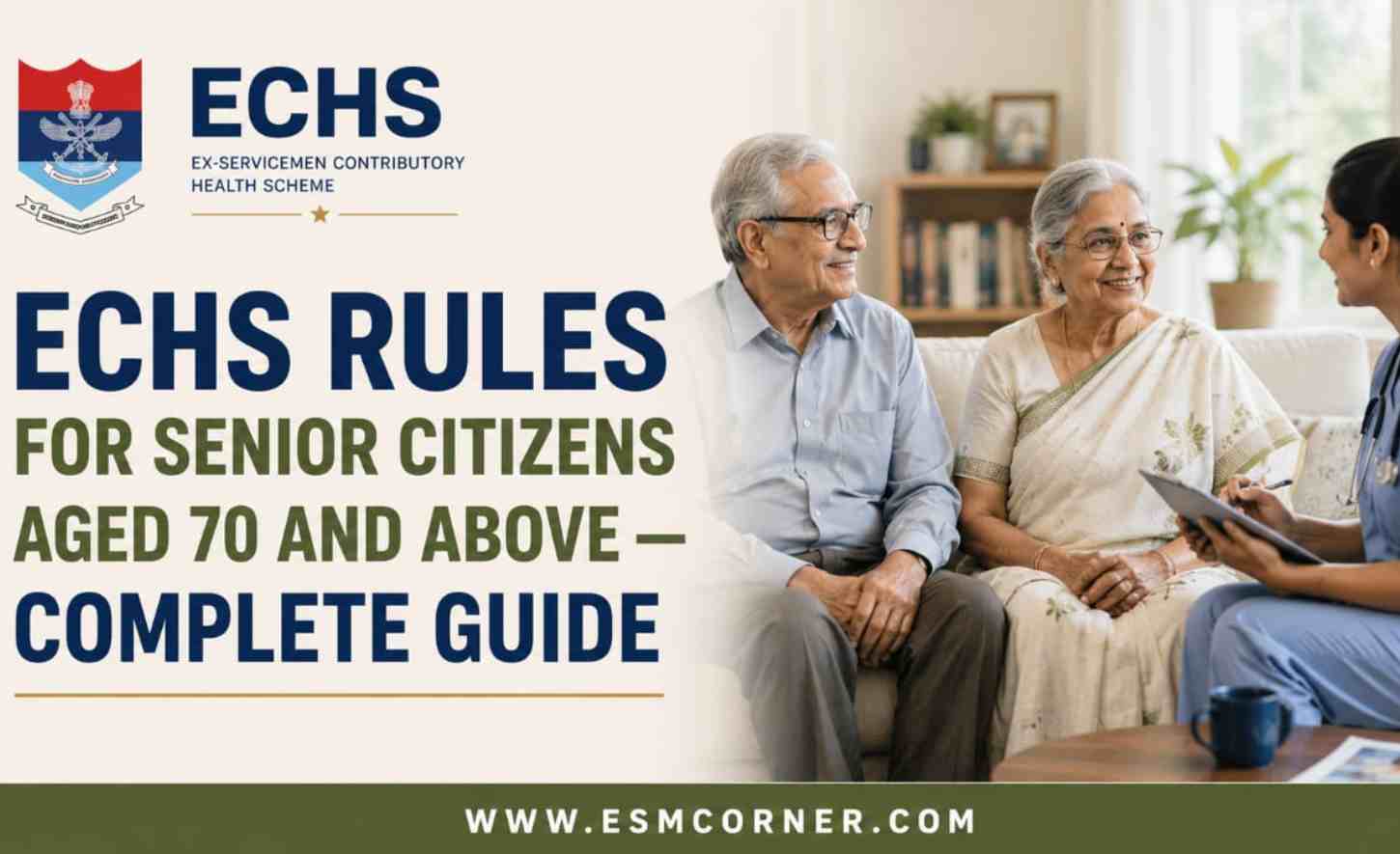
Also veterans of the age 70 ond above can get cashless OPD treatment directly from empanelled hospital on production of ECHS card and aadhar card maybe carried too.
It is an excellent and summarised information for ex service man.
Very nicely differentiated. There is no doubt ECHS is far better than CGHS.