
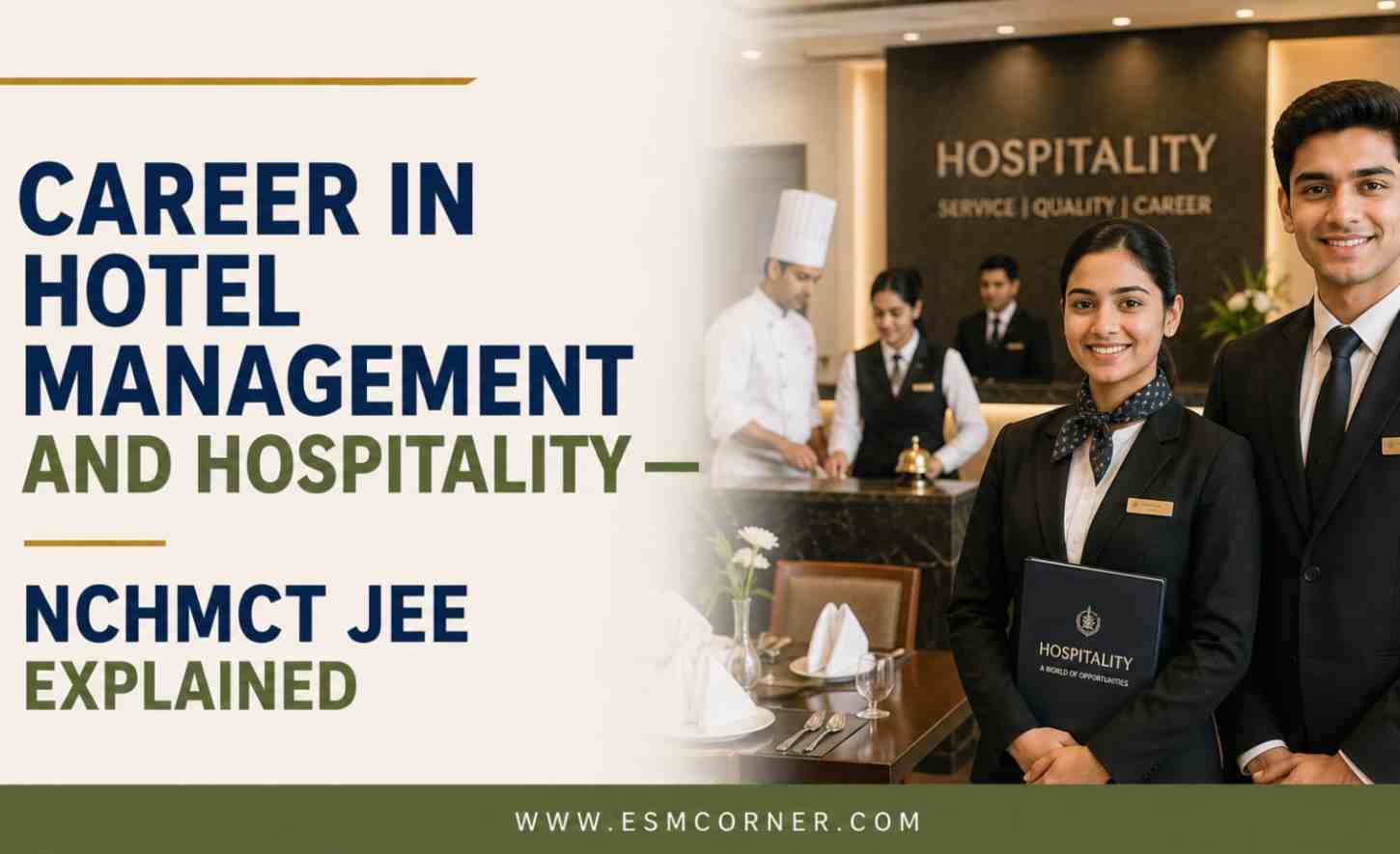
When most students hear the phrase “Hotel Management,” they immediately imagine a chef cooking in a kitchen or a receptionist standing at a front desk. Because of this limited understanding, thousands of bright students ignore one of the largest and most exciting service industries in the world. In reality, the hospitality sector goes far beyond luxury hotels.
It spans international cruise ships, commercial airlines, luxury resorts, event management companies, theme parks, corporate facilities, and high-end restaurants.
Hotel management is fundamentally about human connection, leadership, business management, effective communication, and creating unforgettable guest experiences. If you enjoy interacting with people, organizing events, solving real-world challenges, and working in vibrant environments, this field opens endless professional doors.
Choosing a career path after high school can feel overwhelming, but clarity changes everything. This comprehensive guide explains NCHMCT JEE, top courses, industry skills, real-world opportunities, and future scope in very simple language. By the end of this article, you will clearly understand whether a Career in Hotel Management matches your personal strengths, interests, and long-term professional goals.
Why Hotel Management is Becoming a Popular Career
Many students ask why so many young professionals are actively choosing the hospitality sector today. The answer lies in the global growth of travel, tourism, and lifestyle services. As people travel more for business, leisure, and wellness, the demand for trained hospitality professionals continues to rise rapidly. Unlike traditional desk jobs that feel repetitive, this industry offers dynamic daily experiences, continuous learning, and rapid career growth. Furthermore, hospitality skills are universal, meaning your expertise is valued in almost every country across the globe.
What is Hospitality Management?
A common area of confusion among students is understanding what hospitality actually means in daily operations. Hospitality is the art of making guests feel welcome, comfortable, and valued wherever they are. It combines warm personal care with organized business management to deliver exceptional service standards. Whether you are managing a boutique hotel, coordinating a massive international wedding, or overseeing VIP lounge operations, hospitality ensures seamless execution.
Difference Between Hotel Management and Hospitality
Students frequently confuse these two terms, assuming they mean the exact same thing. While they are closely related, their actual scope is quite different:
- Hotel Management: Focuses specifically on the operational and administrative aspects of running accommodation properties like hotels, resorts, motels, and inns.
- Hospitality Management: A broader umbrella term that includes hotel management alongside airlines, travel agencies, event management, cruise lines, luxury retail, and sports facility management.
- Operational Focus: Hotel management concentrates heavily on room division, front office, housekeeping, and food production within a property.
- Broader Scope: Hospitality management covers customer service strategy, brand experience, and guest relations across various service-driven industries.
What is NCHMCT JEE?
If you want to study at India’s top government-affiliated hotel management institutes, NCHMCT JEE is your starting gateway. This national-level entrance exam evaluates your aptitude for the hospitality industry through multiple-choice questions.
- Organizing Body: Conducted annually to select students for prestigious Institutes of Hotel Management (IHMs).
- Key Subjects: Tests English language, numerical ability, reasoning, general knowledge, and service sector aptitude.
- Exam Objective: Assesses problem-solving ability, situational judgment, and basic communication readiness.
- Standardized Entry: Ensures fair, merit-based admission into top public and private hospitality institutions across India.
Who Should Choose Hotel Management?
How do you know if a Hospitality Career Guide is pointing you toward the right field? You should consider this path if you naturally possess strong social skills and empathy. It is ideal for individuals who remain calm under pressure, enjoy working in teams, love organizing events, and take pride in helping others.
Eligibility (General Overview)
Getting started in this field is straightforward and inclusive for students from all academic backgrounds:
- Educational Qualification: Passing Class 12 (10+2 pattern) or its equivalent from a recognized educational board.
- Stream Flexibility: Students from Arts, Science, Commerce, or Vocational streams are equally eligible to apply.
- Mandatory Subject: English must be a compulsory subject in your high school curriculum.
- Age Criteria: General regulations apply as per national exam guidelines each academic year.
Hotel Management Courses
After high school, you can choose from several academic qualification levels depending on your goals:
- B.Sc. in Hospitality & Hotel Administration: A comprehensive 3-year degree offering balanced theoretical and practical knowledge.
- Diploma Programs: Focused 1-to-2-year specialized courses in food production, front office, or bakery operations.
- Certificate Courses: Short-term skill training programs designed for quick entry into specific vocational entry-level jobs.
- Master’s Degrees: Advanced post-graduate programs focusing on hotel administration, strategic management, and corporate leadership.
Skills Required for Success
Building a strong Career in Tourism and Hospitality requires a blend of professional and personal abilities:
- Active Listening: Understanding guest preferences and resolving complaints promptly.
- Multitasking: Handling multiple operational tasks efficiently during peak business hours.
- Team Coordination: Working smoothly alongside kitchen, front office, and housekeeping staff.
- Cultural Sensitivity: Respecting and adapting to diverse guests from different worldwide cultures.
Communication and Personality Development
In hospitality, your personality and speech represent your professional brand. Excellent communication goes beyond speaking fluent English; it involves politeness, positive body language, and professional grooming. Developing confidence and maintaining a cheerful demeanor instantly puts guests at ease, making this one of the most critical factors for long-term career growth.
Practical Training and Internships
You cannot learn hospitality purely from textbooks. Practical industrial exposure is the backbone of any quality Hotel Management Course Guide. During internships at operational hotels, students work directly in front desk management, culinary preparation, event planning, and guest relations. This hands-on experience transforms classroom concepts into practical workplace confidence.
Exploring Hospitality Career Paths
Choosing your specialization area helps shape your future industry growth and personal development.
| Area | Best For | Career Scope | Key Point |
| Front Office | Friendly & articulate communicators | Hotel Operations & Reservations | Direct guest interaction daily |
| Food Production | Creative culinary enthusiasts | Kitchens & Catering Businesses | Focuses on food preparation |
| Food & Beverage | Energetic team players | Restaurants & Banquet Management | Handles dining guest experience |
| Housekeeping | Detail-oriented organizers | Property Maintenance & Hygiene | Maintains quality standards |
| Event Planning | Resourceful planners | Weddings & Corporate Events | Coordinates large celebrations |
Career Opportunities in India
The Indian service market offers diverse job roles across rapidly expanding sectors:
- Luxury Hotels & Resorts: Front office executives, duty managers, guest relation officers, and executive chefs.
- Airlines & Aviation: Cabin crew, ground staff, VIP lounge managers, and flight catering supervisors.
- Corporate Hospitality: Facility management executives for top multinational corporate offices.
- Restaurant Chains: Outlet managers, food safety supervisors, and beverage managers.
International Career Opportunities
Because hospitality standards are global, Indian graduates enjoy excellent international job opportunities. Major tourist hubs in the Middle East, Europe, Southeast Asia, and North America actively hire trained professionals. Additionally, luxury ocean cruise lines offer global travel while earning competitive international incomes.
Entrepreneurship Opportunities
Hotel management education instills strong business acumen. Graduates often start successful ventures such as boutique cafes, cloud kitchens, event management firms, bakery chains, or eco-friendly homestays, becoming job creators instead of job seekers.
Higher Education and Specializations
For those interested in corporate leadership, pursuing higher education opens advanced career pathways:
- MBA in Hospitality Management: Prepares you for regional directorial and corporate executive roles.
- Specialized Master’s Degrees: Advanced studies in tourism development, revenue management, or luxury brand strategy.
- Professional Certifications: Global credentials in sommelier studies, event coordination, or revenue analytics.
Government and Private Sector Opportunities
Apart from private hotels, hospitality graduates find stable career options in government sectors:
- IRCTC & Railway Tourism: Managing catering services, luxury tourist trains, and railway guest facilities.
- State Tourism Boards: Administrative roles promoting regional heritage, cultural centers, and tourism lodges.
- Armed Forces Mess Services: Managing catering and hospitality operations for defense officer establishments.
- Corporate Private Units: Overseeing employee dining facilities, corporate guest houses, and event spaces.
Future Scope of the Hospitality Industry
The hospitality sector continues to evolve with smart hotel technology, eco-tourism, and personalized wellness services. While automation speeds up booking processes, human warmth, empathy, and genuine hospitality can never be replaced by technology. This ensures long-term job security for skilled professionals.
Common Myths Students Believe
- Myth 1: Hotel management is only about cooking and cleaning dishes.
- Myth 2: You must speak fluent, perfect English from day one to join.
- Myth 3: Jobs are limited strictly to hotel buildings.
- Myth 4: There is no scope for long-term professional growth or executive leadership.
Common Mistakes While Choosing Hotel Management
- Selecting a college without checking its practical training infrastructure and lab facilities.
- Ignoring soft skills and focusing purely on written exam scores.
- Expecting executive managerial positions immediately without undergoing foundational ground-level training.
- Choosing the field purely under peer pressure without evaluating personal interest in service.
How to Know If This Career is Right for You
Ask yourself these simple personal questions before making a final decision:
- Do I genuinely enjoy interacting with new people from different cultural backgrounds?
- Can I stay positive, polite, and calm during challenging customer situations?
- Am I excited about working in energetic, non-traditional work settings?
- Do I possess good organizational skills and a desire to help others?
Conclusion
Building a successful Career in Hotel Management offers an exciting, dynamic, and globally rewarding journey for young students. It is far more than a routine job; it is a creative profession centered on leadership, human connection, business efficiency, and hospitality excellence. If you genuinely enjoy meeting people, organizing events, solving real-world challenges, and delivering outstanding service, this industry provides incredible personal and professional growth.
Entrance exams like NCHMCT JEE serve as an accessible stepping stone to top-quality education and hands-on industrial training. Rather than following common misconceptions or societal pressure, evaluate your personal strengths, social skills, and long-term career goals. With dedicated effort, strong communication, and a true customer-first mindset, a hospitality career can take you to prestigious professional heights both in India and across the globe.
READ ALSO: CAN HINDI MEDIUM OR RURAL BACKGROUND STUDENTS CRACK NDA AND BECOME OFFICERS?
Frequently Asked Questions
What is the NCHMCT JEE entrance exam?
It is a national-level entrance exam conducted in India for admissions into undergraduate hospitality programs offered by affiliated central, state, and private Institutes of Hotel Management (IHMs).
Can an Arts or Commerce student take the NCHMCT JEE exam?
Yes, students from any academic background—Arts, Commerce, or Science—can appear for the entrance exam, provided they passed Class 12 with English as a subject.
What are the main subjects taught in a hotel management degree?
The curriculum covers four primary operational areas: Front Office Operations, Housekeeping Operations, Food Production (Culinary Arts), and Food & Beverage Service, alongside basic business management.
Is fluent English necessary before joining a hotel management course?
While basic English understanding helps, complete fluency is not mandatory at entry. Professional institutes provide comprehensive training in communication, grooming, and soft skills throughout the course.
Are hospitality jobs limited only to working inside hotels?
No, hospitality skills apply broadly across commercial airlines, cruise ships, corporate facility management, event management companies, luxury retail brands, tourism boards, and healthcare hospitality.
What is the difference between a degree and a diploma in hotel management?
A degree is a comprehensive 3-year academic program covering all aspects of management and operations, whereas a diploma is a shorter, specialized technical training course.
Do hotel management courses include practical training?
Yes, practical classes, live kitchen sessions, mock front desk training, and mandatory industrial internships at operational properties form a major part of the curriculum.
Is hotel management a good career choice for female students?
Absolutedly. The hospitality industry provides equal opportunities, excellent safety standards, diverse job profiles, and equal growth avenues for all professionals regardless of gender.
For daily defence updates, government notifications, recruitment alerts, welfare schemes, career opportunities, education news, and other important announcements, join our WhatsApp Community. Click here to join our WhatsApp Group.