

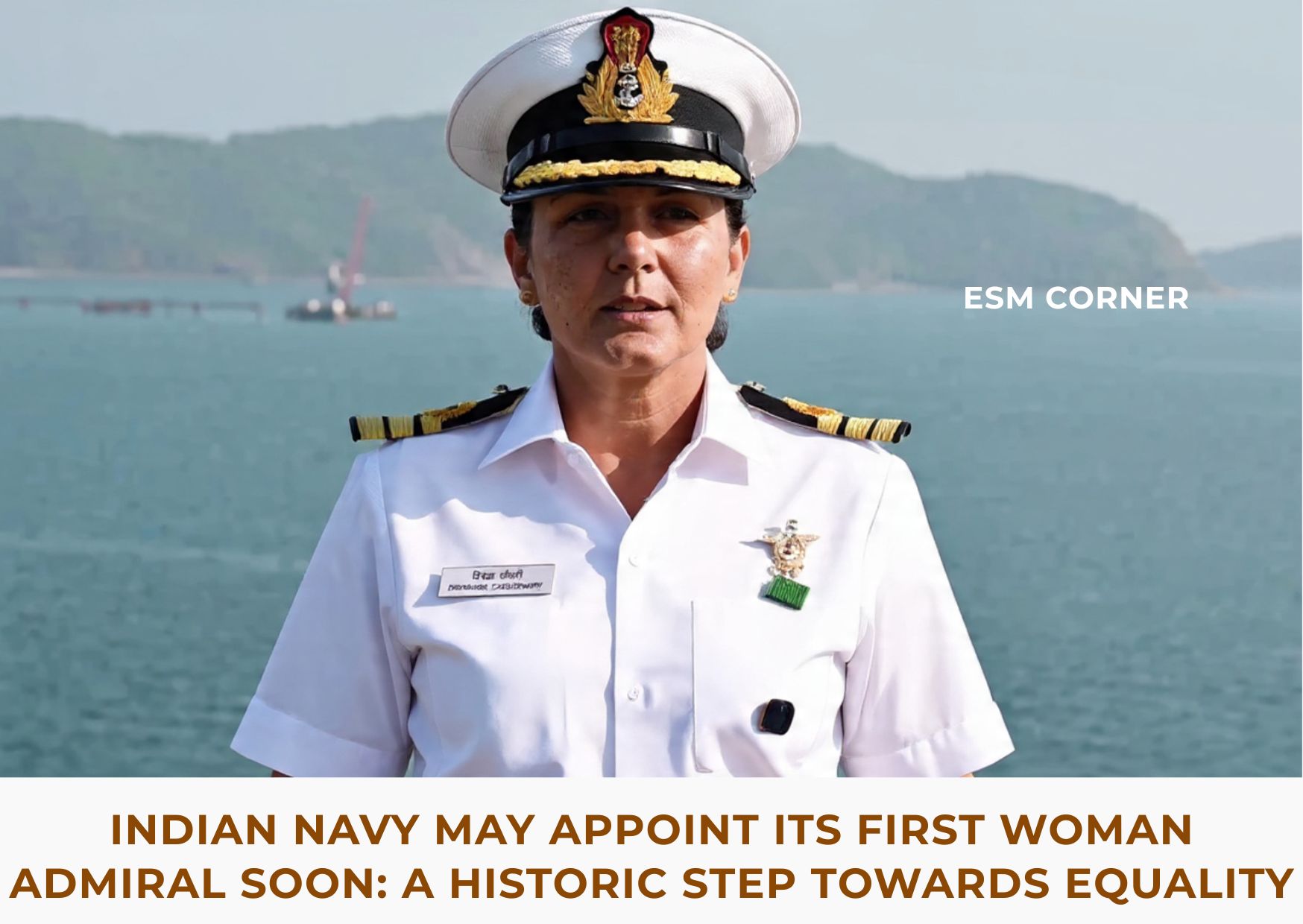
India’s armed forces are slowly but steadily changing with time, and one of the most encouraging signs of this change is the growing role of women in uniform. In a major and positive development, the Indian Navy may appoint its first woman admiral in the coming years, marking a historic milestone in the country’s military leadership.
This important possibility was recently highlighted by Chief of the Naval Staff Admiral Dinesh Kumar Tripathi while addressing a national human resources conclave. He expressed confidence that in the near future, a woman officer could reach the rank of admiral and stand at the same platform to lead and inspire others. His statement reflects not only optimism but also the Navy’s firm commitment to gender equality and merit-based growth.
A Journey That Began in the 1990s
Women were first inducted into the Indian Navy in the early 1990s. At that time, their roles were limited mainly to support and shore-based duties. Combat roles, sea command, and aviation were largely closed to women due to traditional thinking, operational challenges, and infrastructure limitations.
However, over the past three decades, this mindset has changed significantly. Step by step, the Navy expanded opportunities for women officers. Today, women are serving across almost all branches and roles, including operational, technical, aviation, and command appointments.
The Navy has clearly adopted a policy of “all roles, all ranks”, meaning that women are no longer restricted based on gender but assessed purely on ability, performance, and leadership potential.
Breaking Barriers at Sea
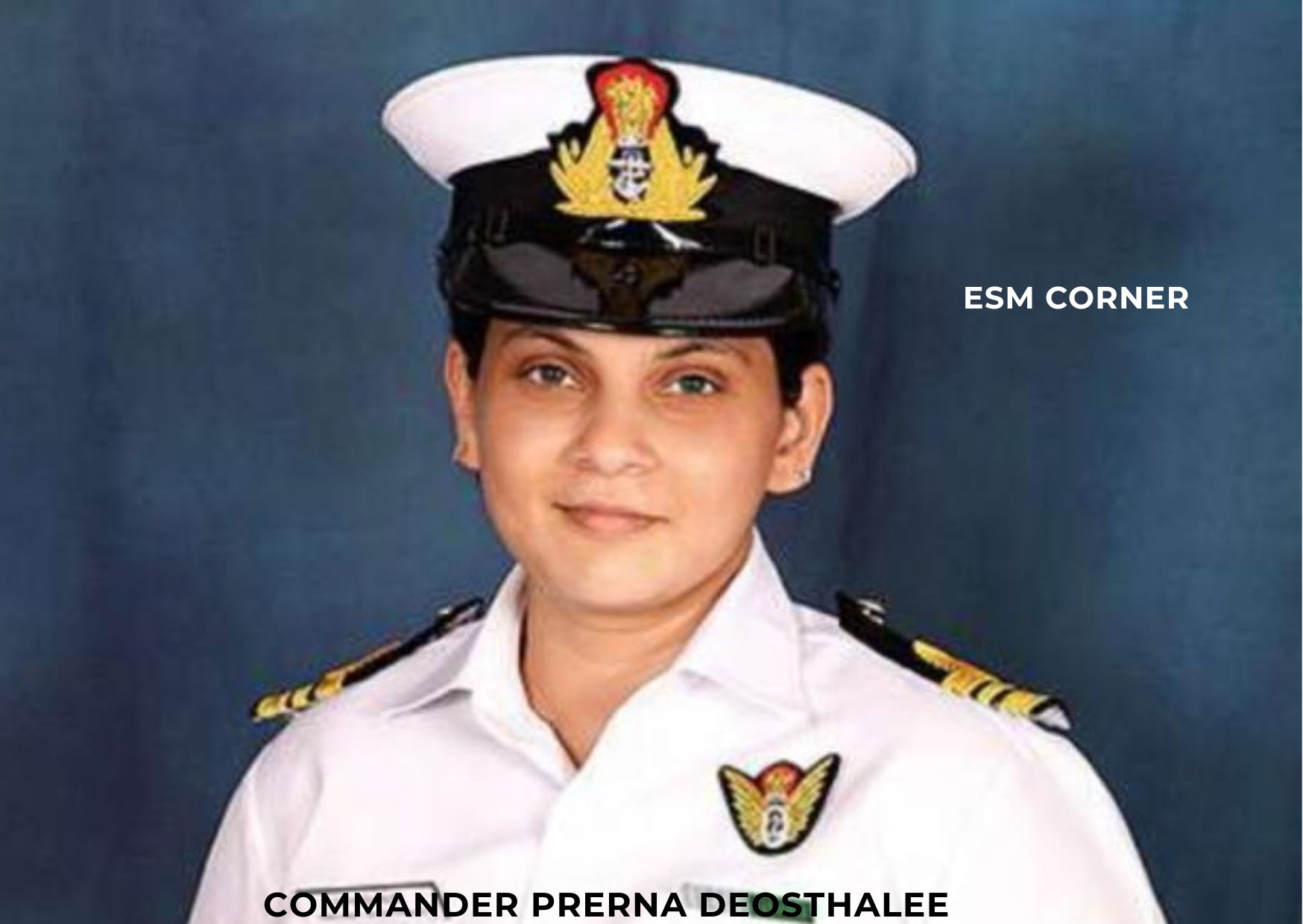
One of the biggest breakthroughs came in December 2023, when Commander Prerna Deosthalee became the first woman officer to command an Indian naval warship. This achievement was not just symbolic; it proved that women can successfully lead sailors, manage complex operations at sea, and take responsibility for national maritime security.
Commanding a warship requires strong leadership, technical knowledge, decision-making under pressure, and the trust of the crew. By performing this role with distinction, Commander Deosthalee set a powerful example for future women officers aspiring to higher command ranks.
👉How to change registered mobile number in ECHS online
Women Taking the Skies Too
Another major milestone was achieved when a woman officer became the first fighter pilot of the Indian Navy. This was a historic moment, as naval fighter aviation is one of the most demanding and technically challenging roles in the armed forces.
Women officers are also flying helicopters, maritime surveillance aircraft, and participating in long-range missions. These roles were once considered unsuitable for women, but today they stand as proof that capability matters more than gender.
New Frontiers: Submarines and Specialised Roles
The Navy Chief has also indicated that women may soon be inducted into the submarine arm, one of the most specialised and secretive branches of naval operations. Earlier, technical and logistical limitations were cited as reasons for not deploying women submariners. However, with modern technology and evolving infrastructure, these barriers are gradually being removed.
Once women begin serving in submarines, it will further strengthen their eligibility for senior leadership positions, as exposure to diverse operational roles is essential for promotion to flag ranks like commodore, rear admiral, and vice admiral.
👉ECHS websites: explore health benefits, smart cards, & claims for ESM

Why the Rank of Admiral Matters
The rank of admiral is among the highest in the Navy. Officers at this level are responsible for strategic planning, fleet operations, policy decisions, and national maritime security. Reaching this rank requires decades of service, command experience, professional courses, and an outstanding service record.
A woman admiral would not just be a personal achievement for one officer. It would represent:
- Equal opportunity in leadership
- Trust in women’s operational and strategic abilities
- A modern and progressive armed force
- Inspiration for young women across India
Such representation also sends a strong message to society that leadership and patriotism are not limited by gender.
Learning from the Indian Navy Itself
The Indian Navy has already seen a woman officer reach a leadership position equivalent to the rank and responsibility of an Admiral. Surgeon Vice Admiral Arti Sarin, a senior Naval officer, served as the Director General of Armed Forces Medical Services (DGAFMS)—the highest medical appointment across the Army, Navy, and Air Force, and a post held at a three-star level.
Her achievement clearly demonstrates that when women in the Indian Navy are given equal opportunity, institutional trust, and leadership responsibility, they are fully capable of performing at the highest levels of command and strategic decision-making. This strengthens the case for a future woman Admiral in the Indian Navy.
Strengthening National Defence Through Inclusion
Gender inclusion is not just about equality; it is also about strengthening national defence. A larger and more diverse talent pool brings new perspectives, better decision-making, and stronger institutional resilience.
Modern warfare and security challenges require intelligence, technology, leadership, and teamwork. By fully integrating women into all levels of command, the Navy is ensuring that it does not limit itself by outdated thinking.
👉 Controversy on 8th Pay Commission for pensioners
Looking Ahead
The likely appointment of the first woman admiral in the Indian Navy is not an overnight change. It is the result of years of reforms, policy decisions, court rulings, and cultural shifts within the armed forces.
As more women join the Navy, gain sea command, fly combat aircraft, and serve in challenging roles, the path to senior leadership becomes clearer and stronger.
This upcoming milestone will not only rewrite naval history but also inspire future generations to serve the nation with confidence, courage, and pride — regardless of gender.
The Indian Navy’s journey toward inclusive leadership shows that change is possible when institutions evolve with time, and when merit is allowed to rise above tradition.




The chief of any defence force be it Army/Air Force/Navy must have good experience in commanding operational commands.There should be no compromise on it.