
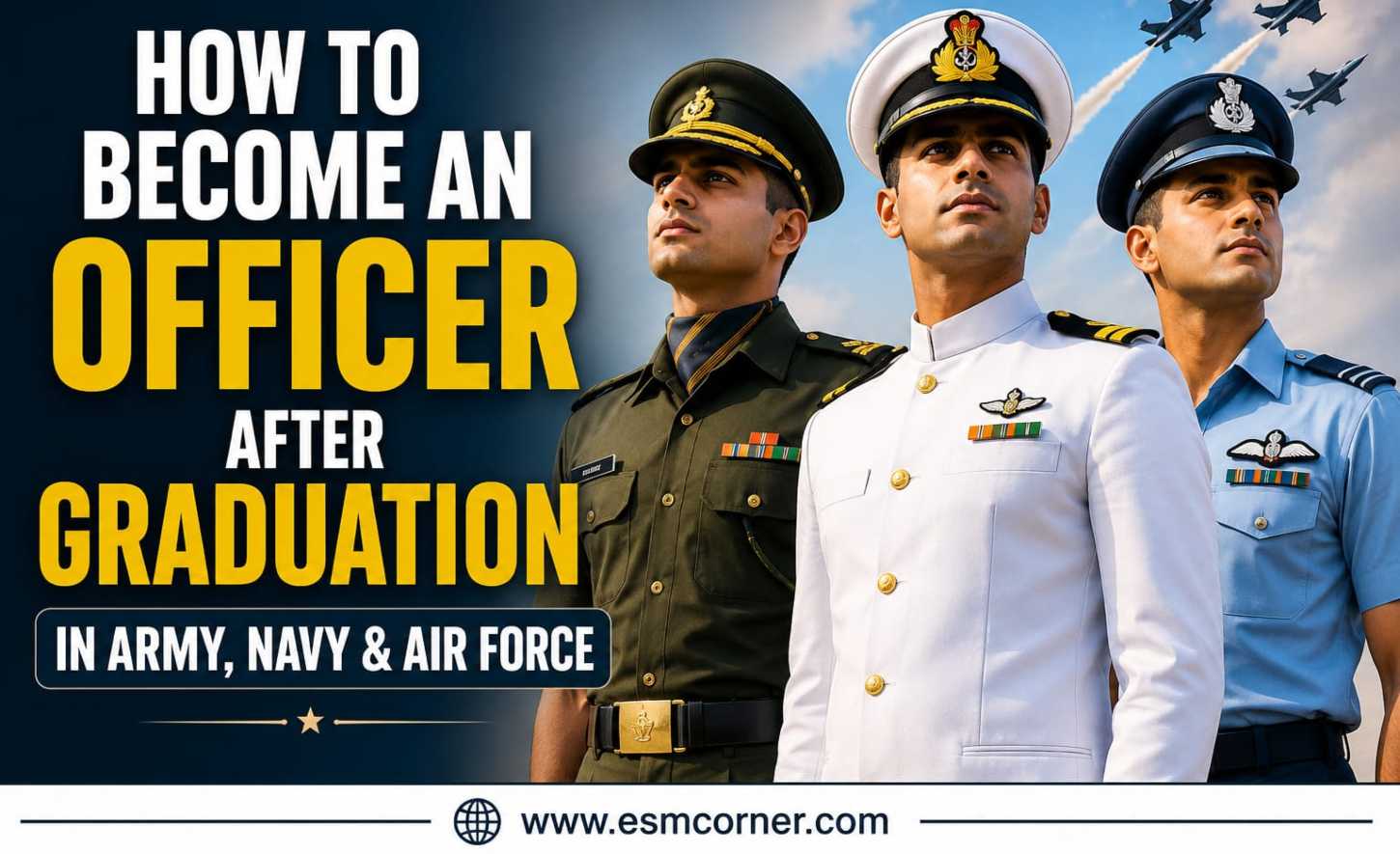
Many students believe that if they miss the NDA route after Class 12, their dream of becoming a commissioned officer is over. This is one of the biggest misconceptions about joining the Indian Armed Forces. In reality, there are several ways to become an officer after graduation, and a college degree opens up many more opportunities across the Indian Army, Navy, and Air Force.
Whether you have graduated in Engineering, Science, Commerce, Arts, Law, or another discipline, the Armed Forces offer multiple officer-entry schemes such as CDS, AFCAT, NCC Special Entry, TGC, SSC Tech, JAG, and several branch-specific entries based on your educational qualifications
In fact, graduation can work to your advantage. By the time you complete your degree, you’ve developed greater maturity, stronger decision-making skills, and the confidence that military leadership demands. Along with these qualities, your academic background gives you specialised knowledge that can be valuable in a wide range of defence roles. While the NDA prepares candidates from the ground up, graduate-entry programs are designed for individuals who already bring education, experience, and a more mature perspective.
Now, let’s explore the different officer-entry options available after graduation and find the path that best matches your qualifications and career goals.
If you’d like, I can also rewrite it in a more YouTube narration, blog, or motivational style.
Why Graduating First Might Actually Work Better For You
A lot of graduates wonder if joining after college puts them at a disadvantage compared to NDA candidates. Actually, the opposite is true — your degree lets you apply to multiple branches at once, based on what you studied. And becoming a Commissioned Officer means real command responsibility and leadership from day one, which is a big deal.
To qualify, you’ll need to meet basic requirements around age, nationality, physical standards, and academic qualifications. Here’s a tip worth remembering — keeping your graduation percentage above 60% genuinely matters, since a lot of direct-entry cut-offs are based purely on academic scores.
Strong academic performance alone is not enough for selection. Every candidate must successfully clear the SSB Interview, a comprehensive five-day assessment that evaluates personality, psychological suitability, leadership qualities, and officer-like potential. This is followed by a detailed medical examination to ensure the required physical standards are met for military service. The final merit list is prepared based on the candidate’s selection performance and medical fitness, after which successful candidates join premier training academies such as the IMA, OTA, INA, or AFA.
Officer Entries in the Indian Army
- CDS Entry – Conducted twice a year by UPSC, leading to a permanent commission at IMA or a short service commission at OTA.
- SSC (Tech) – Men & Women – For engineering graduates, skipping written exams entirely and going straight to SSB based on your degree marks.
- SSC (Non-Tech) – Women – For female graduates from any discipline, entering OTA for operational support roles.
- TGC (Technical Graduate Course) – A permanent commission entry for male engineering graduates, leading straight into IMA training.
- NCC Special Entry – For graduates holding an NCC ‘C’ Certificate with a minimum ‘B’ grade — direct SSB call, no written exam needed.
- JAG Entry – For law graduates with at least 55% aggregate marks and valid Bar Council registration.
Officer Entries in the Indian Navy
- INET Graduate Entries – A unified written exam covering branches like Executive, Hydro, and Naval Armament Inspectorate.
- Executive Branch – Handles ship navigation, artillery command, submarine operations, and intelligence duties.
- Education Branch – For science and engineering graduates who train naval personnel in modern tech and operational theory.
- Technical Branch – Designed for engineers responsible for maintaining marine propulsion systems, electrical equipment, and advanced weapon systems on naval vessels.
- SNAES – A specialised path for naval architecture engineers who design and maintain warships and submarines.
Officer Entries in the Indian Air Force
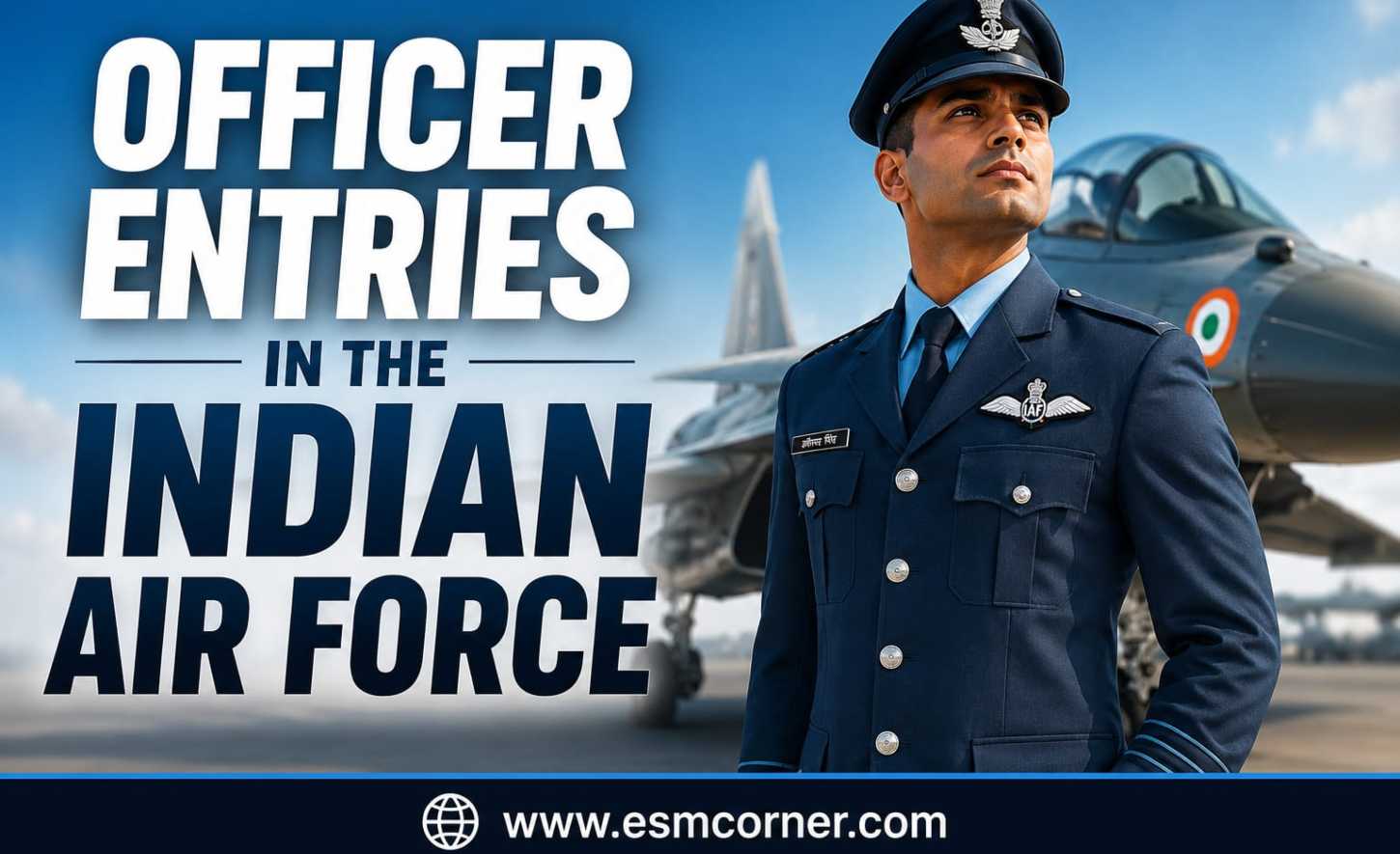
- AFCAT Entry – The main gateway across operational, engineering, and administrative branches.
- Flying Branch – Recruits pilots for fighter jets, transport aircraft, and helicopters via AFCAT, CDS (male only), or NCC Special Entry.
- Ground Duty (Technical) – Covers Aeronautical Engineering roles in both Electronics and Mechanical streams.
- Ground Duty (Non-Technical) – Open to general graduates across Administration, Logistics, Accounts, Meteorology, and Education.
- NCC Special Entry (Air Wing) – A direct SSB path for NCC Air Wing ‘C’ Certificate holders aiming for the Flying Branch.
One More Option Worth Knowing
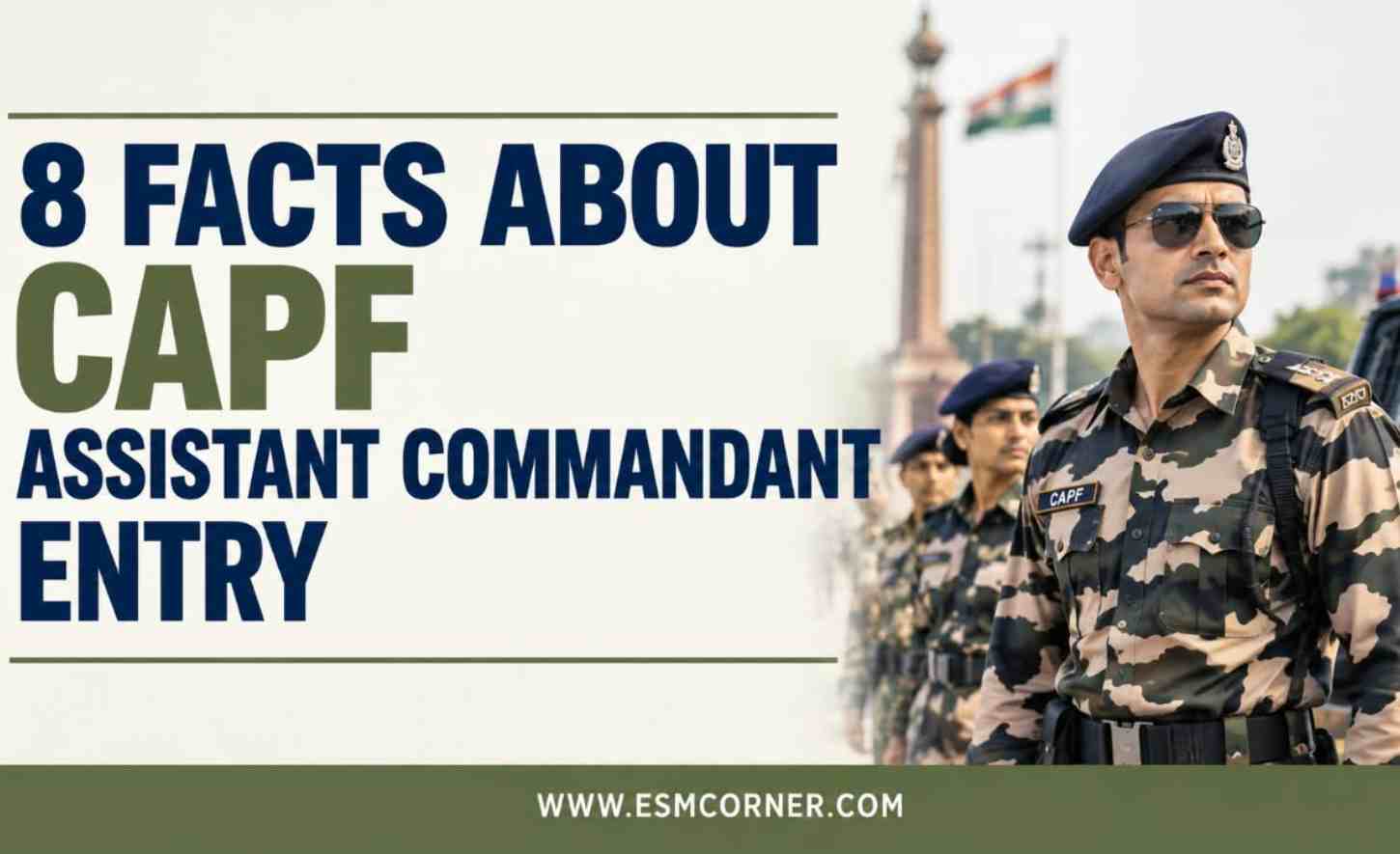
Beyond the three main services, the CAPF Assistant Commandant Entry (via UPSC) offers a strong alternative for graduates who want command roles in paramilitary forces like BSF, CRPF, and ITBP.
It also helps to understand the difference between Permanent Commission (PC), where you serve until retirement, and Short Service Commission (SSC), which runs for 10-14 years with an option to convert to PC later.
Here’s something worth knowing too — engineering graduates get access to technical branches across all three services, while non-engineering graduates tend to do well in executive, administrative, logistics, and flying roles. And genuinely — opportunities today are open to both men and women across most operational and support branches.
Quick Comparison: Major Graduate Officer Entries
| Entry | Qualification | Selection Process | Service |
|---|---|---|---|
| CDS (IMA/OTA) | Graduation in Any Stream | Written Exam + SSB + Medicals | Indian Army |
| AFCAT (Flying/Ground) | Graduation / B.E. / B.Tech | Written Exam + AFSB + Medicals | Indian Air Force |
| SSC Tech / TGC | B.E. / B.Tech Degree | Direct Shortlisting + SSB + Medicals | Indian Army |
| INET Executive | Graduation / Engineering | Written Exam or Shortlisting + SSB | Indian Navy |
| NCC Special Entry | Any Graduate + NCC ‘C’ Cert | Direct Shortlisting + SSB + Medicals | Army / Navy / Air Force |
How Do You Actually Prepare For All This?
Start by matching your qualifications against active notifications so you don’t accidentally miss an application window — this happens more often than you’d think. For written exams like CDS and AFCAT, focus on consistent practice in Maths, English, General Knowledge, and Reasoning using previous years’ papers.
The SSB Interview looks closely at your Officer Like Qualities (OLQs) — things like sound judgement, social adaptability, courage, and stamina. These aren’t things you can cram for overnight; they come from daily habits. Alongside that, keep up consistent physical training — cardio, bodyweight exercises, and running — so obstacle courses and medical tests feel manageable, not intimidating.
A common mistake: waiting until written exam results are out before starting SSB prep. That leaves way too little time to build the physical and psychological readiness you actually need. Instead, build strong daily habits early — read the newspaper, practice speaking spontaneously, solve daily aptitude questions, and stay physically active. Also, don’t overlook lesser-known entries like NCC direct or specialised tech routes — a lot of aspirants miss these simply because they didn’t know they existed.
Conclusion
Becoming a commissioned officer after graduation is genuinely one of the most rewarding paths a young adult can choose — and completing your degree only expands your options across the Army, Navy, and Air Force, rather than limiting them. Whether you go through written exams like CDS and AFCAT, or land a direct SSB call through technical, legal, or NCC entries, there’s a path suited to your background.
Success here isn’t just about marks — it’s about building strong Officer Like Qualities, staying physically fit, keeping up with current affairs, and maintaining real integrity. Start early, prepare consistently, and take that first step with confidence.
READ ALSO: INDIAN NAVY B.TECH ENTRY SCHEME AFTER 10+2 : COMPLETE GUIDE
Frequently Asked Questions
Q1.Can any graduate become an officer?
Yes, any graduate holding a recognized degree can apply for officer entries. However, specific branches like technical wings or flying branches require specific subjects such as Mathematics, Physics, or Engineering degrees. General graduates from Arts, Commerce, and Science can freely join executive, administrative, and operational support branches across the services.
Q2.Which is the best entry after graduation?
The best entry depends entirely on your educational background and career goals. CDS is ideal for permanent commission in the Army, while AFCAT is best for Air Force aspirants. Direct entries like SSC Tech or TGC work best for engineering graduates seeking direct SSB calls without written exams.
Q3.Is engineering compulsory?
No, engineering is not compulsory for becoming a military officer after graduation. While technical branches require engineering degrees, numerous operational and administrative entries—including CDS IMA/OTA, AFCAT Ground Duty Non-Tech, and Navy Executive branches—are open to graduates from Arts, Commerce, Science, and other general streams.
Q4.What is the difference between CDS and AFCAT?
CDS is conducted by UPSC for entry into the Indian Army, Navy, and Air Force, featuring papers in English, General Knowledge, and Mathematics. AFCAT is conducted by the Indian Air Force specifically for Flying and Ground Duty branches, testing Verbal Ability, Numerical Ability, Reasoning, and General Awareness.
Q5.Are women eligible?
Yes, women graduates are eligible for multiple officer entries across the Army, Navy, and Air Force. Opportunities include CDS (OTA), AFCAT (Flying and Ground Duty), SSC Tech, NCC Special Entry, JAG Entry, and various Naval Executive and Technical branches, offering equal career growth and leadership opportunities.
Q6.Which entries do not require a written exam?
Entries like SSC Tech (Men and Women), TGC, JAG Entry, and NCC Special Entry do not require a written entrance exam. Shortlisting for the SSB interview is done directly based on your graduation percentage, engineering marks, law qualification, or possession of an NCC ‘C’ Certificate.
Q7.How important is SSB?
The SSB interview is the most crucial stage of the officer selection process. Regardless of your written exam score or academic percentage, clearing the 5-day SSB assessment—which evaluates your personality, psychological fitness, and Officer Like Qualities—is mandatory for final merit listing and academy admission.
Q8.What should beginners prepare first?
Beginners should first thoroughly research eligibility criteria for various entries to choose the right path. Next, focus simultaneously on written exam syllabus topics and daily newspaper reading to build general awareness. Concurrently, start basic physical fitness training and work on communication skills to prepare for the SSB interview.
For daily defence updates, government notifications, recruitment alerts, welfare schemes, career opportunities, education news, and other important announcements, join our WhatsApp Community. Click here to join our WhatsApp Group.