
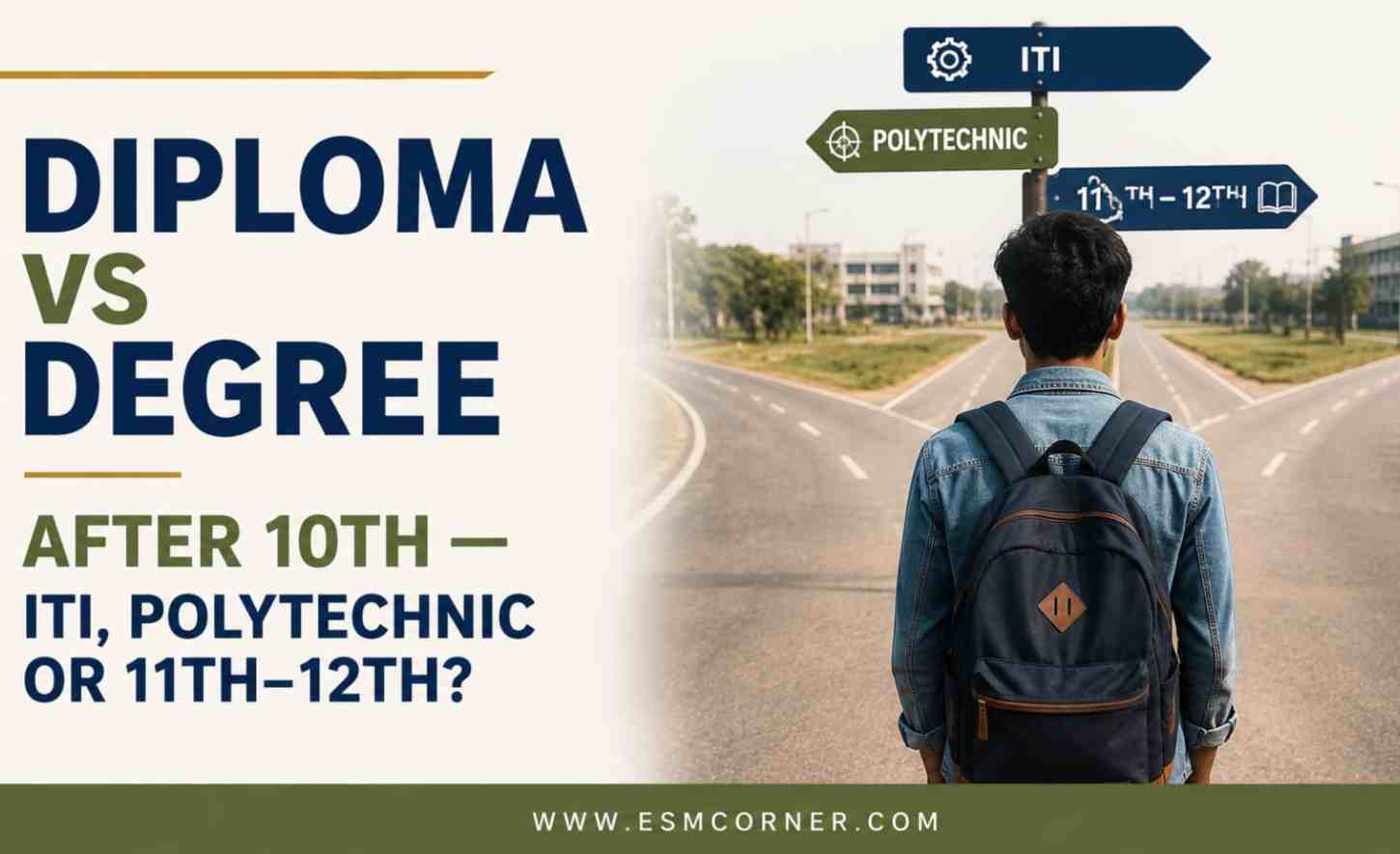
Every year, thousands of students complete Class 10 and suddenly face one of the biggest decisions of their lives. Some well-wishing relatives advise them to choose Science, while others strongly suggest ITI, Polytechnic, or Commerce. Friends, neighbours, school teachers, and social media videos often give completely different advice, leaving students more confused than ever before. You might be sitting with your mark sheet wondering which road will safely lead to a happy, stable, and successful career.
The truth is that there is no single “best” option after Class 10 for every student. The right choice depends entirely on your personal interests, learning style, career goals, family financial situation, and long-term ambitions. An option that works brilliantly for your best friend might turn out to be completely wrong for you. In this beginner-friendly guide, we will break down every path in simple Indian English so that you and your parents can confidently choose the right direction without any fear or confusion.
Why Choosing the Right Path After Class 10 Matters
Class 10 is the very first official turning point in your academic journey because it sets the base for your future. Choosing a stream or vocational course without thinking carefully can lead to lost time, unnecessary mental stress, and career dissatisfaction later. When you select a line that matches your natural talent, studying feels enjoyable rather than a heavy burden.
Many students make serious mistakes during this phase simply because they lack proper guidance or act out of panic. Here are the most common traps you should actively avoid:
- Following your best friends blindly just to stay in the exact same school or classroom.
- Giving in to social or parental pressure to select high-prestige streams like Science without genuine personal interest.
- Choosing options based purely on temporary popularity rather than analyzing your own academic strengths.
- Ignoring practical financial realities or the need for early employment in your family.
Understanding ITI: Quick Hands-On Skills
Are you someone who learns much faster by doing practical work with tools rather than reading thick theory books? Industrial Training Institutes, commonly known as ITI, are specialized government and private centers that offer vocational trade training. These short courses, lasting from six months to two years, focus entirely on developing practical, job-ready skills for technical trades like electrician, plumber, mechanic, and welder.
Who Should Choose ITI?
ITI is ideal for students who want to enter the workforce quickly right after Class 10. If you prefer physical work, handling machines, or need to support your family financially at an early age, ITI offers a direct, fast-track route.
Advantages of ITI
- Short Course Duration: You can complete your training within 1 to 2 years and start earning.
- Affordable Education: Fees in government ITIs are very low, making it accessible for everyone.
- High Practical Focus: Over 70% of the course involves hands-on workshop training.
Limitations of ITI
- Limited Growth Initially: Entry-level technical roles usually start at basic operational levels.
- Less Theoretical Knowledge: You miss out on advanced mathematical and engineering theory.
Understanding Polytechnic Diploma: The Middle Path
What if you love technical fields like computers, civil construction, or machinery, but want broader options than a basic trade? A Polytechnic Diploma is a three-year technical program that teaches core engineering concepts alongside practical laboratory work. It serves as a perfect middle bridge between basic trade skill training and a full four-year B.Tech engineering degree.
Who Should Choose Polytechnic?
Polytechnic is best suited for students who have a strong interest in technology and engineering but wish to skip traditional Class 11–12 board exams. It suits practical learners who want solid technical qualifications without spending four long years in general school education first.
Advantages of Polytechnic
- Direct Entry to Engineering: After completing a diploma, you can enter directly into the 2nd year of a B.Tech degree through lateral entry.
- Strong Technical Foundation: You learn practical applications of engineering concepts early in life.
- Early Employment: Companies actively hire diploma holders for junior engineer and supervisory positions.
Limitations of Polytechnic
- Early Specialization: Changing your stream later from engineering to management or arts becomes quite difficult.
- Rigid Curriculum: The workload is practical and intensive right from the first semester.
The Traditional Route: Class 11–12
Choosing general higher secondary education (Class 11 and 12) keeps your options wide open for two more years. This traditional route focuses on academic theory and prepares you for higher undergraduate degree programs across various fields.
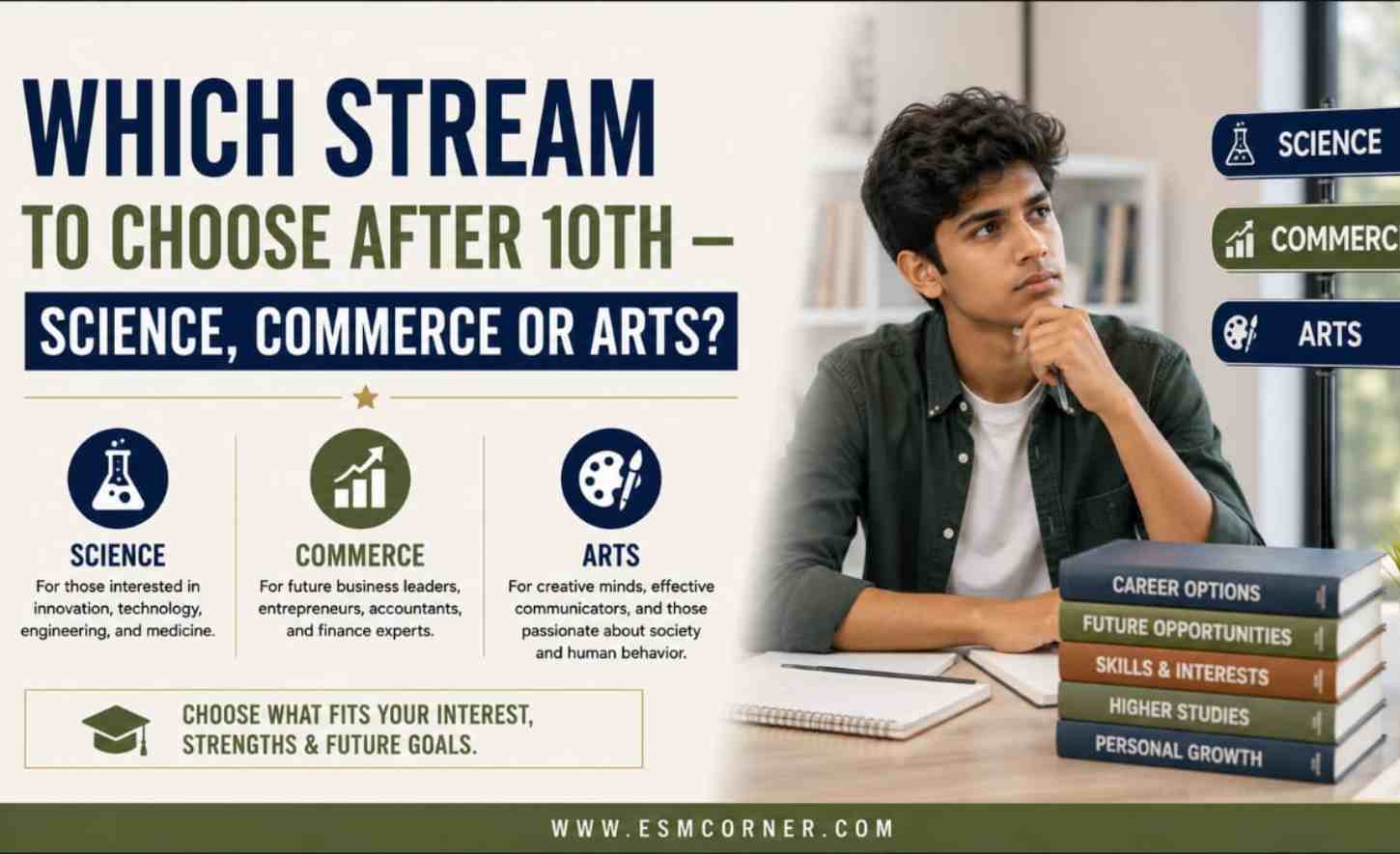
1. Science Stream
The Science stream focuses on understanding the physical world through Physics, Chemistry, Mathematics, and Biology. It is perfect for students who love solving complex analytical problems, doing lab experiments, and dreaming of careers in medicine, engineering, technology, or scientific research.
2. Commerce Stream
The Commerce stream introduces you to the world of business, financial systems, economics, and corporate trade through subjects like Accountancy and Business Studies. It suits students who enjoy working with numbers, understanding market trends, and aiming for business management or financial auditing careers.
3. Arts / Humanities Stream
The Arts stream offers a deep exploration of human society, culture, language, history, political systems, and creative fields. It is ideal for students passionate about law, journalism, public administration, psychology, graphic design, literature, and social research.
Diploma vs Degree: Key Differences
Understanding the structural difference between practical diplomas and academic degrees helps you plan your long-term future clearly.
| Option | Best For | Future Opportunities | Key Point |
| ITI | Quick job entry | Technician, mechanic, workshop self-employment | High hands-on training |
| Polytechnic | Early engineering | Junior Engineer, lateral entry to B.Tech | Practical technical bridge |
| Class 11–12 (Science) | Medical & Engineering | B.Tech, MBBS, B.Sc, research careers | Strong academic base |
| Class 11–12 (Commerce) | Business & Finance | CA, CS, B.Com, MBA, banking jobs | Focus on business math |
| Class 11–12 (Arts) | Civil services & Law | BA, LLB, journalism, public service | Focus on social sciences |
Skill-Based vs Academic Education
Skill-based tracks like ITI and Polytechnic train you to execute specific technical tasks from day one. In contrast, academic education in Class 11–12 builds conceptual clarity, critical thinking, and broader problem-solving skills needed for professional university degrees like B.A., B.Sc., or B.Com.
Career Growth and Employment Speed
If speed of employment is your top priority due to immediate family financial needs, ITI and Polytechnic offer the fastest route to a paycheck. However, long-term corporate growth into senior management roles usually favors candidates holding full university degrees.
Practical Guidance for Students and Parents
Making this decision requires calm reflection rather than emotional reactions or social comparisons. Here is how you can systematically navigate this crucial transition:
How to Discover Your Real Interests
- Identify favorite subjects: Notice which topics make you lose track of time while studying.
- Take self-assessment quizzes: Evaluate whether you enjoy theoretical reading, technical tinkering, or creative expression.
- Talk to working seniors: Ask older students about their daily routine in ITI, diploma, or higher secondary streams.
Questions Every Student Should Ask
- Do I want to start working in 2–3 years, or can I study for 5–6 more years?
- Am I comfortable spending hours reading complex books, or do I prefer learning by building things?
- What are my family’s financial expectations over the next three years?
The Essential Role of Parents
Parents should act as supportive guides rather than decision-makers who force unfulfilled personal dreams onto their children. Have open conversations about financial constraints, listen patiently to your child’s natural interests, and avoid comparing them with neighbors or relatives.
Common Myths vs Reality
- Myth: Arts stream is only meant for weak students who score low marks in Class 10.
Reality: Arts offers brilliant high-paying career paths in corporate law, policy design, journalism, and civil services.
- Myth: ITI and Diploma courses are inferior to school education.
Reality: Skilled technical workers and diploma engineers often secure employment faster than general degree graduates.
- Myth: You must select Science if you score above 80% marks in Class 10.
Reality: High marks simply mean you have good study habits; choose a stream based on interest, not just percentage.
Conclusion
There is no universally perfect path after Class 10, but there is definitely a right path for you. Whether you choose ITI for fast technical skills, Polytechnic for early engineering experience, or Class 11–12 for broader university options, your dedication and continuous learning will decide your ultimate success. Sit down with your parents, assess your true strengths honestly, avoid peer pressure, and take your first confident step toward a bright future.
READ ALSO: CAREER OPTIONS AFTER 12TH SCIENCE (PCM) -ENGINEERING & BEYOND
Frequently Asked Questions
1. Can I do B.Tech after completing a Polytechnic Diploma?
Yes, diploma holders can join the second year of a four-year B.Tech engineering degree program directly through a lateral entry scheme.
2. Is ITI better than Polytechnic for getting a quick job?
ITI is shorter and provides operational technical skills in just one to two years, making it slightly faster for early job entry.
3. Can I apply for government jobs after a Polytechnic Diploma?
Yes, various public sector undertakings and government departments regularly hire diploma graduates for Junior Engineer (JE) and technical supervisor positions.
4. Is Class 11–12 compulsory to get a university degree?
No, completing a recognized three-year Polytechnic diploma is considered equivalent to Class 12 for entry into many specialized technical degree programs.
5. What if I choose the wrong stream in Class 11?
You can switch streams in Class 12 or at the undergraduate level, though it requires adjusting to new subjects and extra study effort.
6. Can Arts students get high-paying corporate jobs in the future?
Yes, fields like corporate law, digital design, clinical psychology, and media management offer high salary potential for talented Arts graduates.
7. Why are soft skills important alongside technical diplomas?
Good communication, teamwork, and basic computer knowledge help technical graduates perform better in interviews and advance faster into managerial positions.
8. How should I convince my parents if I want to choose ITI or Arts?
Show them clear career options, present realistic job paths, and explain calmly how the field matches your personal talents and goals.
For daily defence updates, government notifications, recruitment alerts, welfare schemes, career opportunities, education news, and other important announcements, join our WhatsApp Community. Click here to join our WhatsApp Group.