
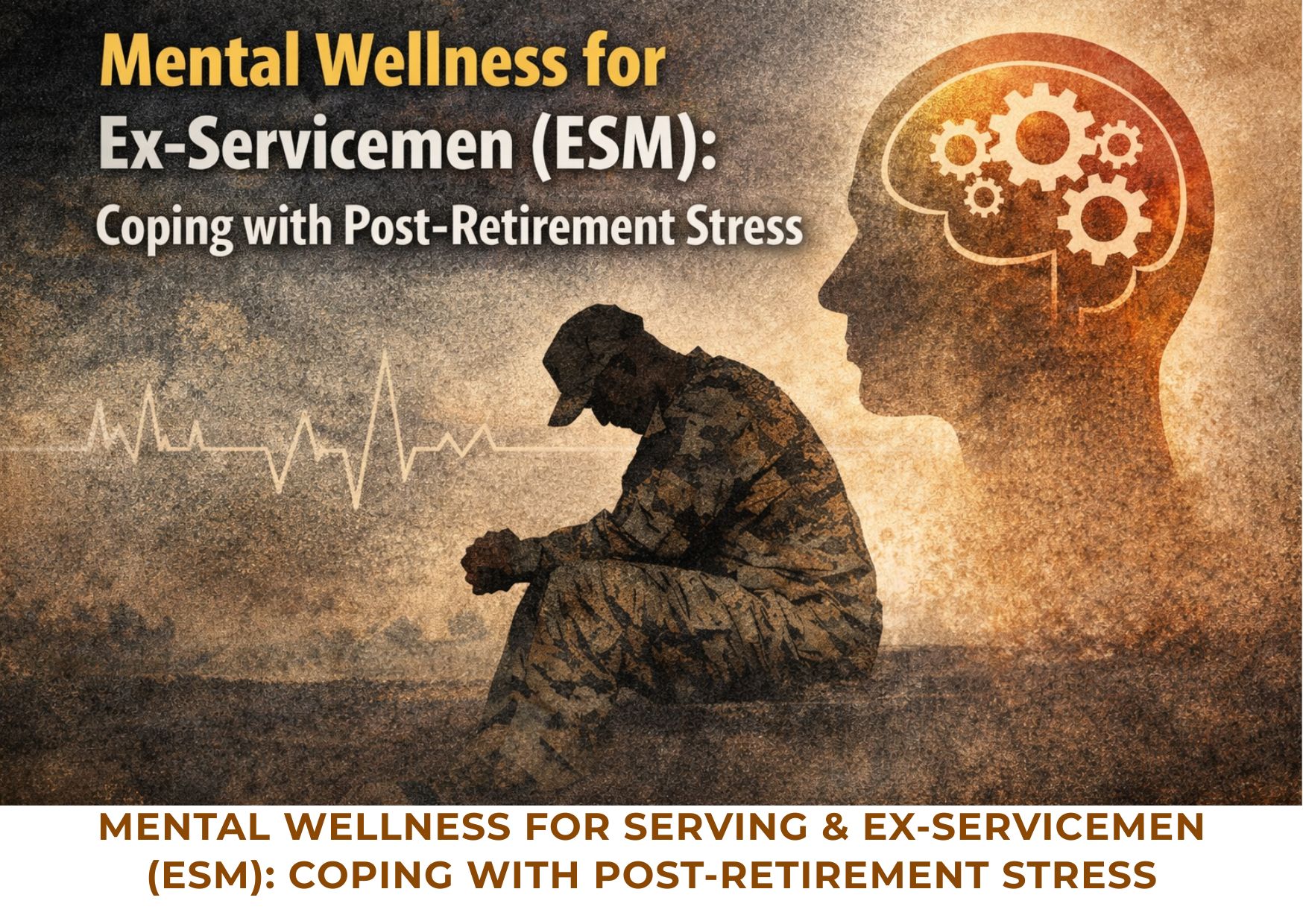
Mental health after retirement from the Indian Armed Forces is a very important issue. For many Ex-Servicemen (ESM), retirement happens at a young age—often between 35 and 45 years—after serving the nation for 15 to 20 years. Army life gives a fixed routine, discipline, respect, brotherhood, and a clear purpose. But when this life suddenly stops, many veterans start feeling stressed, lonely, or mentally disturbed.
As per official data, more than 60,000 soldiers retire every year. India today has around 26 lakh ex-servicemen and nearly 7 lakh widows. That is why mental health after retirement needs serious attention, even though many people do not talk about it openly.
This article explains why post-retirement stress happens, what warning signs to notice, and simple ways to stay mentally strong and peaceful.
Why Do Ex-Servicemen Feel Stress After Retirement?
Army life is very different from civilian life. When a soldier retires, many things change at once.
1. Loss of Identity
In service, a person is known by rank and uniform—Subedar, Havildar, Major, Captain. After retirement, that identity suddenly disappears. Many veterans ask themselves:
“Who am I now?”
This loss of identity causes sadness and confusion.
2. Loss of Brotherhood
In the Army, you live and work with your unit like a family. After retirement, that daily bonding stops. Many ex-servicemen feel lonely, especially when living away from cantonments.
3. Financial Worries
Even though pension is received, rising expenses, children’s education, medical costs, and marriage responsibilities create tension. Many veterans worry about:
- Second career
- Lower salary in civilian jobs
- Family future
4. Old Trauma Comes Back
Some veterans have faced accidents, combat stress, or difficult field conditions. After retirement, when life becomes slow and quiet, old memories may return as:
- Bad dreams
- Anger
- Fear
- Sleeplessness
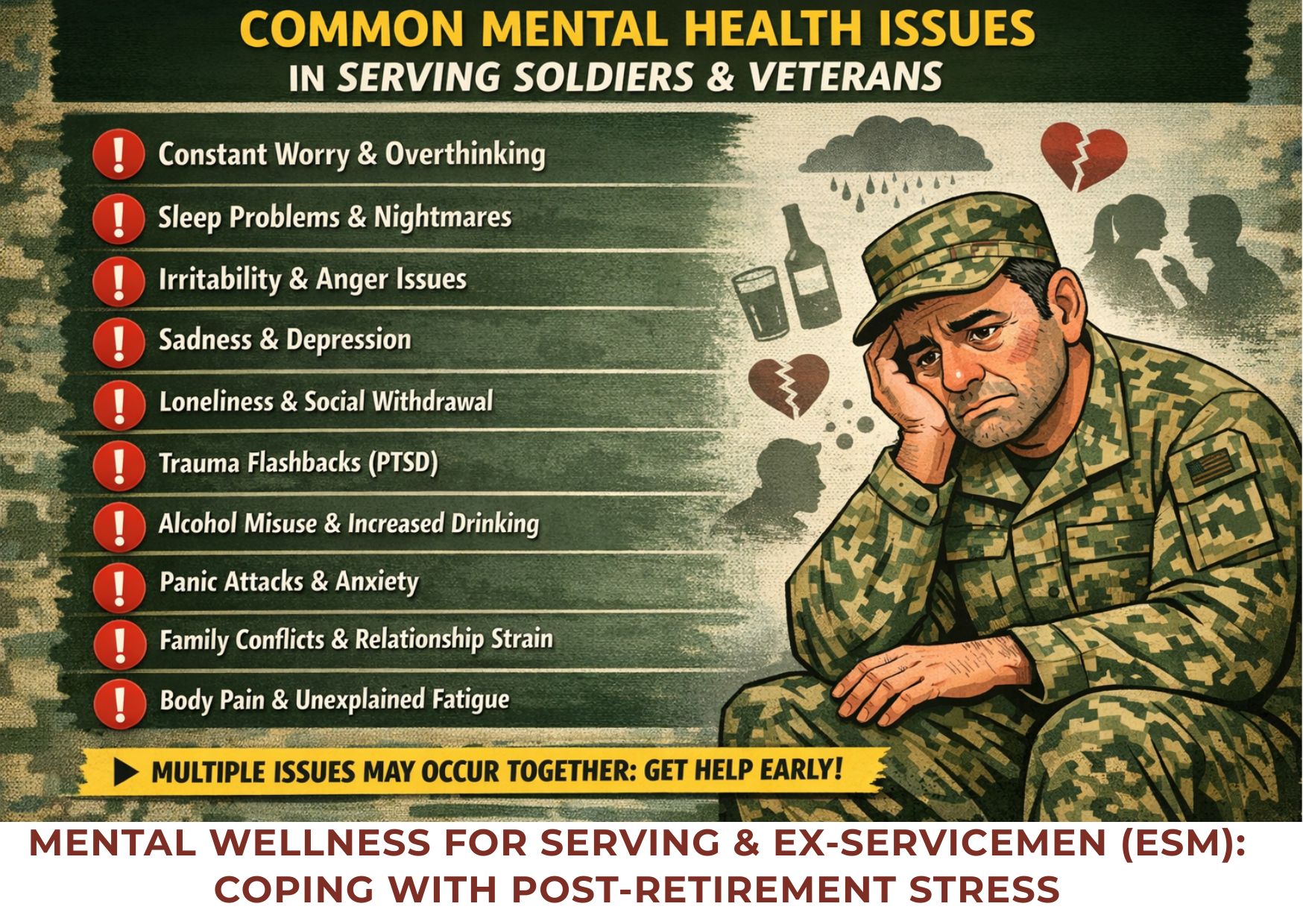
Common Signs of Mental Stress in Ex-Servicemen
Stress does not always show clearly. Watch out for these signs:
Emotional Signs
- Irritation without reason
- Feeling sad or empty
- Losing interest in family or hobbies
Physical Signs
- Poor sleep
- Tiredness
- Body pain without clear reason
Behaviour Changes
- Avoiding people
- Drinking more alcohol
- Anger or silence at home
If these signs continue for weeks, help should be taken early.
Simple and Effective Ways to Stay Mentally Strong
1. Create a New Purpose in Life
Purpose gives strength. After retirement, purpose must be rebuilt.
What you can do:
- Join skill courses or training programmes
- Do part-time work or security jobs
- Help other veterans or youth in your area
Helping others gives self-respect and satisfaction.
2. Stay Physically Active
Physical activity is one of the best medicines for mental stress.
Simple habits:
- 30 minutes daily walking
- Yoga or stretching
- Light jogging or cycling
Exercise improves sleep and reduces anxiety.
3. Stay Connected With People
Do not cut yourself off.
Good options:
- Attend veteran meetings
- Stay active in WhatsApp groups of your unit
- Spend time with family, grandchildren, and friends
Talking openly reduces stress.
4. Control Alcohol Consumption
Alcohol may feel like stress relief, but it worsens mental health and family relations. Reducing alcohol improves:
- Sleep
- Mood
- Respect at home
Seeking help is not weakness—it is responsibility.
5. Take Professional Help When Needed
Mental health treatment is available and free for veterans.
You can get help from:
- ECHS Polyclinics (mental health consultation)
- Government hospitals
- Tele-counselling services
Talking to a trained doctor or counsellor can change life for the better.
6. Practice Simple Relaxation Techniques
You do not need complex methods.
Try this daily:
- Sit quietly
- Breathe in slowly for 4 seconds
- Breathe out slowly for 6 seconds
- Repeat for 10 minutes
This calms the mind and reduces anger.
7. Plan a Second Career Slowly
Do not rush into any job due to pressure.
Steps to take:
- Understand pension and expenses
- Choose work matching your age and health
- Learn one new skill
Even small work gives confidence.
Why Mental Health of Veterans Matters
When a veteran suffers mentally:
- Family suffers
- Relationships suffer
- Children are affected
A mentally healthy veteran becomes:
- A good parent
- A good guide for youth
- A strong support for society
Breaking the Stigma
Many soldiers believe:
“Asking for help means weakness.”
This belief is wrong.
Mental health care is strength, not weakness—just like medical treatment for injury.
Final Message
You have faced enemy fire, extreme weather, separation from family, and tough duties. Facing mental stress after retirement is not failure—it is a natural human response to a big life change.
With discipline, support, and timely help, retirement can become a peaceful and meaningful phase of life.
You served the nation with courage.
Now it is time to take care of yourself and your mind.
Need mental health counselling support? Click here to message our Anubhuti team